Walking the St Wulstan Way
St Wulstan's Way Video
The St Wulstan's Way was walked for the first time in May 2025. Peter Chisholm, one of the perpetual pilgrims who walked the full distance, has created this wonderful video of the Pilgrimage.
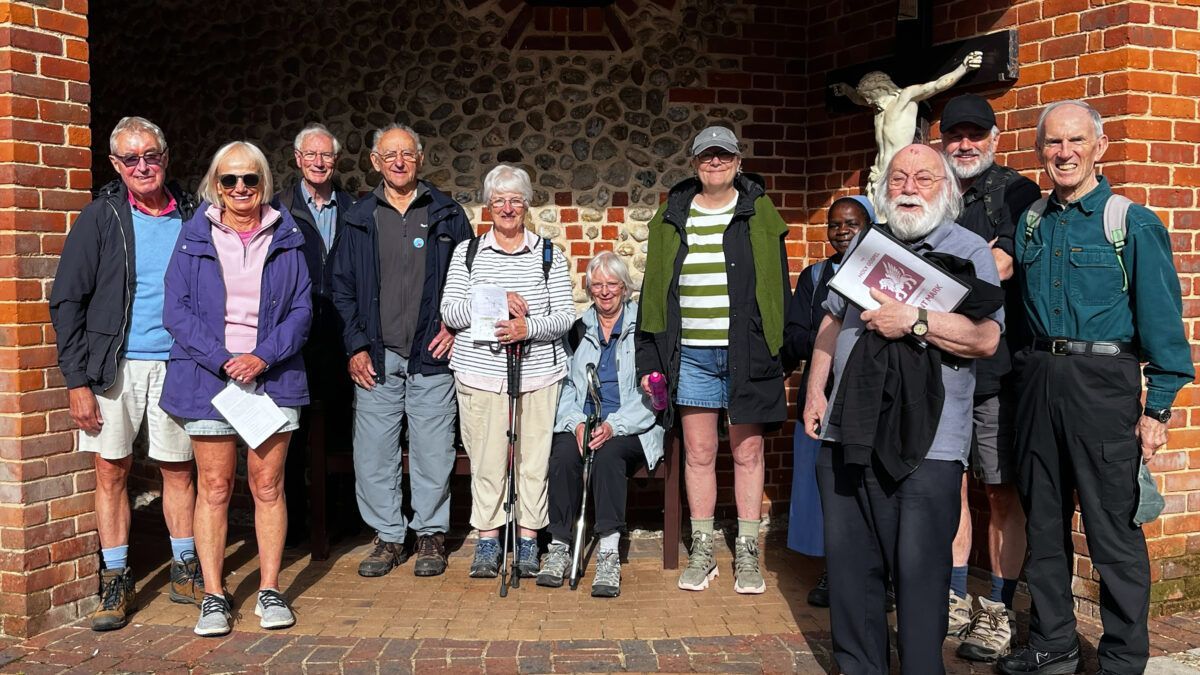
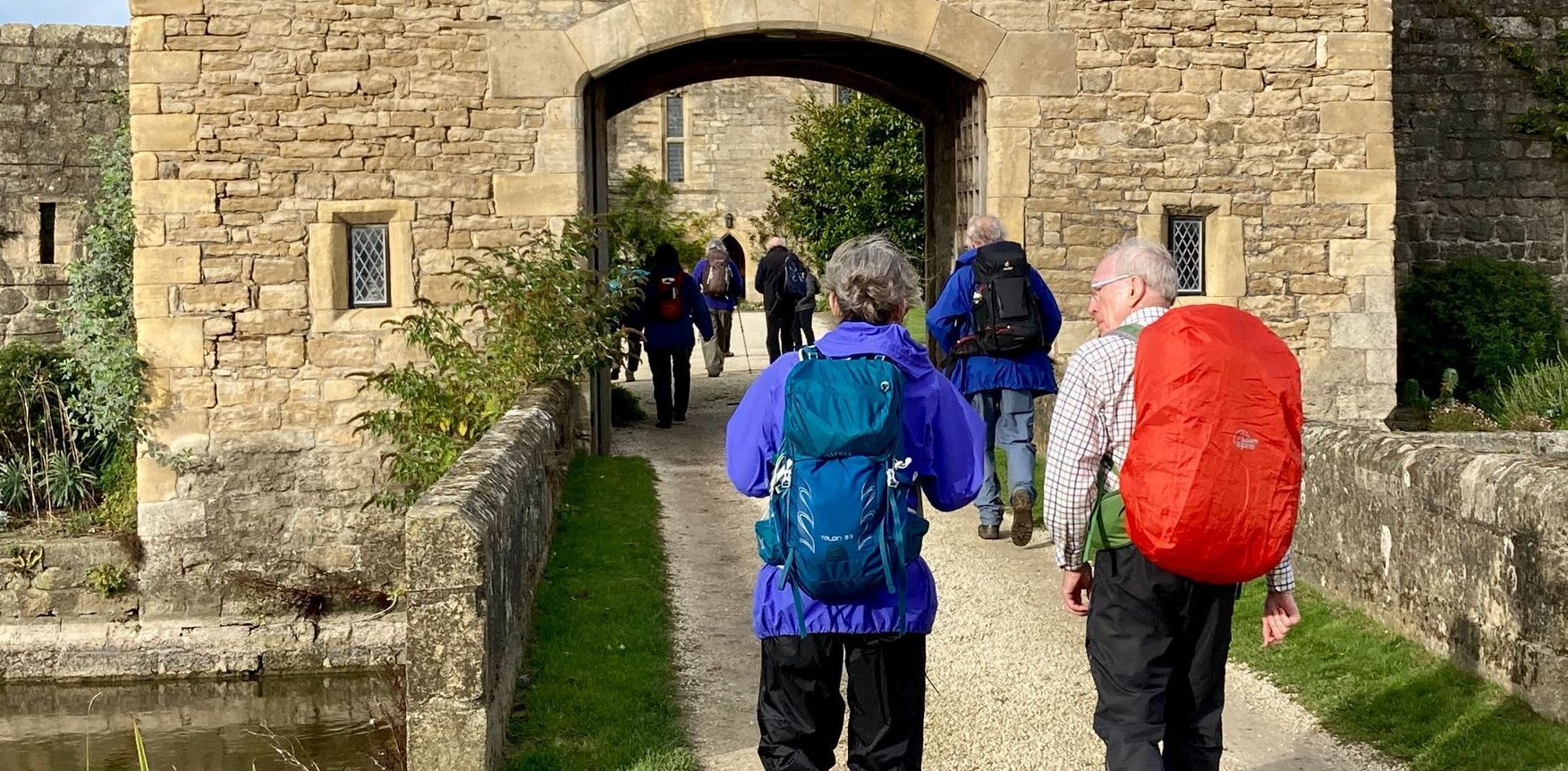
Pilgrims joined Fr Gerry Walsh tracing St Wulstan’s life and legacy, from Worcester Cathedral to Clifton Cathedral as part of the Catholic Church’s Year of Jubilee, “Pilgrims of Hope” celebrations. Participants explored their faith while journeying through stunning landscapes and historic locations.
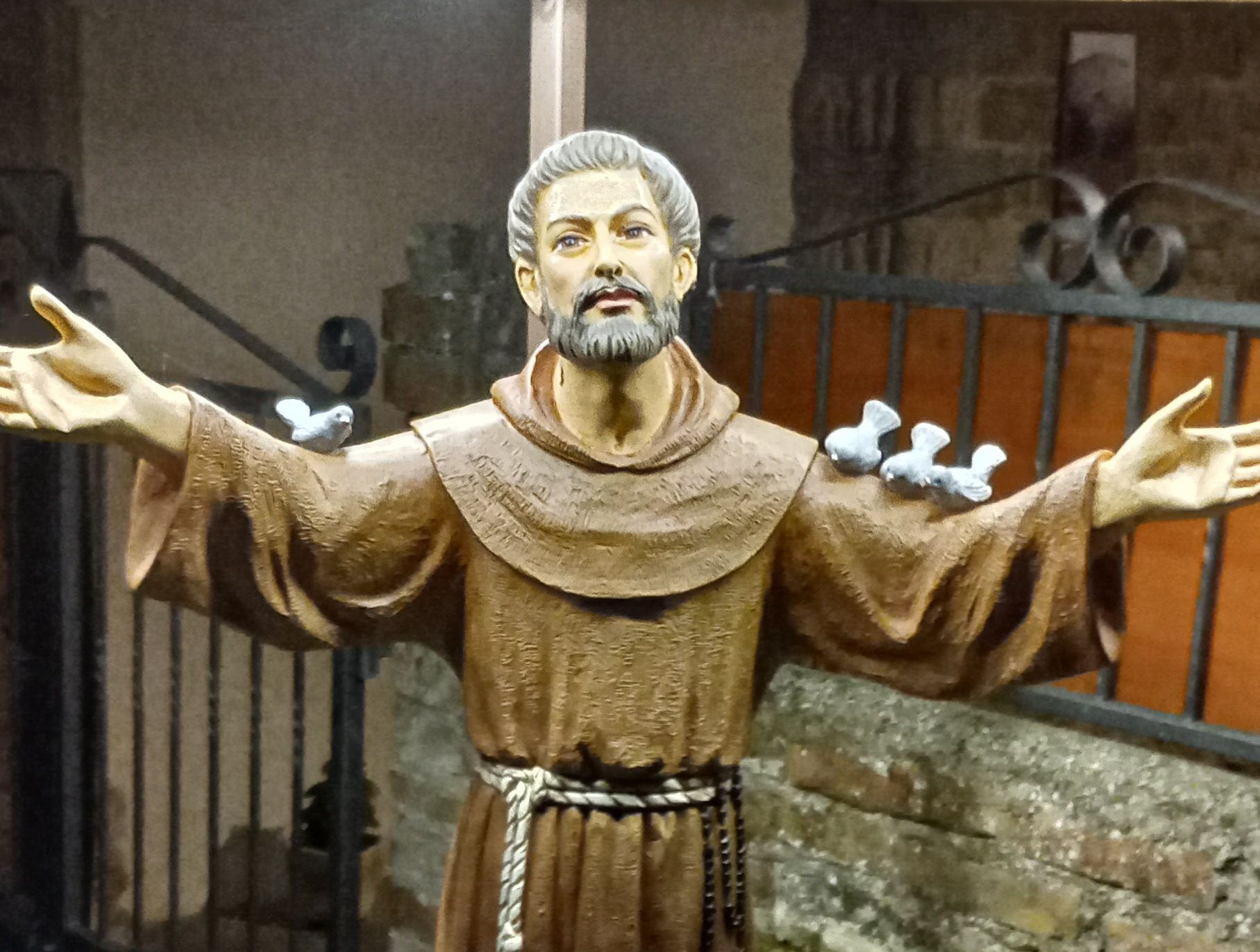
- St Wulstan (c. 1008 – 1095) was an English Benedictine monk who served as Bishop of Worcester from 1062 to 1095. In 1034 Wulstan was serving as a priest at St Mary's Church in Hawkesbury, Gloucestershire. Whilst at his devotions he was distracted by the smell of a goose cooking nearby. Mortified, he became a vegetarian. Wulstan was consecrated Bishop of Worcester in 1062. He was a strong opponent of the slave trade with Ireland, and together with Lanfranc, was mainly responsible for ending the trade from Bristol. After the Norman Conquest Wulstan was the only English-born bishop to retain his diocese for any significant time. He founded the Great Malvern Priory, and undertook much large-scale rebuilding work, including Worcester Cathedral, Hereford Cathedral, Tewkesbury Abbey. He died 20 January 1095 whilst washing the feet of parishioners as was his custom and was canonized on 14 May 1203. He is the patron saint of peasants and vegetarians. In 2023, a pastoral area of the Catholic Diocese of Clifton was named in his honour.
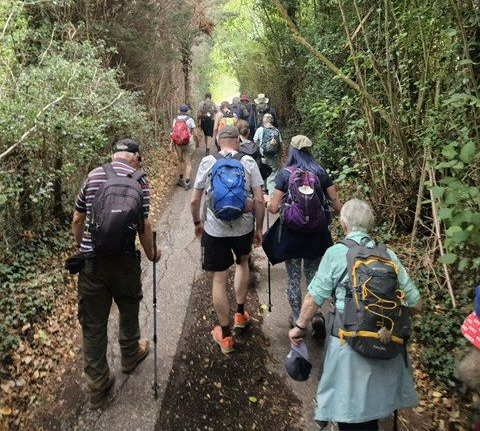
Each day of the pilgrimage was marked by moments of reflection, community, and faith, as they walked together through the countryside, across towns and parishes, carrying prayers and hope with every step.
Day 1: From Worcester Cathedral to Malvern Priory
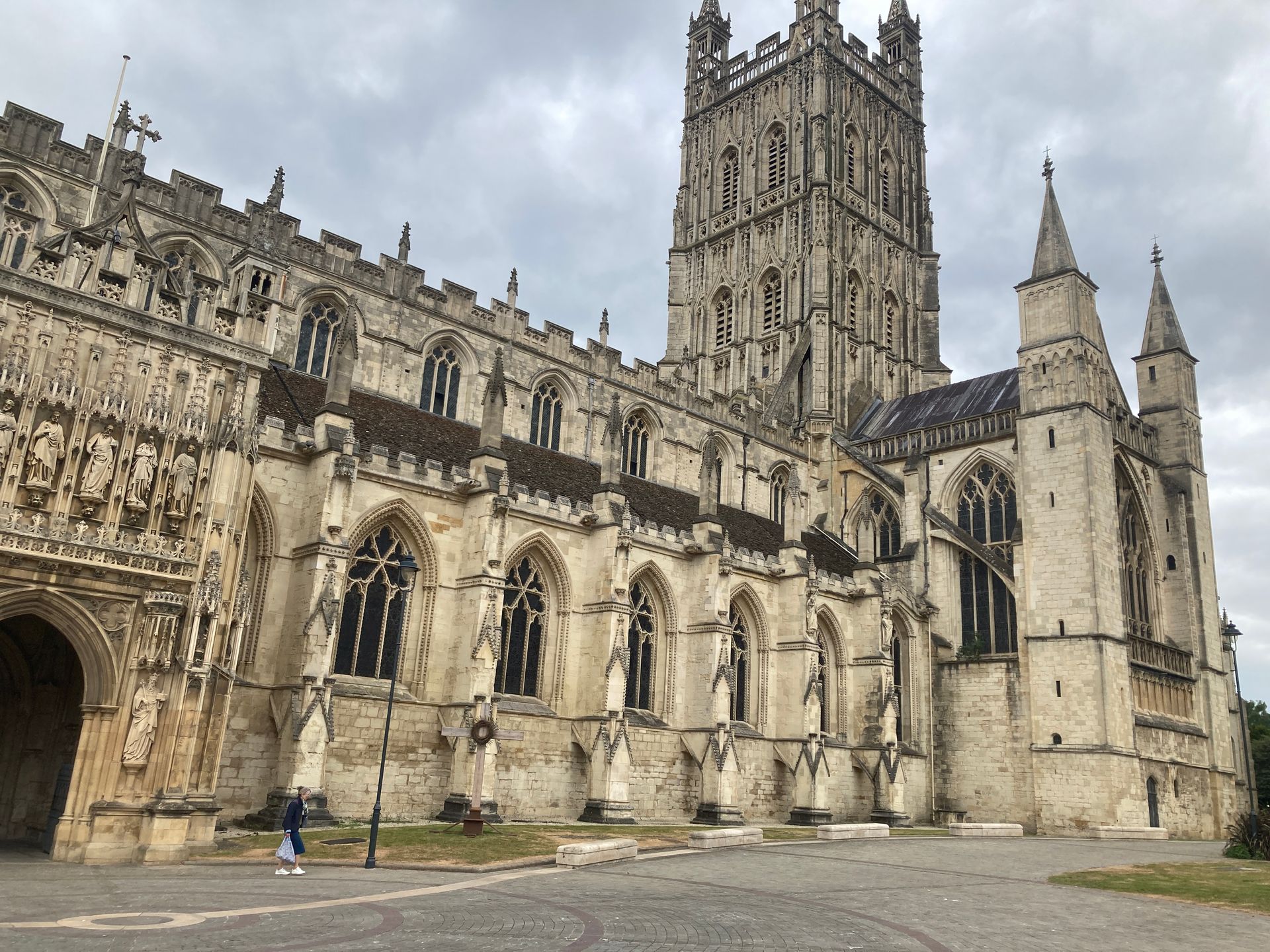
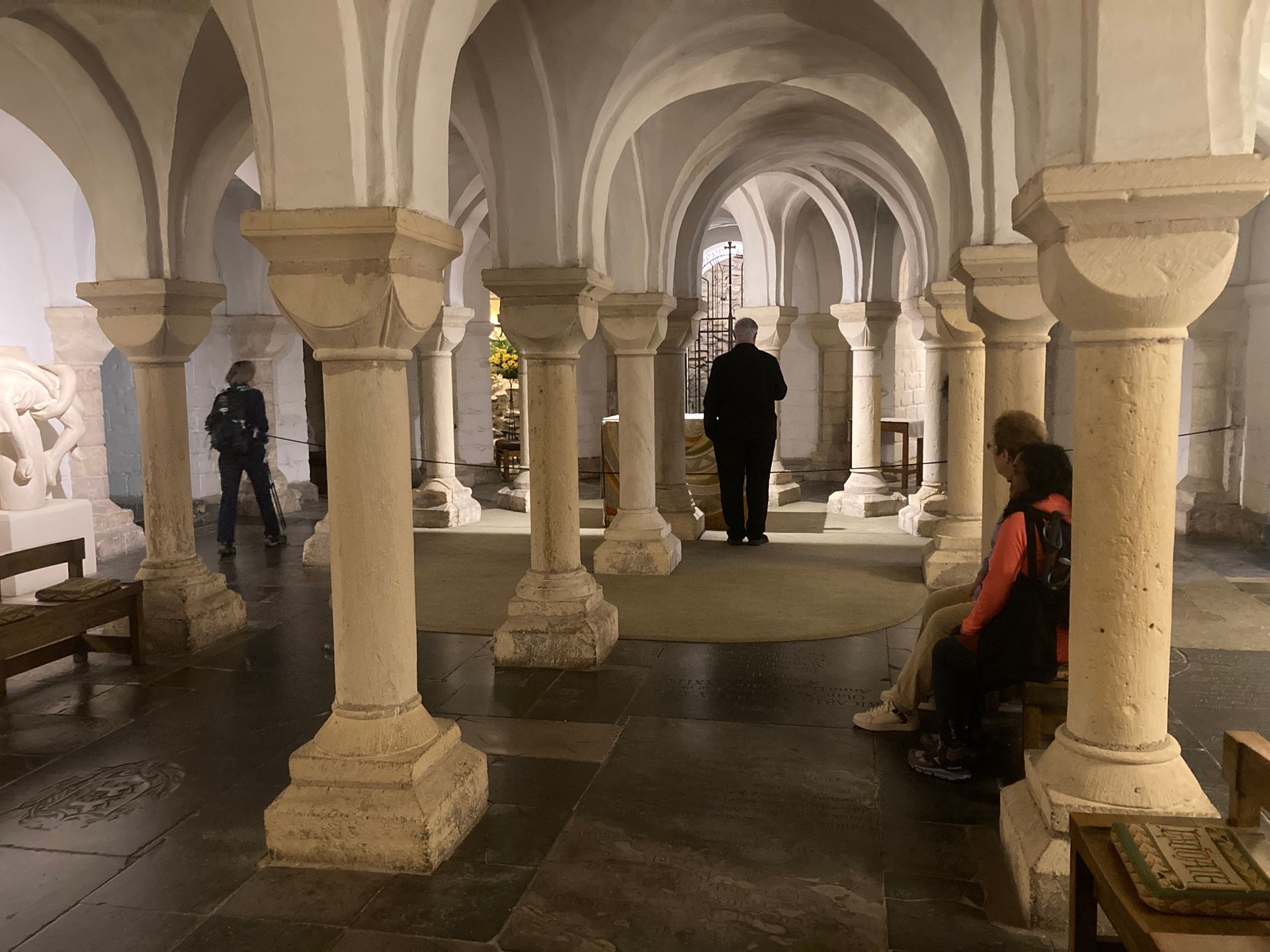
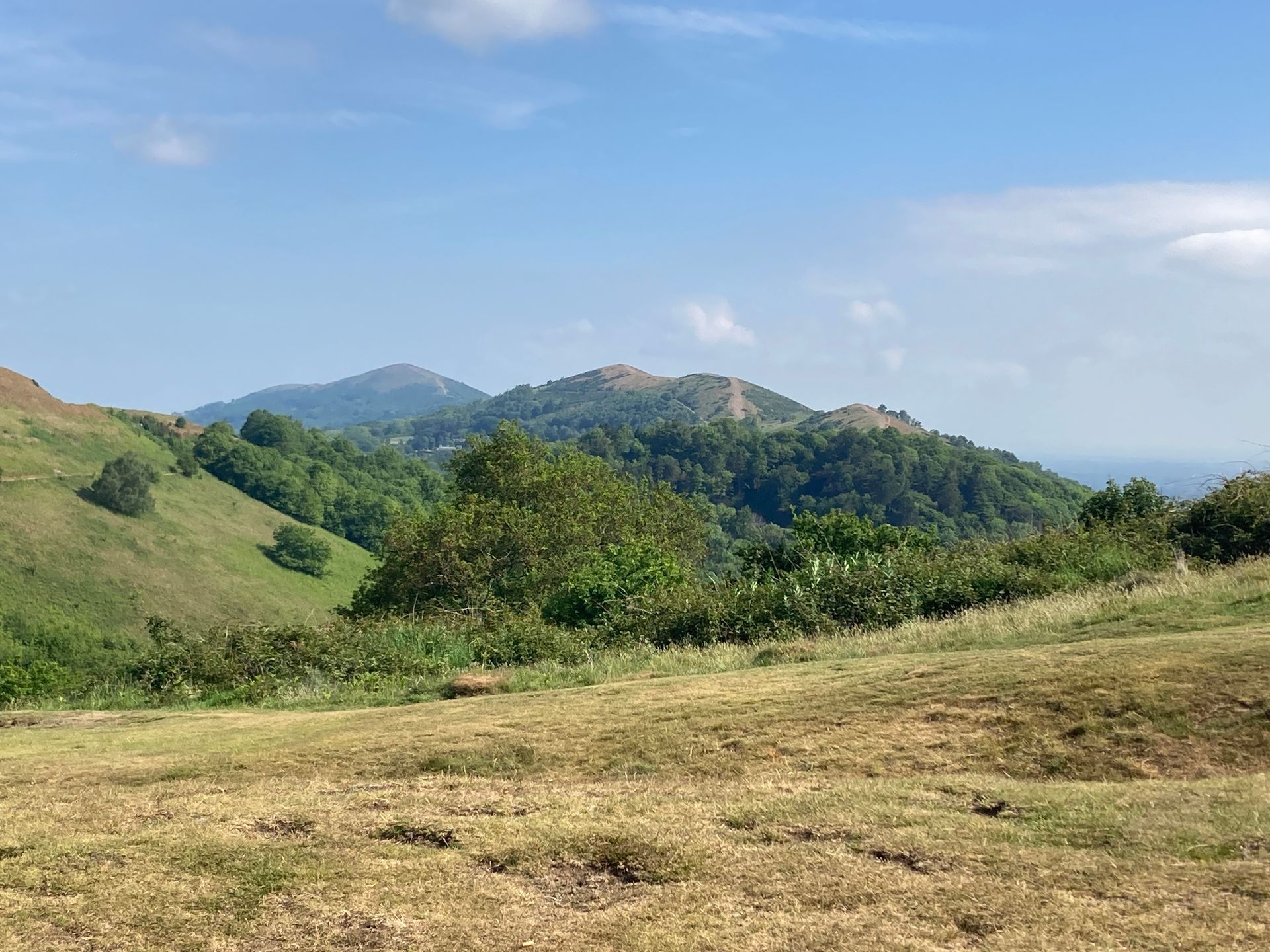
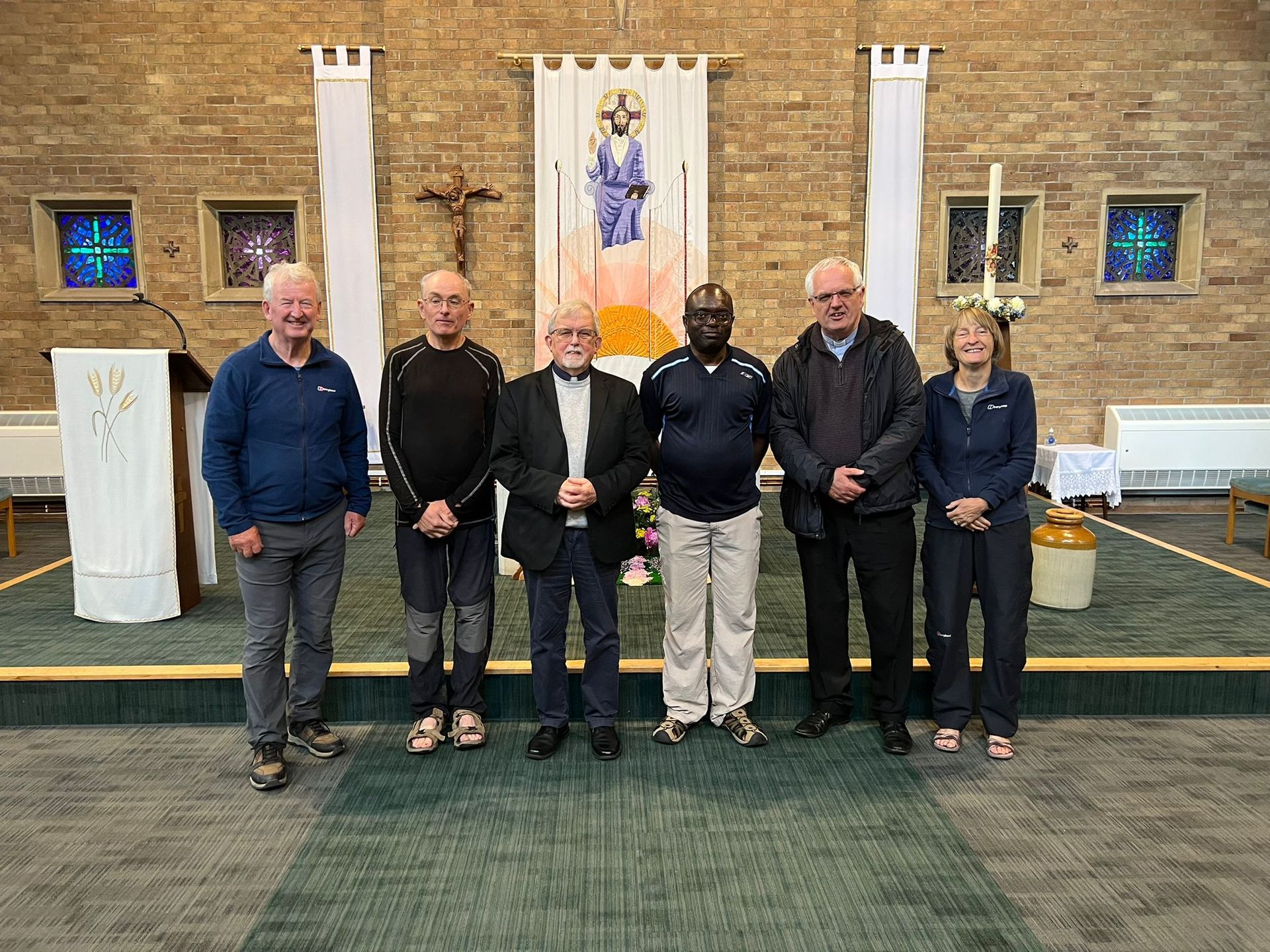
The first day saw intrepid perpetual pilgrims Fr Gerry, Bev, Ufuoma, Phil and Peter joined by day pilgrims Nicky, Marisa and Juliana. We started out with daily prayer at St George’s church, Worcester. A blessing by Fr Gary to protect us. Then a short walk to Worcester cathedral visiting the crypt, tomb of King John and the stained glass windows of St Oswald and St Wulstan. Then off across country in the direction of the Malvern Hills. We called by notable sights of Stanbrook Abbey and Great Malvern Priory before arriving at St Wulstan’s church in Little Malvern. There we had evening Mass concelebrated by Fr Gary, Fr Gerry and parish priest Fr Tom. Overall we walked 14.5 miles and overnighted at Malvern Hills Hotel.
Day 2: From St Wulstan’s Catholic Church, Malvern to Our Lady of Lourdes, Newent
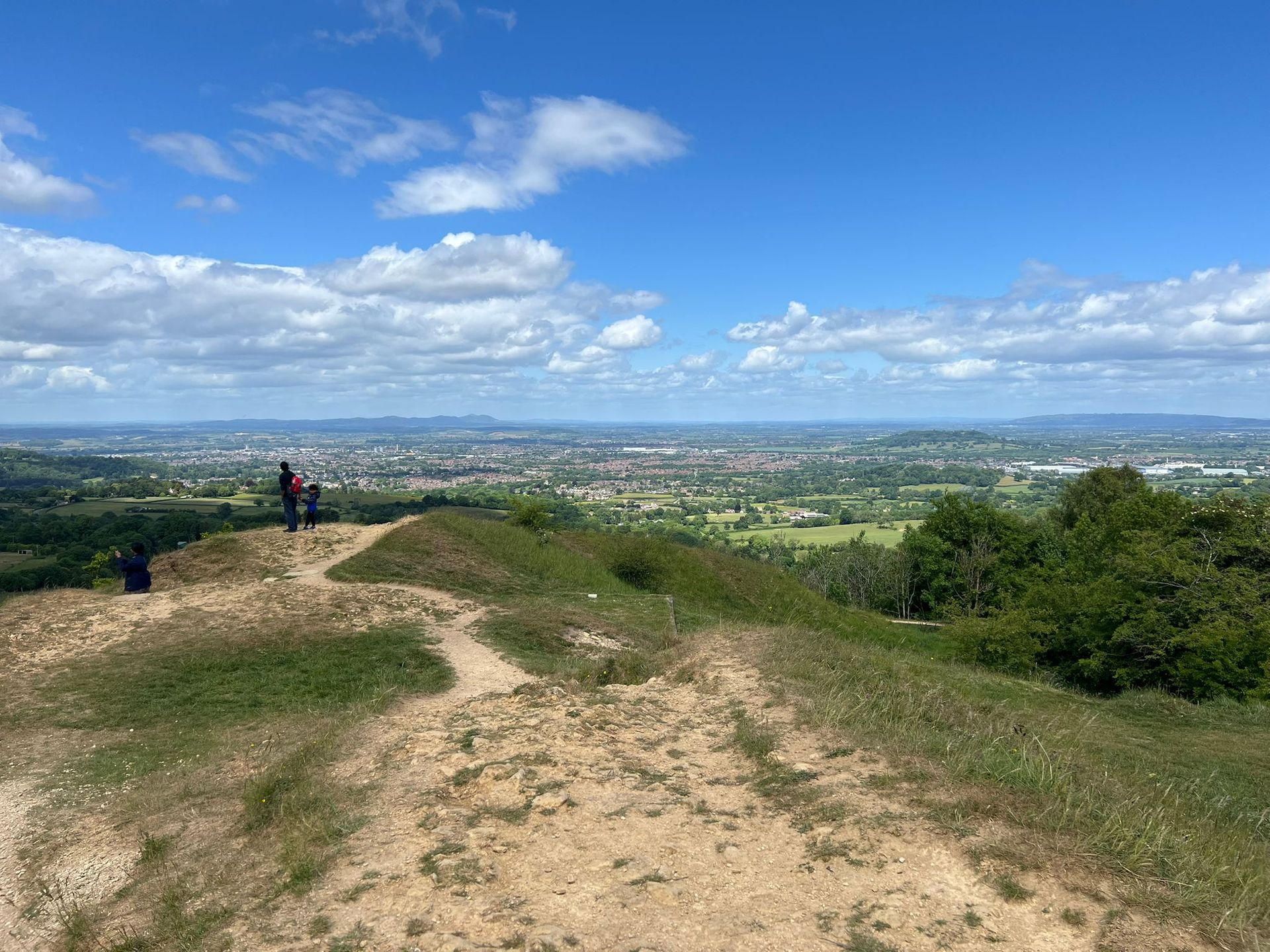
We set off a little late from the hotel and British Camp because the chef was late to work! Said morning prayers in pub car park and off straight up the southern part of the Malvern Hills. Fr Gerry set a fierce pace all day. Then through the woods of Eastnor Park. Visited the Anglican Church of St Mary at Bromsberrow where we said a decade of the Rosary and prayed for Pope Leo’s and Bishop Bosco’s intentions. Then cross country up and down hills all day until we reached the Herefordshire and Gloucestershire canal. We arrived at Our Lady of Lourdes dead on 4pm as planned. Met by the parishioners who fed us us sandwiches, cake and tea. Mass at 6pm with Fr Gary, Fr Gerry and parish priest Fr Martin concelebrating. Staying overnight with host parishioner. A much harder day with the number of hills. 13.5 miles.
Day 3: From Our Lady of Lourdes, Newent to St Peter’s, Gloucester
The day started off with breakfast at Our Lady of Lourdes kindly prepared by parishioner, Mary. We were joined today by four day pilgrims: Dorota, Tony, Kat and Ross. Morning prayers, then off on our way in the direction of Gloucester. Mostly across country encountering numerous obstacles of cows and horses, and electric fence barriers. So the route ended up about a mile longer and five decades of the Rosary. Our first main stop was at the Holy Trinity church at Tibberton for lunch then following the Three Choirs Way and the Wysis Way past Highnam to call by the lost church of Lassington, St Oswald. We said goodbye to Dorota, Kat and Ross at Over Farm in sight of Gloucester cathedral, then followed the river to the city. Just before St Peter’s Gloucester cathedral we passed by the memorial to Bishop John Hooper, an Anglican martyr of Queen Mary I. Then on to our final stop at St Peter’s church in time for Vigil Mass. Overnight with St Peter’s parishioners. Today’s distance was 15 miles.
Day 4: From St Peter’s, Gloucester to St Joseph’s, Stonehouse
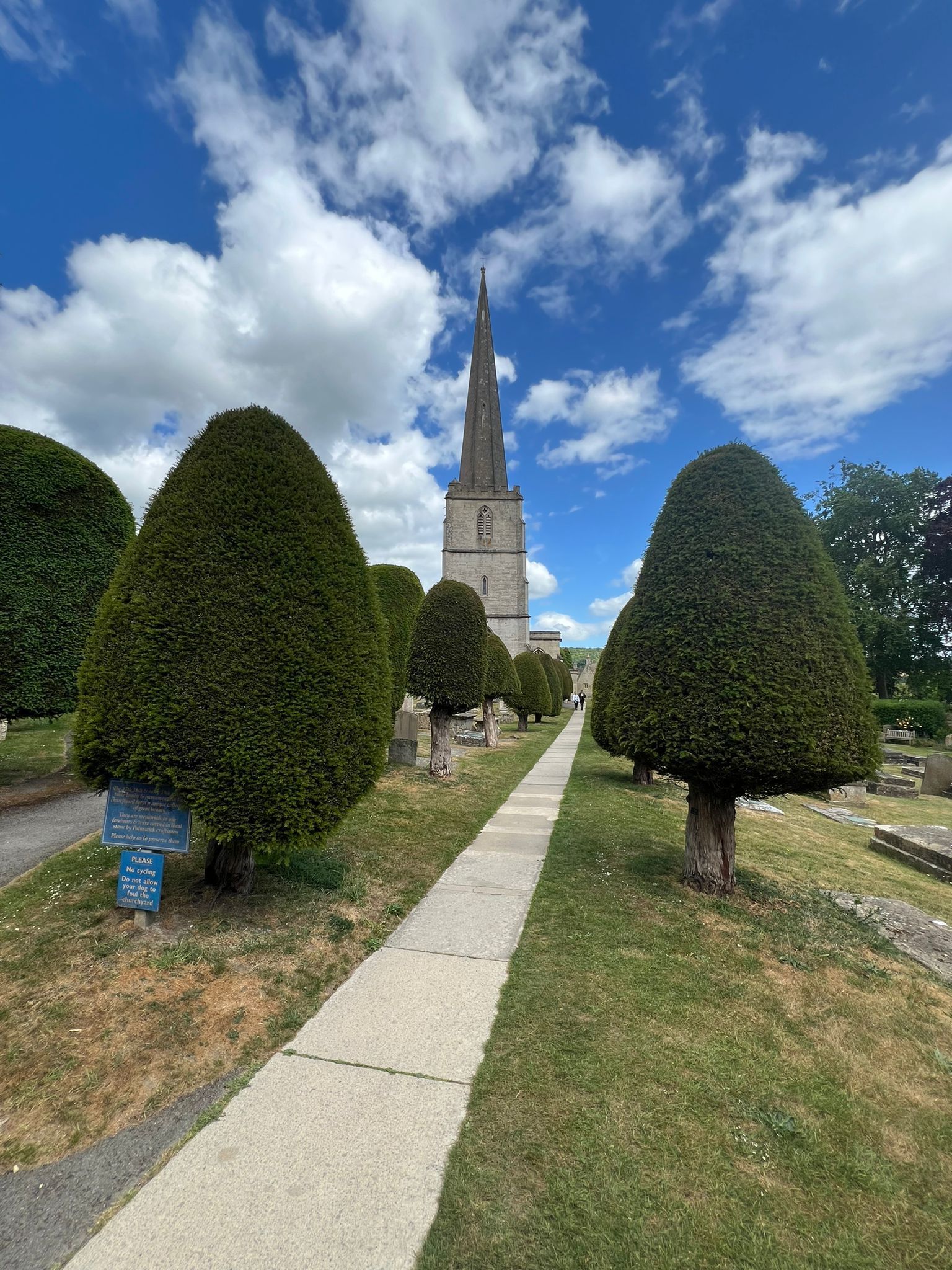
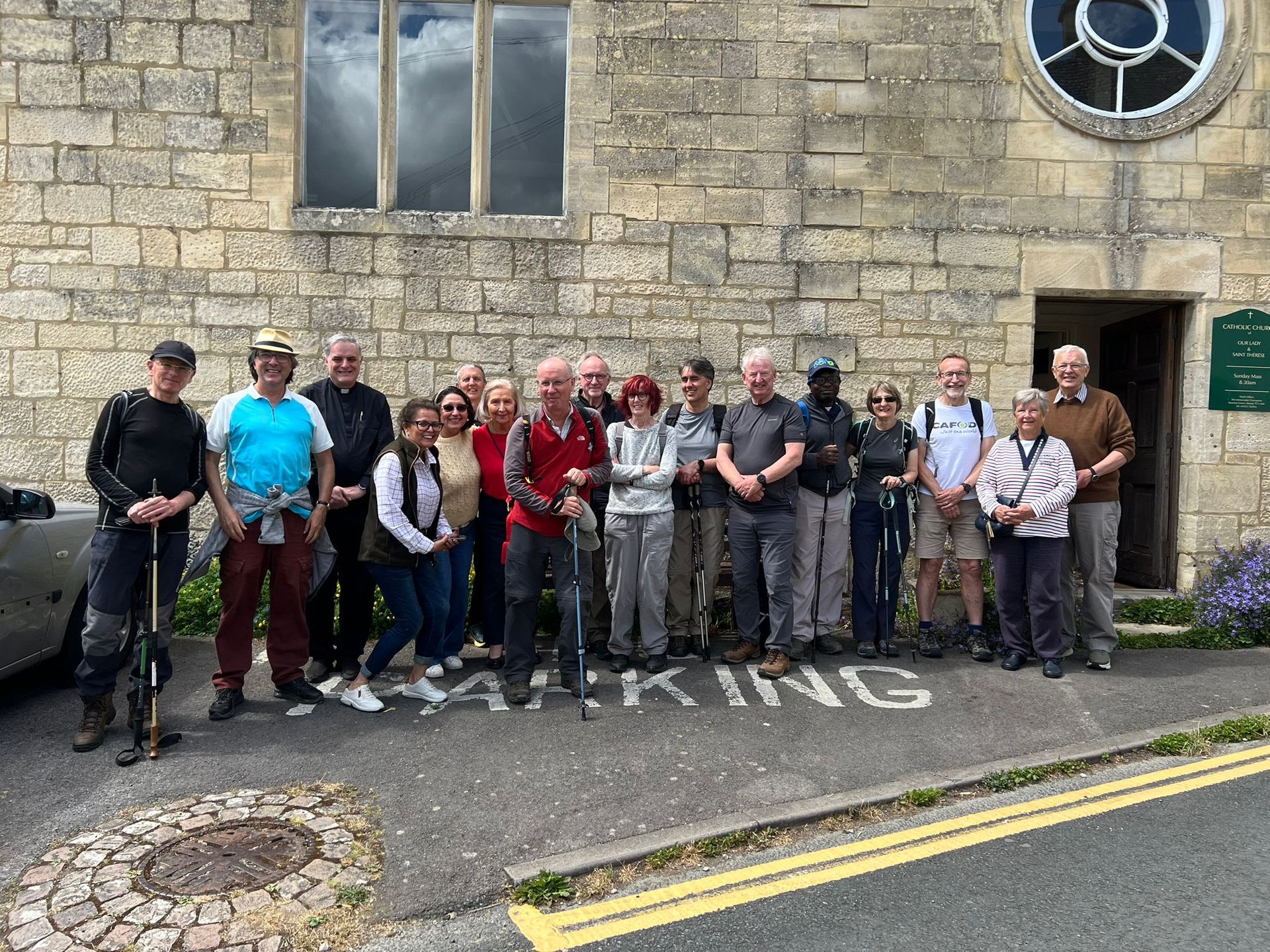
We started at St Peter’s 9am Mass. At the end of Mass, Mgr. Liam brought all the primary school children and the pilgrims to the front of the church. Mgr. Liam and the children held out their hands and gave the pilgrims a Blessing. Fr Gerry was on Mass duty so he joined us at Painswick after having done the first part of the walk earlier in the morning. We were joined by Tony again and another day pilgrim Daniel. Then we marched off to Painswick calling by St Augustine’s at Matson. A long and difficult climb to the Painswick Beacon across fields and woods. We finally reached the beacon and then descended to the RC church of Our Lady and St Thérèse in Painswick. We were greeted by Fr Gary and the parishioners and treated to a wonderful lunch! A short prayer and blessing by Fr Gary and then we were joined by more pilgrims: Martin, Savannah, Matthew, Mike, Phil and Caroline on the way to Stonehouse. We exited Painswick via St Mary’s church and climbed up into the Cotswold hills before descending to Stonehouse. At arrival at St Joseph’s we are ‘clapped in’ by Fr Gary and the parishioners, then we are treated to a delicious meal prepared by them. Holy Hour and Benediction before departing with our host parishioners. A 14 mile day.
Day 5: From St Joseph’s, Stonehouse to St Dominic’s, Dursley
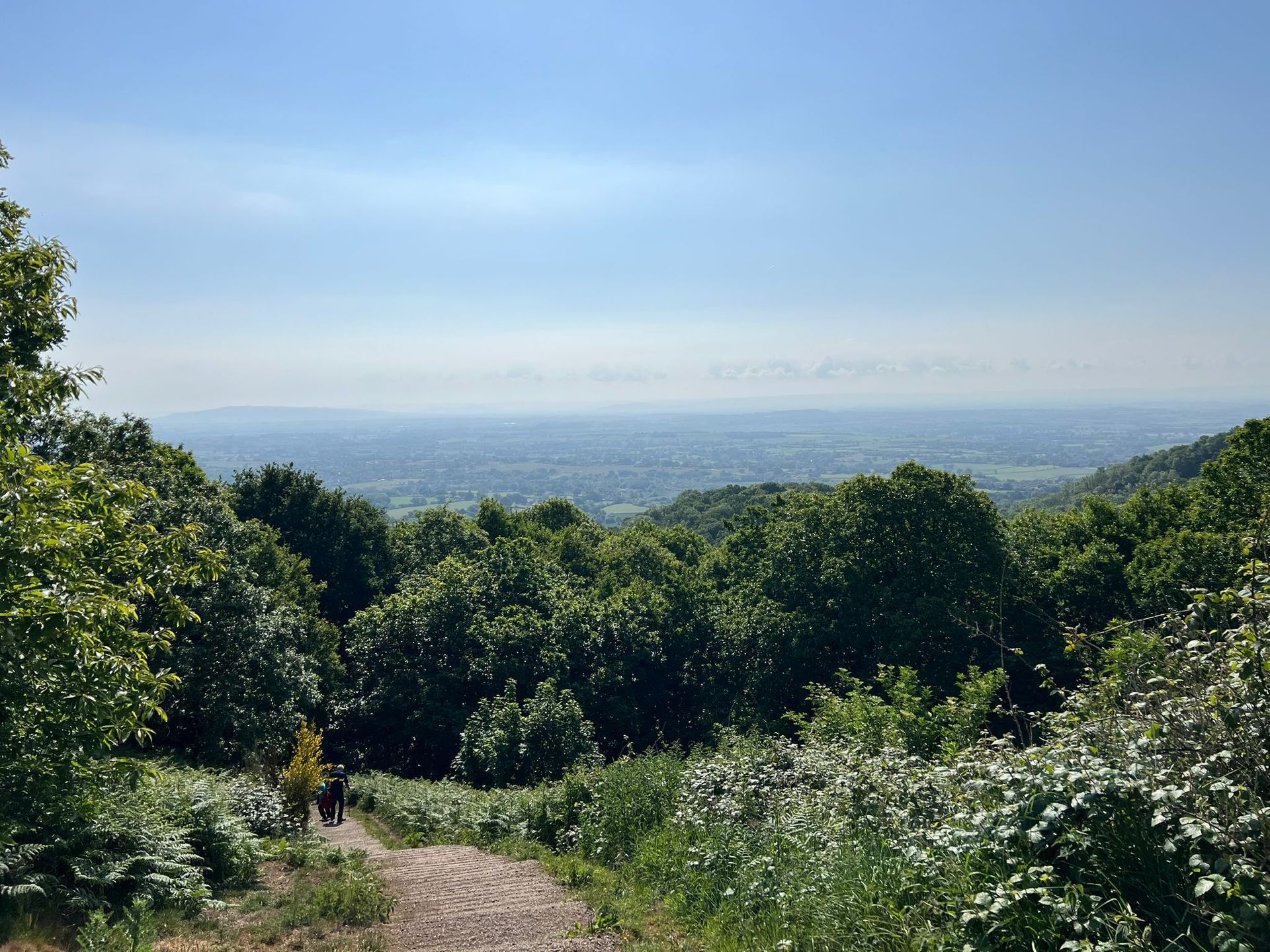
The day commenced with Morning Prayers at St Joseph’s Stonehouse. We were joined by day pilgrims Deacon Domenic, Richard and Matt. Then it was off along the Stroudwater canal to King’s Stanley where we came to the first climbs of the day. Mostly following the Cotswold Way towards Dursley. The journey took us through mostly woodland until we reached the open peak of Coaley Peak with its amazing views to the west. We walked past the ancient burial ground of Nympsfield Longbarrow. We departed from our route to visit the Marian Retreat Centre at Nympsfield where we said the Rosary followed by lunch. We were joined by another pilgrim, Mary, before visiting St Joseph’s RC church. Some prayers to St Joseph and back to the route. Once back on the trail, the track became quite unpredictable with tree roots and stones ready to trip the unwary. It caught out Richard who took a fall. Fortunately no major injuries. As we arrived at the formidable Cam Peak which featured a steep up and down, discretion overcame valour and we took the circular route to Dursley. Entering the town we passed St James’s parish church and the market house featuring a statue of Queen Victoria. Then arrival at St Dominic’s RC church for Divine Mercy prayers followed by tea and biscuits in the parish hall. Mass for the Memorial of St Philip Neri at 6pm was concelebrated by parish priest Fr Philip, Fr Gary and Fr Gerry. Overnight in private accommodation. The trek was just over 11 miles.
Day 6: From St Dominic’s, Dursley to Christ the King, Thornbury
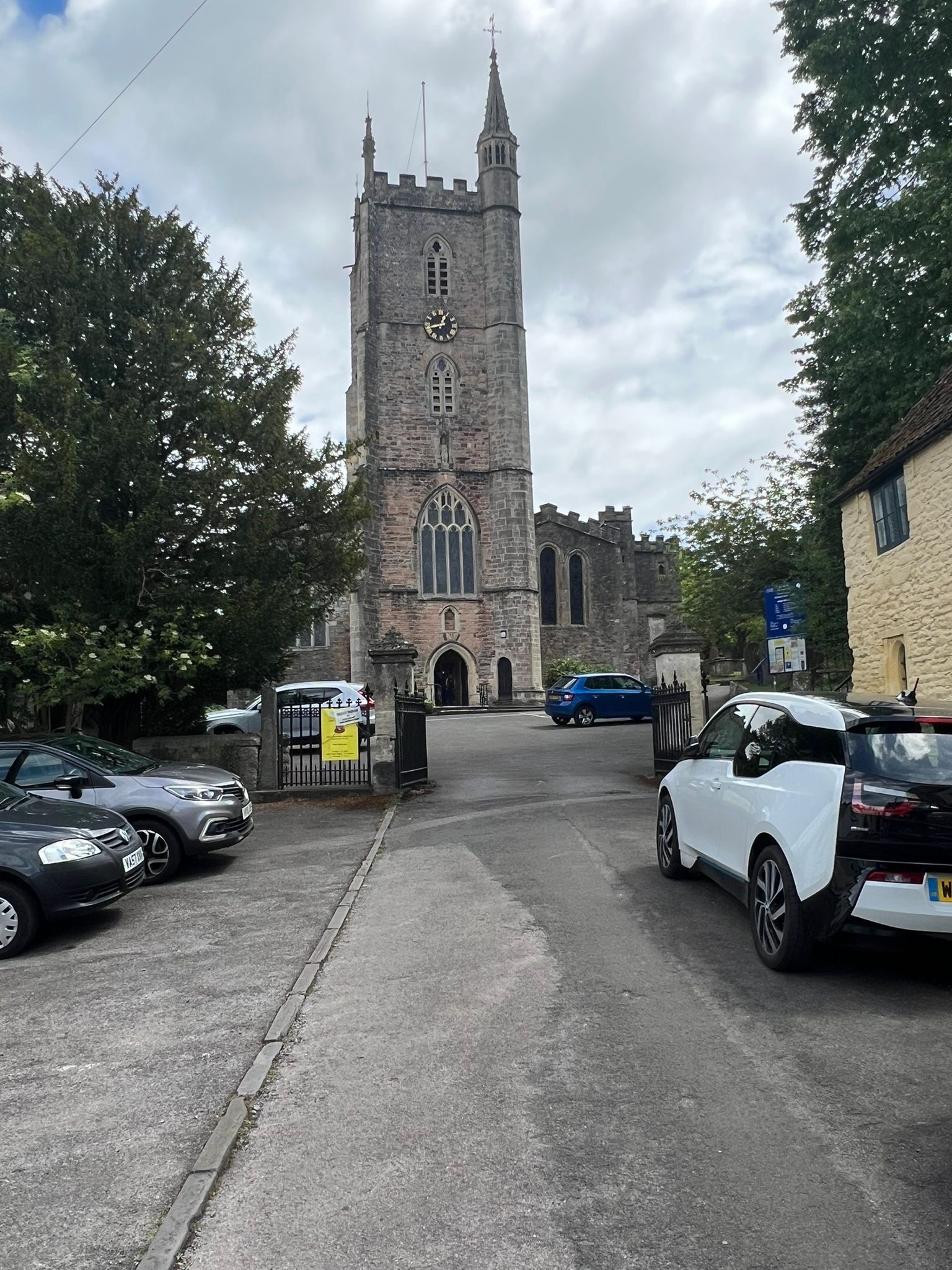
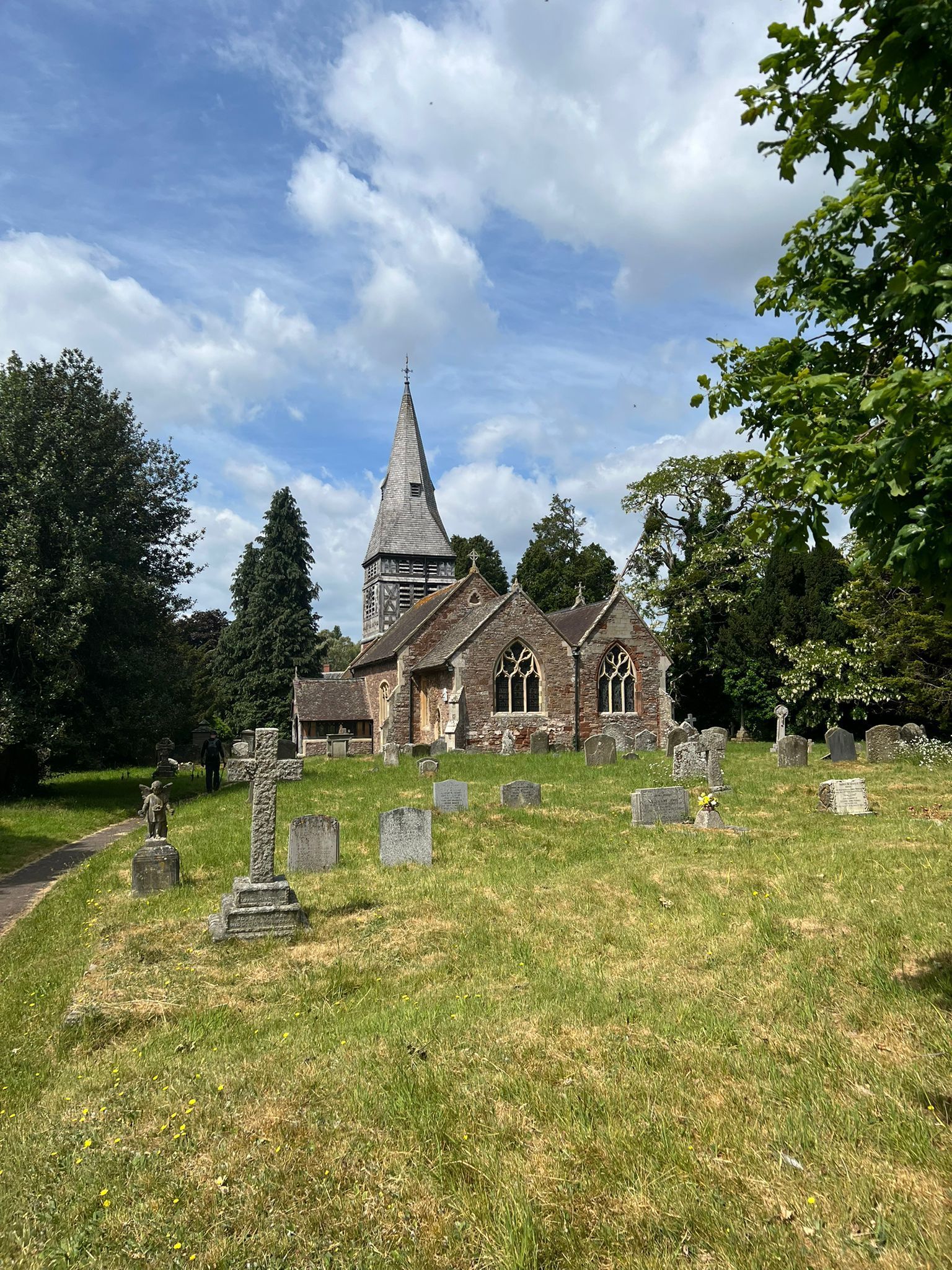
A tough day for us pilgrims, fighting wind and rain for most of the day with plenty of climbing hills. We started out after Lauds on the Feast of St Augustine at St Dominic, Dursley and from the town it was straight up hill on the Cotswold Way. Then Heartbreak Hill with a warning at the bottom of 1 in 7 incline. Eventually we arrived at Holy Cross church at Wotton-under-Edge where we were greeted by parishioners who fed us tea and biscuits. After a few prayers and rest we were off again over hills and dales in the direction of Hawkesbury. The magnificent church of St Mary the Virgin came into view as we descended the hill. Inside St Mary’s was beautiful and well worth a visit. St Wulstan served as priest here after his ordination and it was where he had his ‘roast goose’ distraction during Mass. A stained glass window commemorates his life. Leaving Hawkesbury it was a long hard slog towards our final destination of St Paul’s RC church at Yate passing through Chipping Sodbury and by the Catholic Church of St Lawrence. At our destination of St Paul’s we were collected by Deacon Lawrence of Christ the King, Thornbury. Mass for the Feast of St Augustine at Christ the King was concelebrated by parish priest Fr Frank and Fr Gerry assisted by Deacons Lawrence and Kingsley. After Mass we had fish and chips in the presbytery before departing for private accommodation. Overall 15.5 miles but it felt like 20 miles. Everyone was looking forward to our last day and to meeting up with our pastoral area friends at our cathedral next day.
Day 7: From St Paul’s, Yate to Clifton Cathedral, Saints Peter and Paul
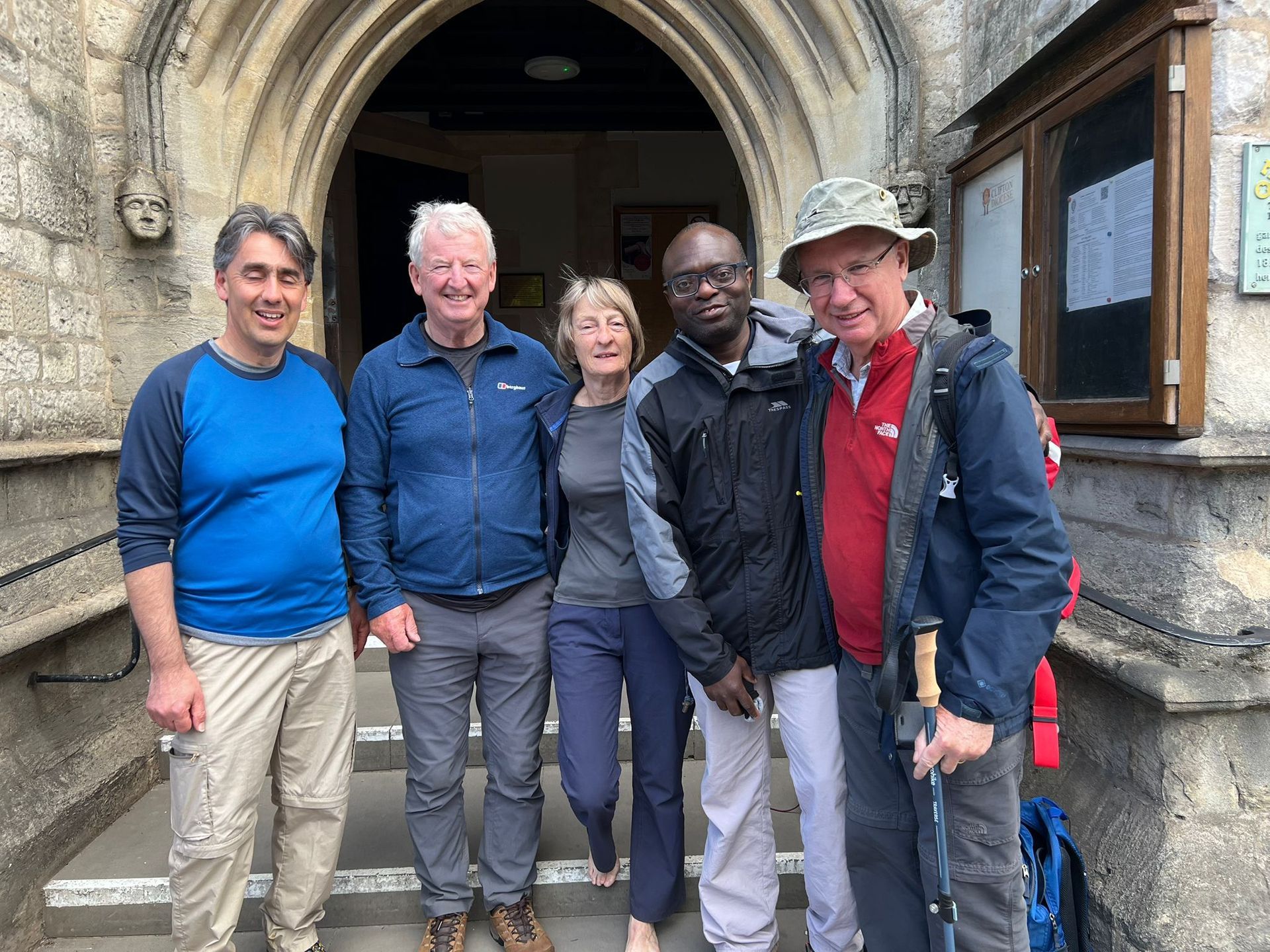
An early start today at 7.30am as it was to be a long walk to Clifton cathedral. Lauds outside St Paul’s, Yate and then off through Yate in the direction of Bristol. A mix of busy road and cross country paths got us past the M4 and M32 to the outskirts of Bristol. Then it was a case of weaving through out of town shopping and housing estates until we reached Westbury-on-Trym which is a beautiful town on the edge of Bristol. Phil being a resident was able to explain some of the history behind the houses and buildings. We visited Holy Trinity Parish Church (previously dedicated to SS Peter & Paul) and said a decade of the Rosary. A short lunch outside the church and then off up hill to the Downs before the long descent into Bristol. We passed by the Catholic Church of St Mary on the Quay before we arrived at Bristol cathedral. We were met by Rev’d Mel Takáč, Minor Canon for Worship and Liturgy, who explained some the interesting parts of the cathedral especially the anti-slavery exhibition currently on display. We just had enough time left to walk the last mile of our pilgrimage uphill to Clifton cathedral where the lovely ladies of the cathedral had made tea, coffee, cakes and biscuits for us and the visiting parishioners from around the St Wulstan’s Pastoral Area. 16.5 miles for our final day. A tour of eight stations for a Pilgrimage of Hope was available to all the visitors. Before Mass Fr Gerry gave a talk on St Wulstan. The conclusion to the Pastoral Area Pilgrimage was Mass to celebrate the Vigil of the Ascension of the Lord with Fr Gerry presiding and Fr Gary, Fr Stephen and Fr Benedict concelebrating assisted by Deacons Domenic and Bogden.
The Perpetual Pilgrims would like to thank everyone who made this pilgrimage possible. The welcome, support and prayers by everyone who helped has brought us much closer together as a Pastoral Area and as the Church of God. Thank you and God Bless you all.
Peter Chisholm
Many more pictures from the Pilgrimage can be found here:
https://saintwulstan.org.uk/2025/05/pilgrims-progress-the-saint-wulstan-southern-way-pilgrimage/