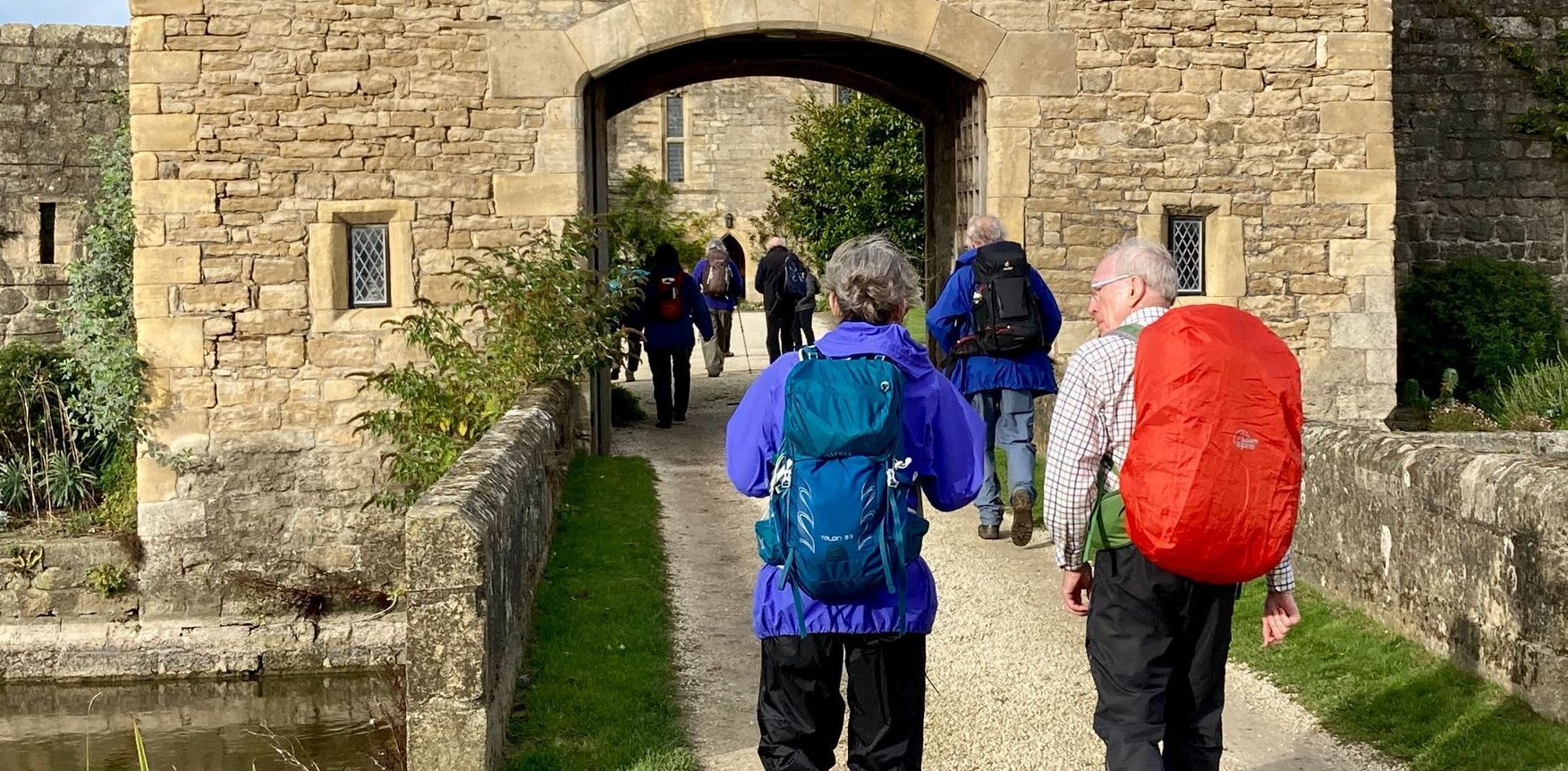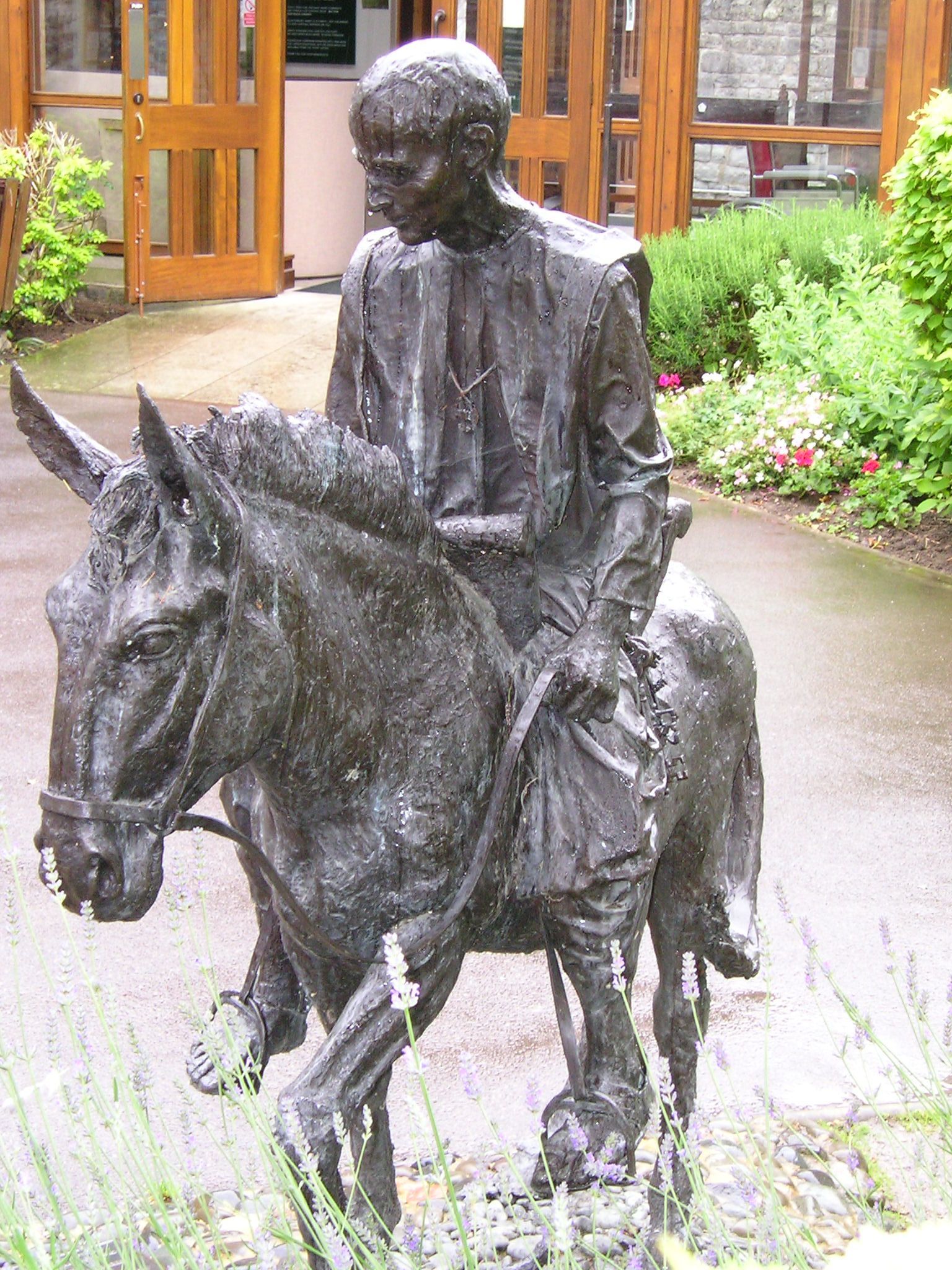
The Via Francigena follows the return route taken by Archbishop Sigeric from Rome to Canterbury in 990. This is a short introduction from my PhD research into Sigeric’s works and days, his career from monk of Glastonbury to Archbishop of Canterbury, and his role as a senior advisor to the king, Æthelred Unræd, or ill-advised (known today as Æthelred the Unready).
Sigeric’s policy of offering financial inducements for Viking raiders to return home, only for raids to resume the next summer, has earned him a reputation for poor judgment, leading England into impoverishment and provoking the return of Viking attacks. Only recently has this view been challenged, where new insights into his approach to negotiation, and the limited scope of his options, have demonstrated that ‘buying off’ the invaders was not such a poor choice after all.
But who was this man Sigeric “venerable in appearance and deed” as he was called later in life? There are only a few scraps of information about his childhood and education at Glastonbury Abbey and his subsequent rise through the ranks of the Church. We know nothing of Sigeric’s family circumstances. He may have come from a farming background, his family based locally, but with little wealth or prominence in the community. From Sigeric’s subsequent career it’s probable that the Abbot of Glastonbury, Dunstan (later archbishop and saint), knew him well and aided his promotion.
Sigeric became Abbot of St. Augustine’s Abbey in Canterbury in 980, shifting from rural Somerset to the great ecclesiastical centre where Dunstan was now archbishop. It was a time of upheaval and uncertainty across the country, punctuated, particularly in the south and east, by brutal attacks by Viking raiders.
A raid on the island of Thanet in 980 brought this threat close to home. As Abbot of St Augustine’s Sigeric had responsibility for the monastery of Minster-in-Thanet and it must have been a major undertaking to manage the relocation of the Abbess Leofrun and her religious sisters to Canterbury, where they could settle and worship in peace.
The Anglo-Saxon Chronicle (ASC) of 865 records that the people of Kent had offered the Vikings money to try and secure their safety. There followed more than a hundred years of localised negotiation with the raiders, involving a piecemeal, and expensive, buying-off of whoever seemed most biddable. Sigeric’s later attempt to negotiate a national, written and lasting settlement with the Viking leadership should be understood in this context.
Sigeric’s abbacy took place during the development of a new style of writing, a national script. While we may never be entirely sure of his promotion of the beautifully flowing and readable new script, as Abbot of St Augustine’s he must have sanctioned its use in the new books being produced in the abbey’s scriptorium. He also managed the economic growth of St Augustine’s as it acquired, amongst other holdings, the Minster-in-Thanet land on the (then) island. Later the monastery was listed as owning most of the island, plus a small fleet of ships for trading between London and northern France.
In 985, Sigeric became Bishop of Ramsbury, now a small village in rural Wiltshire, but in the tenth century a centre for the bishopric, encompassing the rich farming counties of Wiltshire and Berkshire. Travelling around the bishopric was no doubt an important part of his responsibilities allowing time to discuss political, ecclesiastic and economic innovations, events at court and within the Church hierarchy, as well as the spiritual health of the various communities.
Sigeric became Archbishop of Canterbury on the death of Aethelgar in February 990. A letter to Sigeric probably from the Abbot of Glastonbury, Aelfweard, sending good wishes for his new position, mentions approvingly that the new archbishop had not purchased his position with gold ‘as is the custom of many’. Sigeric appears to have become archbishop on merit, at least according to the abbot of his monastic alma mater.
Sigeric’s first task in early 990 was the journey to Rome to receive his pallium from the Pope. His well-known journey would probably have passed with little notice, apart from a short entry in the ASC Canterbury manuscript dated 989 (for 990). Archbishops had been travelling to Rome to collect their scarf of office for at least 150 years. The comment in the Chronicle was therefore hardly noteworthy, except that, in a remarkable decision to document the travel, the journey back from Rome was captured by a scribe travelling with the party.
There were major problems at Canterbury at that time, with Viking raids, relations with the King and the efforts to reform the Church, so the decision to embark on a difficult journey may have been hard to make, especially for a churchman in late middle age. Given that the collection of the pallium was not obligatory, it seems that this journey may have been primarily of political and performative significance.
It is not known whether Sigeric negotiated on behalf of the King (or Pope) when he travelled to Rome in 990 but given the range of monasteries and other Church establishments he stayed in across the continent, it would not be too far-fetched. He would certainly have been able to gather information or carry letters from the King with whom he was closely connected.
For Sigeric it may have appeared as a personal test of faith as he and his retinue waded through the Alpine snow and ice over the Saint Bernard Pass in spring. Ecclesiastical politics and the delivery of gifts of money from England to Rome, plus letters to and from the leaders of Church and state were intertwined with practical considerations. Food, accommodation and the friendliness or otherwise of the local population must have been as much part of the journey as today.
Sigeric would have been aware he was on a ‘well-trodden path’, traversed by kings and nobles, pilgrims, monks and scribes for hundreds of years, making it a physical and meditative ritual lasting many weeks. The travel-writing scribe carefully listed the 23 churches in Rome visited by Sigeric most of which had dedications to the Virgin Mary, Sigeric’s most venerated saint. Several others held the relics of saints with links to England - even a senior member of the Church needed to be close to them to truly worship at these holy places.
Political and diplomatic duties were fulfilled at the ceremonial presentation of the pallium from the hands of Pope John XV himself, and a midday meal with him at the Lateran Palace. The archbishop may have been invited to celebrate Mass “at the altar of St Peter” as Aelfric, his successor did. No doubt funds from England were handed over, and cordial relations with the head of the Western Christian church were reinforced. But after visits to all 23 churches he wished to see, from a total of at least 117 in Rome at that time, and no doubt the collection of a few relics to take back to England, Sigeric must have felt the call to return to his new role in Canterbury as soon as he could.
Sigeric was Archbishop of Canterbury from February 990 until his death in October 994 – a time of increasingly fierce fighting against Viking raiders. Defeat of the Anglo-Saxons in 991 at the Battle of Maldon led to the first payment of ‘a tax’ paid to the Danish men of 10,000 pounds of silver. The ASC for 991 pointedly states that “Archbishop Sigeric decided on the decision.”
This policy was not new - in the late ninth century King Alfred had resorted to buying peace with the Danes – but long-term it was not successful. In late 993, a large Viking army led by Olaf Tryggvason and Svein Forkbeard sailed up the Thames and were driven back from London only after much bloodshed. The King decided to purchase peace again, but this time, perhaps counselled by Sigeric, he negotiated a more complex deal, involving sacred and spiritual aspects which brought Olaf into the Christian faith. The payment (gafol) this time was 16,000 pounds and allowed the Viking army to overwinter in Southampton and the Isle of Wight, fully provisioned by the King. This new plan meant that instead of using the respite gained by the payment to build and provision their own ships to fight the enemy, the English were offering the Vikings the chance to (continue to) stay in England, receiving pay and provisions, and join with the English to defend the country, in effect becoming King Æthelred’s mercenaries. Was this an idea from Sigeric, reflecting his role as a peacemaker and Christian leader, a plan to ‘turn swords to ploughshares’ and stop the violence against the English?
This treaty involved solemn, sacred vows to renounce violence and Sigeric must have hoped that he had finally been able to acquire a lasting peace. When Sigeric died on 28 October 994 and was buried at Christ Church, the mercenary army were protecting the coast and raiders from the east were turning their attentions to Saxony and other easier targets. For now, England could enjoy a short time of peace, and those Vikings who wished to settle in England had the opportunity to turn away from raiding to a more peaceful existence.
Costen, Michael. 1992. "Dunstan, Glastonbury and the Economy of Somerset in the 10th Century." In St. Dunstan, His Life, Times and Cult, edited by Nigel Ramsey. Woodbridge: Boydell Press.
Keynes, Simon. 1980. The diplomas of Aethelred 'the Unready' 978 – 1016, a study in their use as historical evidence. Cambridge: Cambridge University Press.
Swanton, Michael. 2000. The Anglo-Saxon Chronicles. Translated by Michael Swanton. Edited by Michael Swanton. London: J.M.Dent.
Roach, Levi. 2016. Aethelred the Unready. Newhaven, CT: Yale University Press.