Arundel & Brighton: The Cathedral Church of Our Lady and Saint Philip Howard
 CATHEDRAL WEBSITE
Address
London Rd, Arundel, BN18 9AY
Description
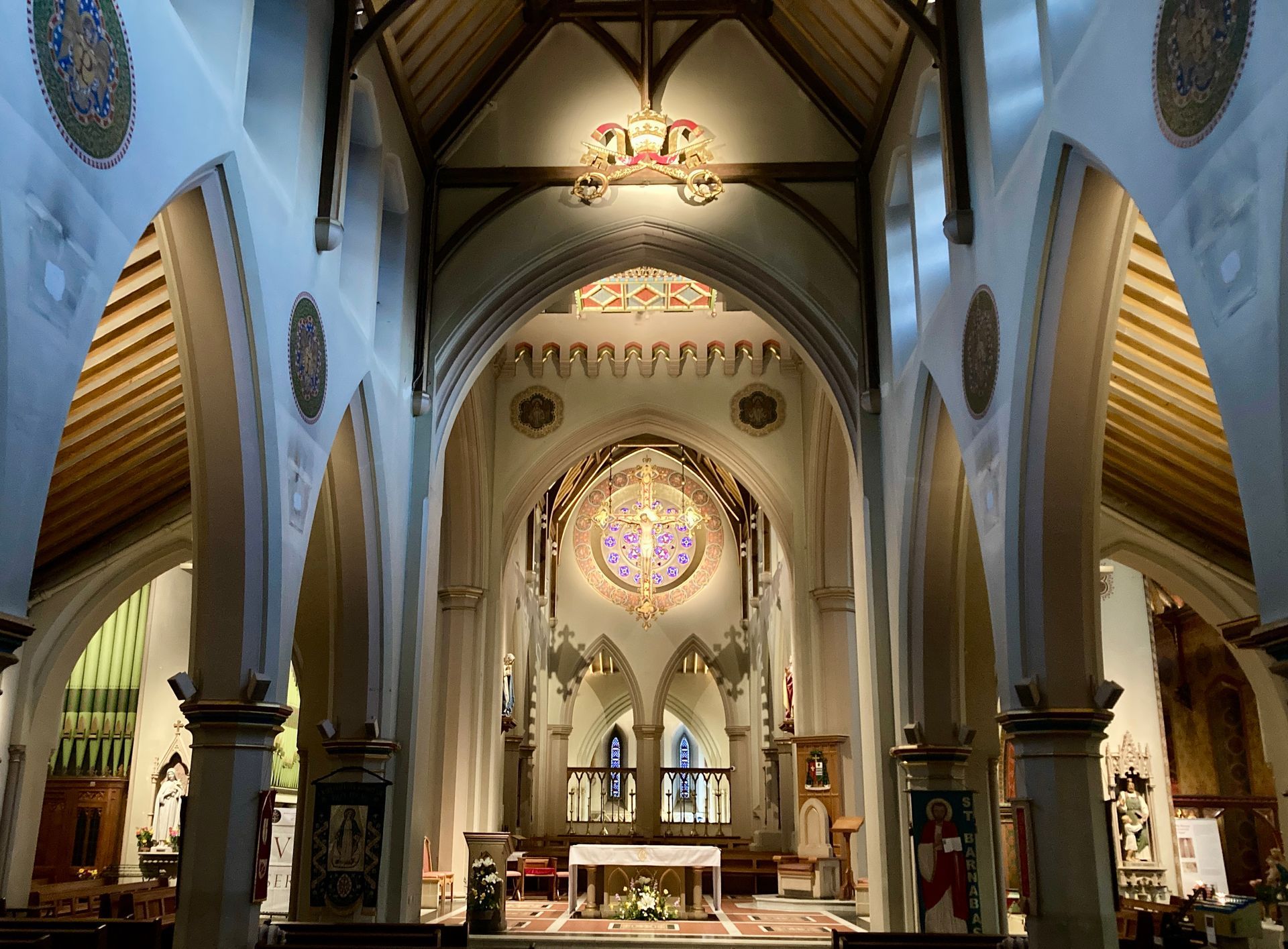
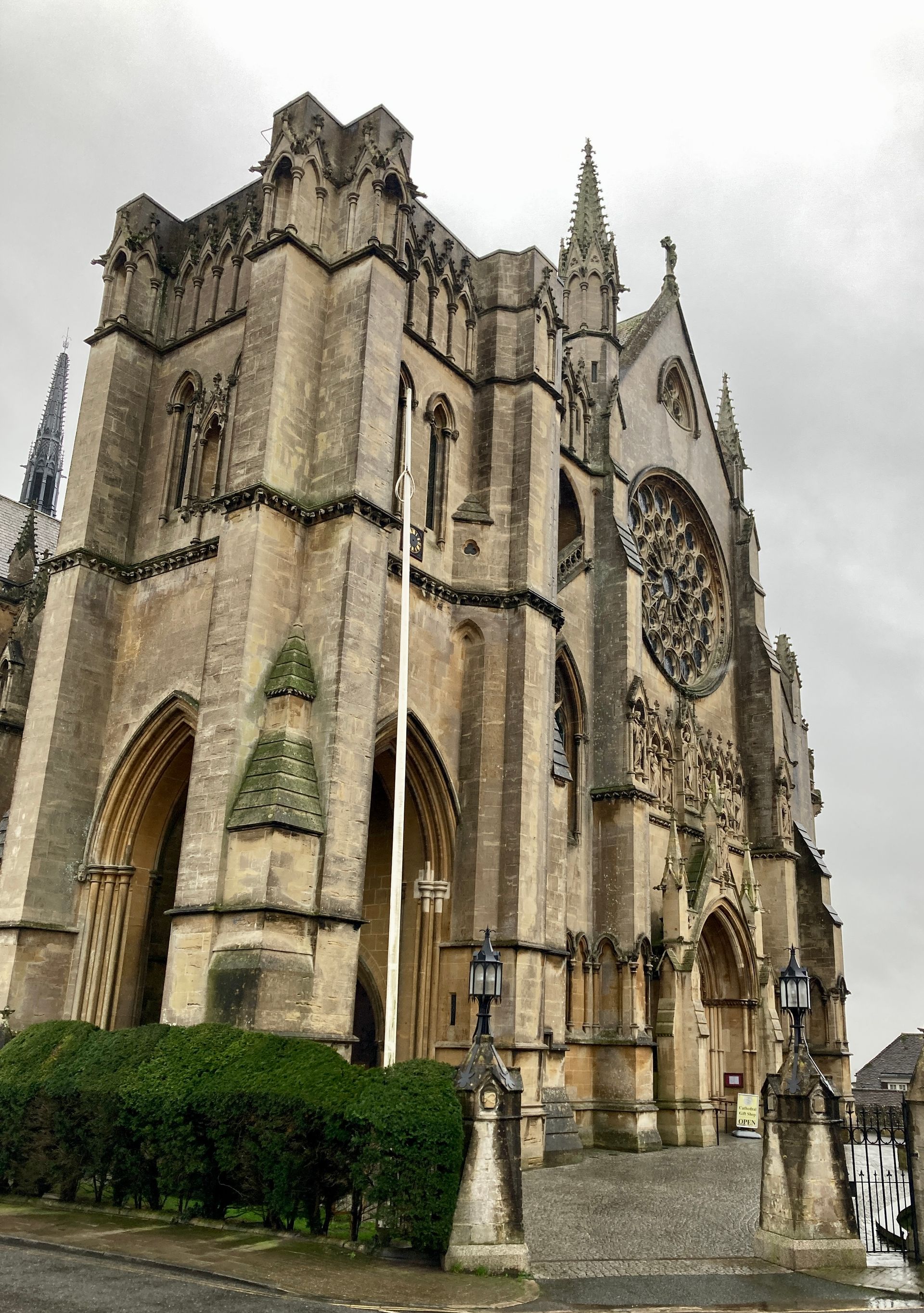
The Cathedral is an impressive neo-Gothic Victorian building, imposingly situated in the centre of Arundel next to the Castle. It was built by Henry, fifteenth Duke of Norfolk, to celebrate his coming of age in 1868.
The shrine of St Philip Howard is in the north transept of the Cathedral. Philip Howard was the 13th Earl of Arundel (1557–1595). In 1585 he was charged with being a Roman Catholic, quitting England without leave and participating in Jesuit plots, and was sent to the Tower of London. In 1589 he was tried for high treason, found guilty and condemned to death by being hanged, drawn and quartered. Queen Elizabeth never signed the death warrant but Howard was not told this and so lived in constant fear of a terrible execution. He died of dysentery having spent ten years in the Tower. He was canonised by Pope Paul VI in 1970, as one of the Forty Martyrs of England and Wales.
WALKING PILGRIMAGE FROM THE CATHEDRAL
The Way of Our Lady of Consolation starts at the Cathedral. More details here.
Birmingham: The Metropolitan Cathedral Church and Basilica of Saint Chad
 CATHEDRAL WEBSITE
Address
St Chad’s Queensway, Birmingham B4 6EU
Description
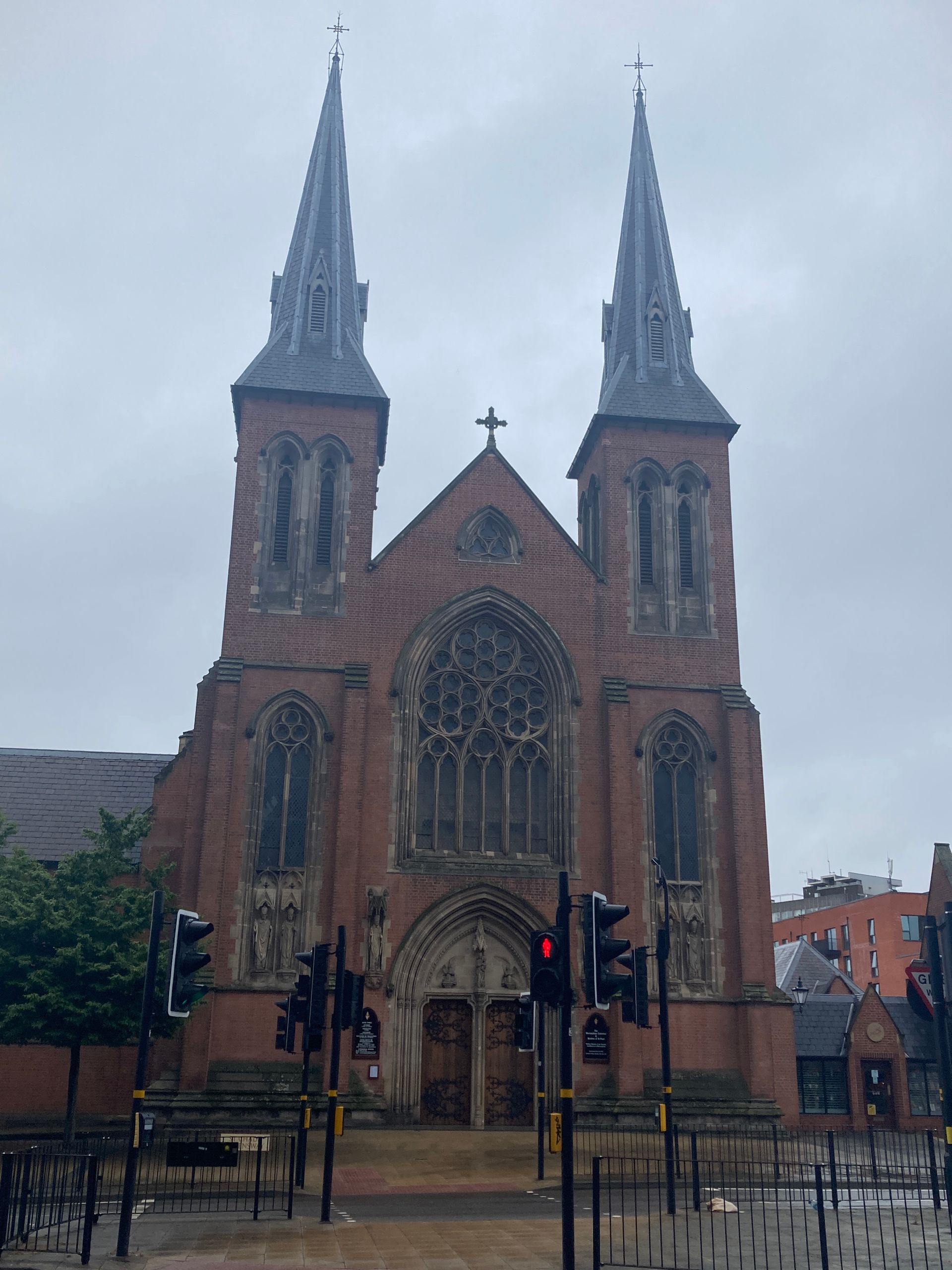
The Cathedral was a major early work by AWN Pugin and replaced an early C19 church which was inadequate for the growing Catholic population of the city. It consecrated in 1841, elevated to cathedral status in 1850 and became a minor basilica in 1941. It was brick built for economy in a German Gothic style.
A reordering in the 1960s resulted in the loss of Pugin’s rood screen but more recent redecoration has reinstated some of the colour and character of the interior. The Cathedral houses relics of St Chad and on the south side of the nave there is a C19 wooden statue of Chad, holding a model of Lichfield Cathedral.
WALKING PILGRIMAGE FROM THE CATHEDRAL
The St Chad's Way starts at the Cathedral. More details here.
Brentwood: The Cathedral Church of Saint Mary and Saint Helen
 CATHEDRAL WEBSITE
Address
28 Ingrave Road, Brentwood, Essex CM15 8AT
Description
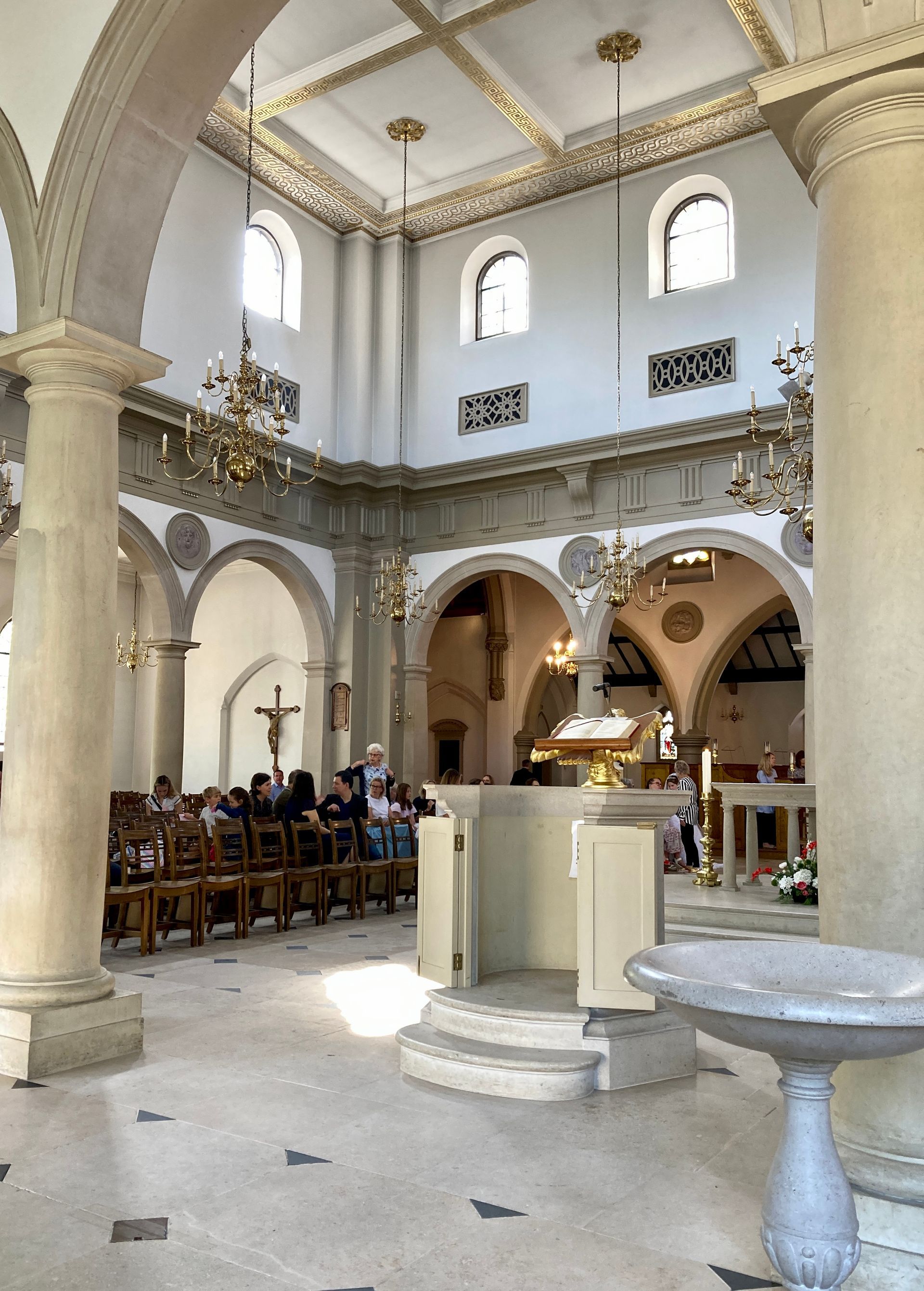
The Cathedral is the first Classical cathedral to be built in England since Wren’s St Paul’s. It was originally a neo-Gothic mission church built in the 1860s and raised to cathedral status in 1917.
It was considerably enlarged in the 1970s, but this addition was replaced in 1989-91 with a neo-Classical extension designed by Quinlan Terry, inspired by the early Italian Renaissance fused with the English Baroque of Sir Christopher Wren. Clear windows on all 4 sides mean that the cathedral is flooded with light at any time of the day giving an uplifting effect. There is a central altar designed for maximum congregational participation, in keeping with the liturgical reforms of Vatican II.
The rebuilt Cathedral was opened in May 1991 and in 2022 was listed as a Grade II giving it the national status of a ‘particularly important building of more than special interest’. The surrounding complex includes the original church and house of the 1830s and a former convent building of the 1870s, also remodelled by Terry and landscaped to contribute to the Brentwood town centre conservation area.
WALKING PILGRIMAGE FROM THE CATHEDRAL
The Way of Our Lady of Light starts at the Cathedral. More details here.
The St Peter's Way starts at the Cathedral. More details here.
Cardiff-Menevia: The Metropolitan Cathedral Church of Saint David
 CATHEDRAL WEBSITE
Address
38 Charles St, St Davids Centre, Cardiff CF10 2SF
Description
During penal times Catholics in Glamorgan were served by priests resident at Llanarth Court, Monmouthshire, and by itinerant priests, mostly Jesuit. Many recusants were imprisoned or died in Cardiff gaol. In the C18 Catholics were served from Pyle, then Bristol and Usk. By 1830 the Catholic population of Cardiff had grown and in 1842 a church was opened on Bute Terrace.
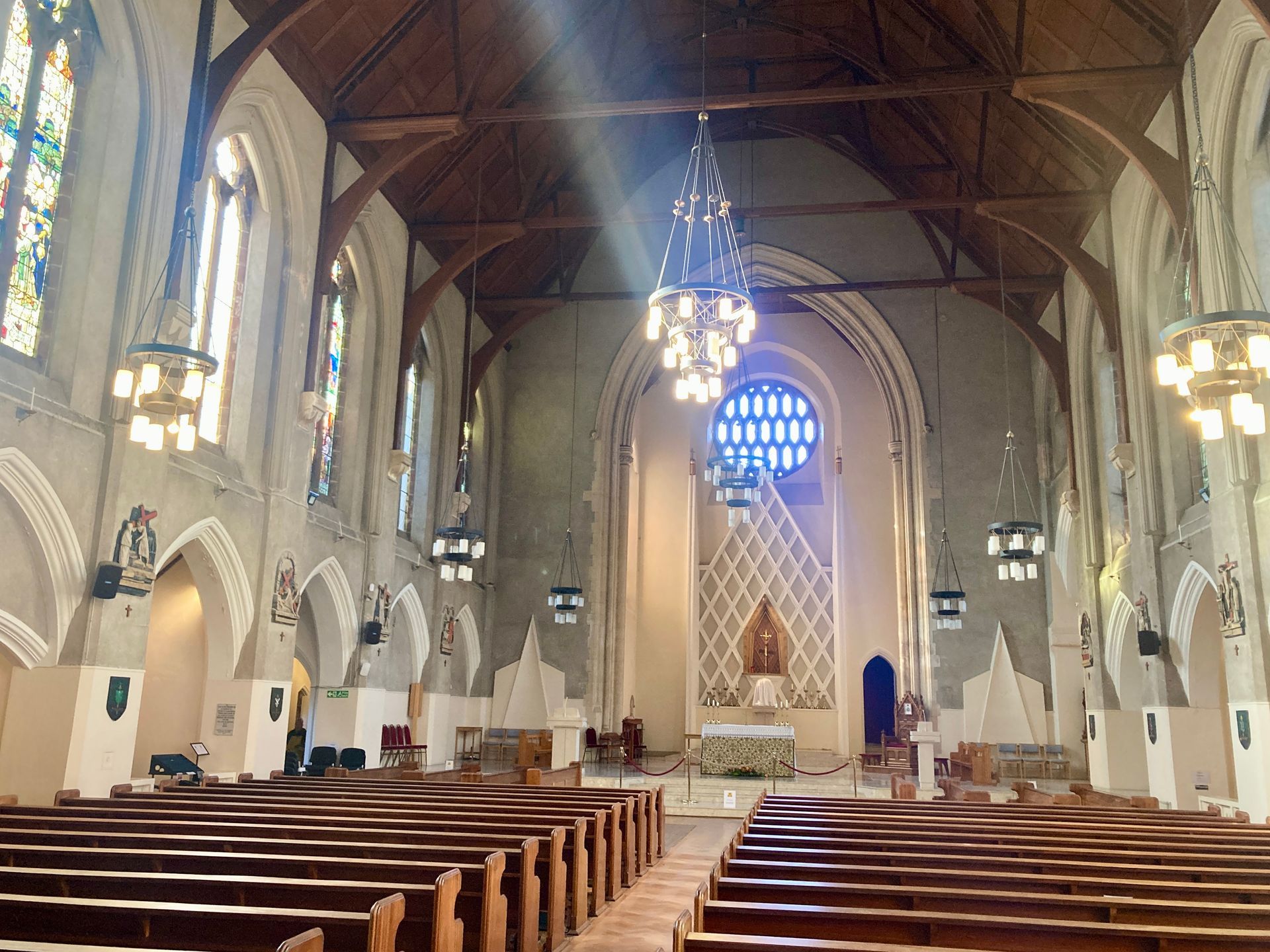
In 1882 a new church dedicated to St David was built on Charles Street to designs by Pugin & Pugin. It was built without aisles or a chancel arch, to afford an unobstructed view of the high altar and reredos. In 1897 the interior walls were painted with murals and new stained-glass windows installed. In 1920 St David’s became the Cathedral of the Archdiocese of Cardiff, created in 1916.
In 1941 the Cathedral was badly damaged by incendiary bombs and was not reconstructed until 1953. Pugin & Pugin’s original designs for the bell stage of the tower were realised and the Cathedral was restored and refitted in a plainer modern style. Many of these furnishings did not survive later reordering but there is a fine ceramic Stations of the Cross and good late C19 & early C20 stained glass.
In 2022 Pope Francis announced that the Archdiocese of Cardiff and the Diocese of Menevia would be united. The Archdiocese of Cardiff – Menevia was formed and the Metropolitan Cathedral became Co-Cathedral with St Joseph’s Cathedral in Swansea.
WALKING PILGRIMAGE FROM THE CATHEDRAL
The Way of Our Lady of the Valleys starts at the Cathedral. More details here.
Cardiff-Menevia: The Co-Cathedral Church of Saint Joseph
 CATHEDRAL WEBSITE
Address
Convent Street, Greenhill, Swansea, SA1 2BX
Description
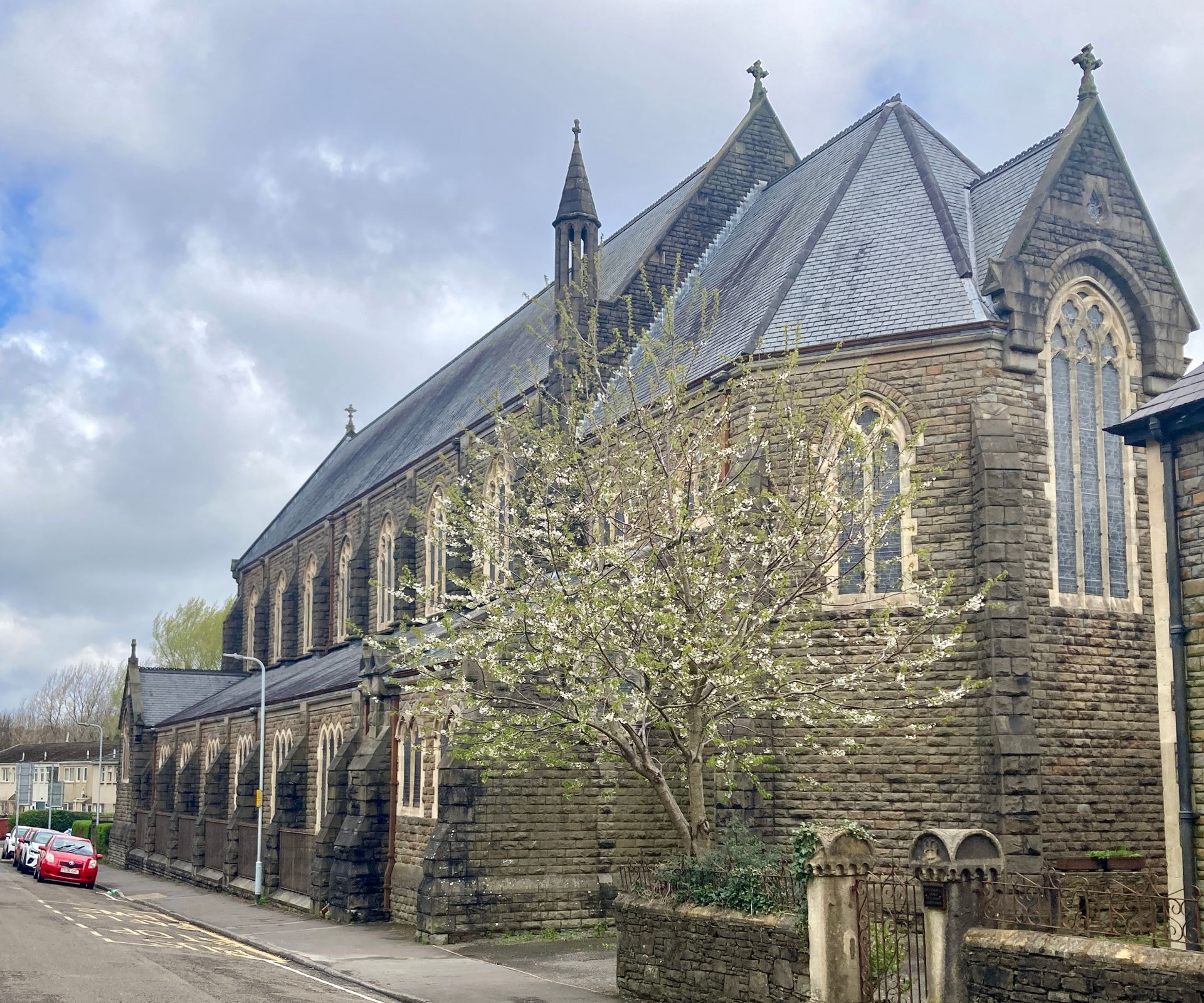
The district of Greenhill was originally part of the mission territory of St David’s Church, in the centre of Swansea. A simple church, which was opened in 1866 on the site of the present parish/cathedral hall. In 1873 the Swansea mission was given over to the Benedictine Order and St Joseph’s became a separate mission. Canon Richards raised money for a handsome new church, designed by Peter Paul Pugin in the Geometrical Gothic style. Building began in 1886 and the church was opened in 1888. On 7 December 1919 the church was consecrated, and a Celtic memorial cross to the memory of parishioners who died in WW1 was unveiled. The Benedictines served the parish until 1932, when it passed to the Diocese of Cardiff.
In 1978 diocesan boundaries were revised and St Joseph’s became the cathedral of the Diocese of Menevia. In 2024 Pope Francis created the Archdiocese of Cardiff-Menevia by merging the Archdiocese of Cardiff and the Diocese of Menevia. St Joseph's became the Co-Cathedral of the new Archdiocese.
WALKING PILGRIMAGE FROM THE CATHEDRAL
The Way of St Anthony's Well starts at the Cathedral. More details here.
Clifton: The Cathedral Church of Saints Peter and Paul
 CATHEDRAL WEBSITE
Address
Clifton Park, Bristol, BS8 3BX
Description
In October 1834 the foundation stone was laid for a large new church in the neo-classical style in what is now Park Place, Clifton. The plan was over ambitious and the site a disaster because of a nearby disused quarry. The unfinished building was abandoned by 1838. Instead a smaller chapel dedicated to St Augustine was built alongside in 1842, from which the Clifton mission originated. A church to a smaller design, dedicated to the Holy Apostles, was opened in 1848. In 1850, with the restoration of the Catholic hierarchy, this became the provisional cathedral (pro-cathedral) of the Diocese of Clifton.
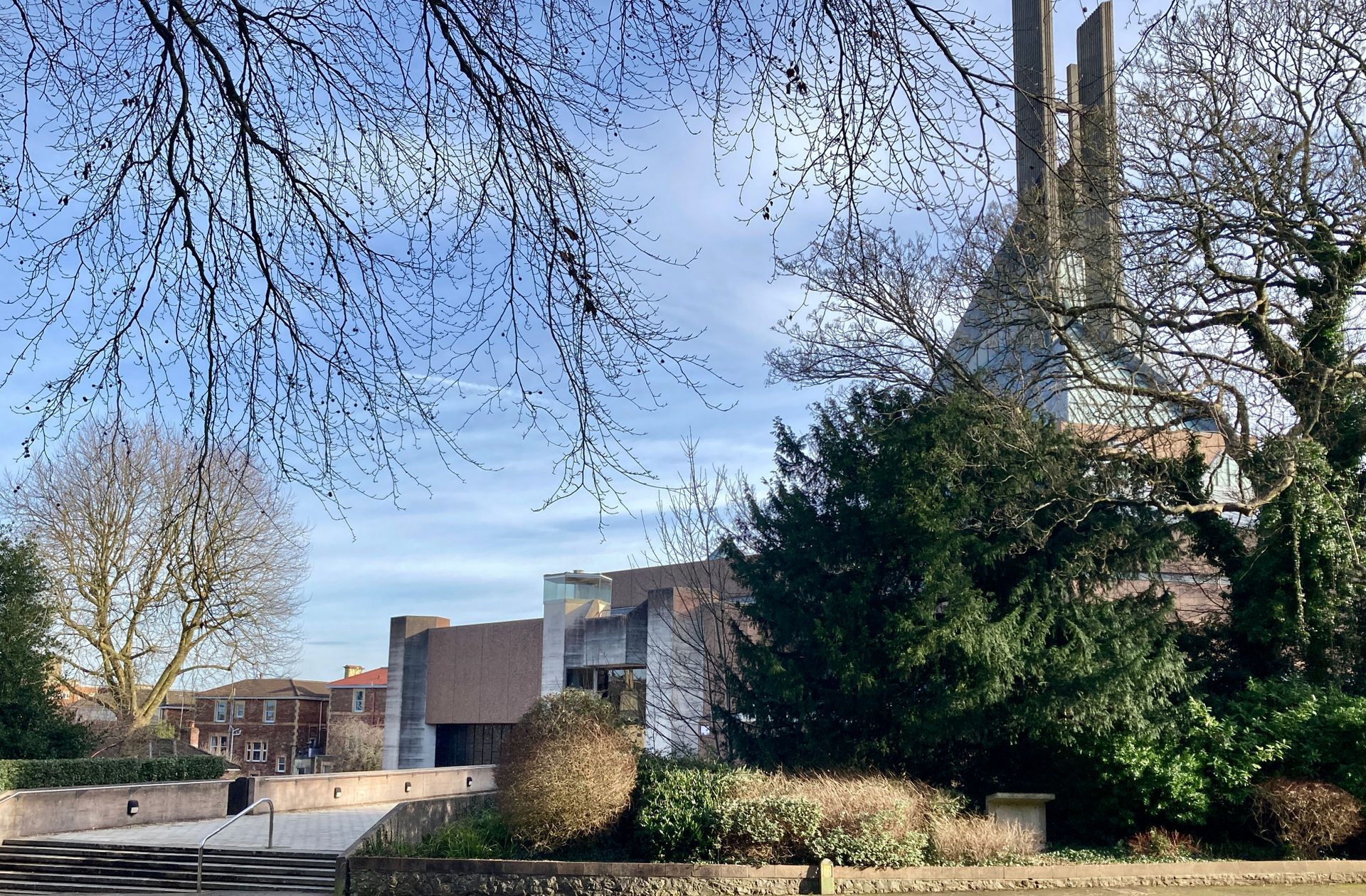
In 1964 an architect’s report concluded that extensive works were needed to stabilise the foundations. In 1965 a major donation allowed for the possibility of building a purpose-built cathedral on a more convenient site in Clifton. Work began in March 1970 and the Cathedral was consecrated in 1973. From the outside it is perhaps an alarming concrete intrusion into genteel Clifton, but inside it is an extraordinary space, airy, plain and light. It was the first cathedral to be conceived and built in England after the Second Vatican Council and 1,000 people can participate in the liturgy and all be close to the high altar. The concrete stations of the cross begin with the Last Supper, take us through the events of Jesus’s passion and death as recorded in the scriptures, and end with the risen Christ breaking bread with his disciples.
WALKING PILGRIMAGE FROM THE CATHEDRAL
The Whiting Way starts at the Cathedral. More details here.
East Anglia: The Cathedral Church of Saint John the Baptist
 CATHEDRAL WEBSITE
Address
Unthank Road, Norwich. NR2 2PA
Description
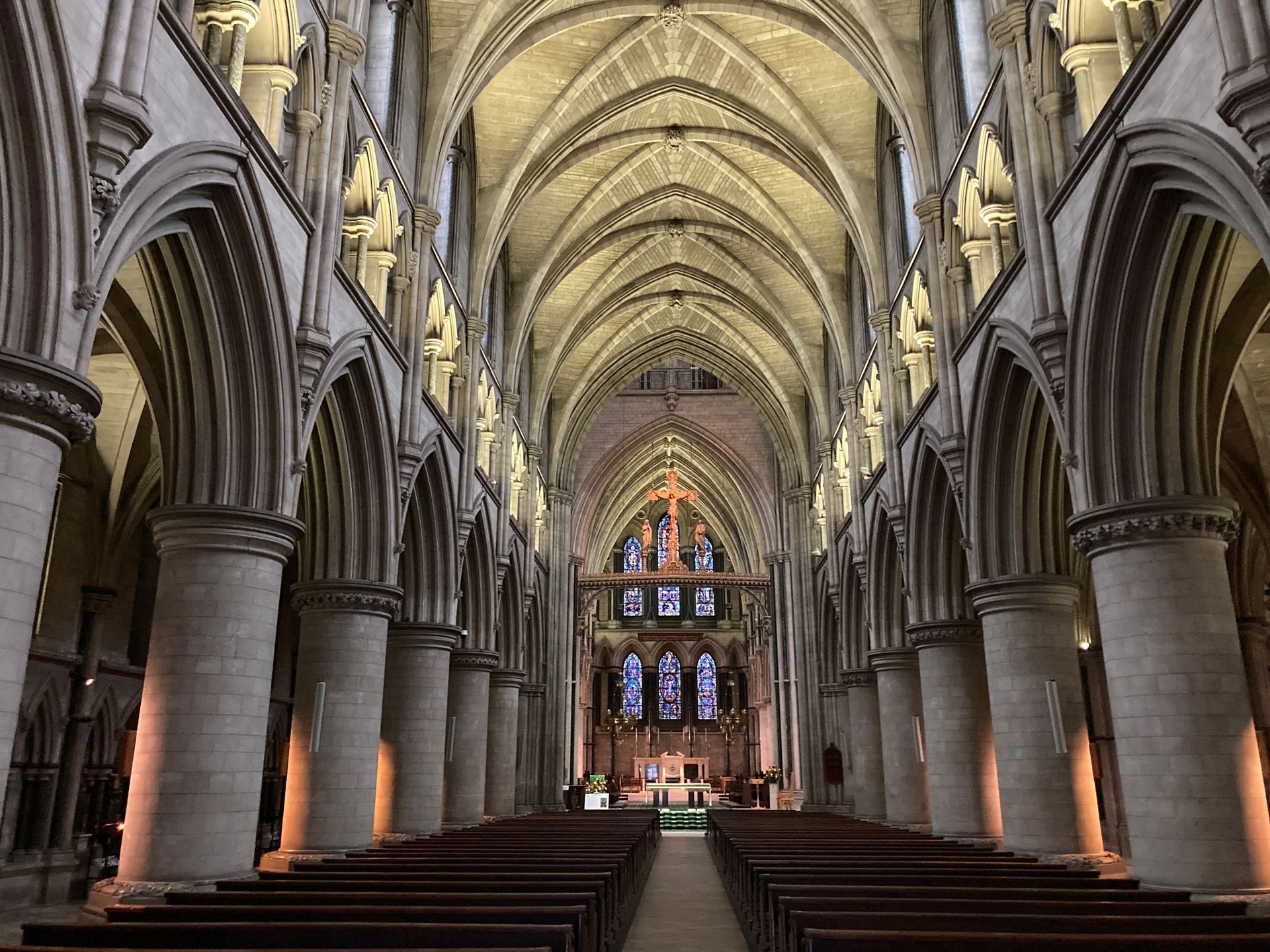
From the mid C17 Jesuits were active in the city and had a chapel which was destroyed in anti-Catholic riots of 1688. The Jesuit mission continued at other sites, later at a chapel on Willow Lane. Before the Catholic Relief Act of 1791, Catholics could also worship in the Duke of Norfolk’s Palace chapel, but when in 1791 a Duke succeeded who conformed to the Church of England, the parishioners purchased land and built a chapel dedicated to St John the Baptist.
In 1878 the 15th Duke of Norfolk offered to build a Catholic church in Norwich to fulfil a vow he had made at Lourdes. The site of a former gaol was bought, and George G Scott Jnr was appointed to build a great church in the Early English style. Due to his poor health the work was completed by his brother John Oldrid Scott. The nave was opened in August 1894 with a temporary east wall. Work continued and in December 1910, the Church was opened and dedicated to St John the Baptist.
In 1976 it became the Cathedral of the new Diocese of East Anglia. Today it is a truly impressive and moving place of worship in the Early English Gothic style.
WALKING PILGRIMAGE FROM THE CATHEDRAL
The Way of the Annunciation starts at the Cathedral. More details here.
Hallam: The Cathedral Church of Saint Marie
 CATHEDRAL WEBSITE
Address
Norfolk Street, Sheffield, S1 2JB
Description
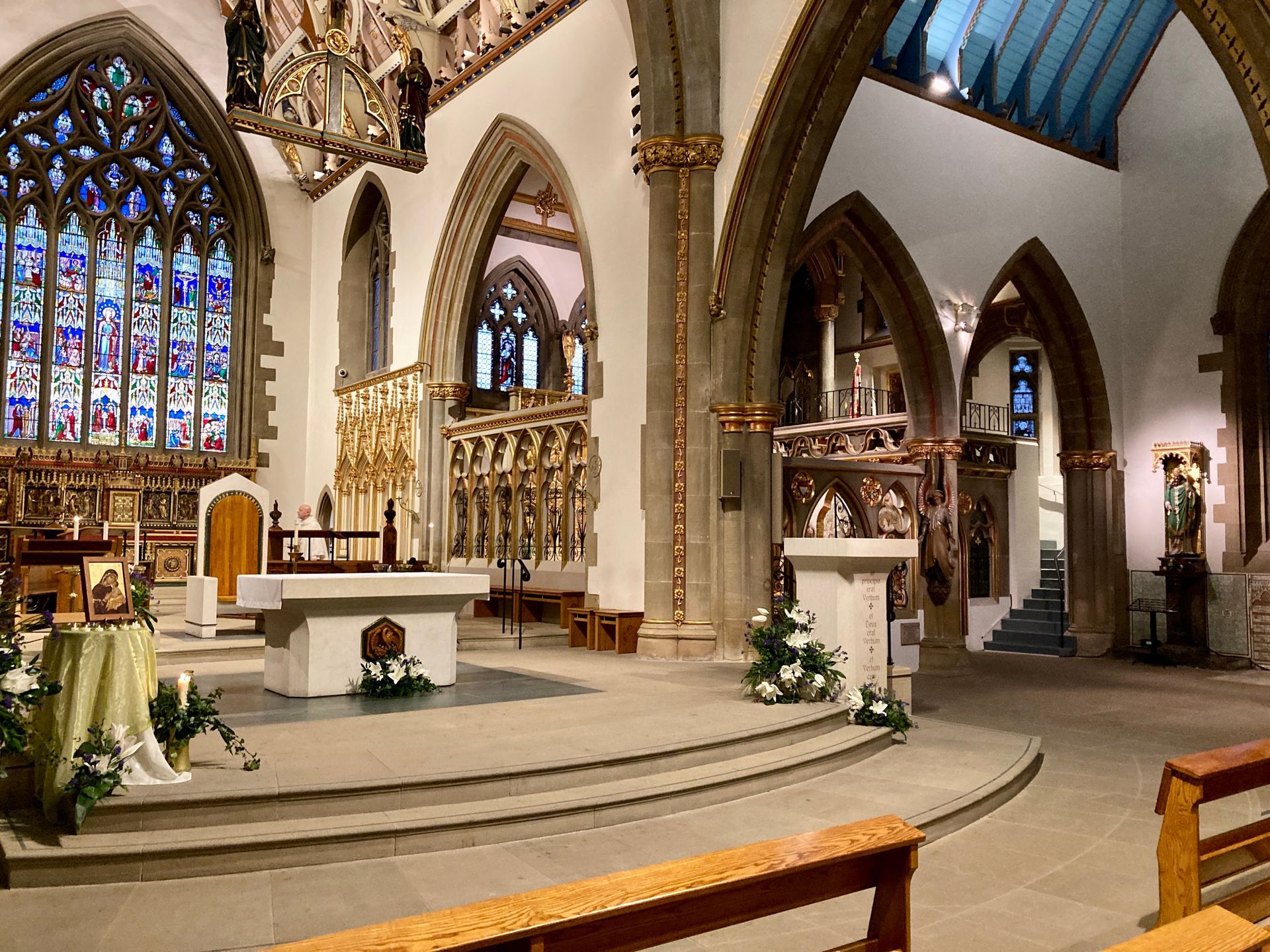
The Church of St Marie was opened in 1850, the year of the restoration of the Roman Catholic hierarchy in England and Wales. It is an airy and impressive building with fine furnishings, many of which were funded by the family of the Duke of Norfolk.
The church was raised to cathedral status in 1980, and in 1982 a window was installed in the south transept (on the R side of Church looking towards the altar) depicting Our Lady flanked by the Padley martyrs, Nicholas Garlick and Robert Ludlum.
In 2012 the Cathedral was sympathetically reordered.
WALKING PILGRIMAGE FROM THE CATHEDRAL
The Padley Martyrs Way starts at the Cathedral. More details here.
Hexham & Newcastle: The Cathedral Church of Saint Mary
 CATHEDRAL WEBSITE
Address
Clayton Street West, Newcastle upon Tyne, NE1 5HH
Description
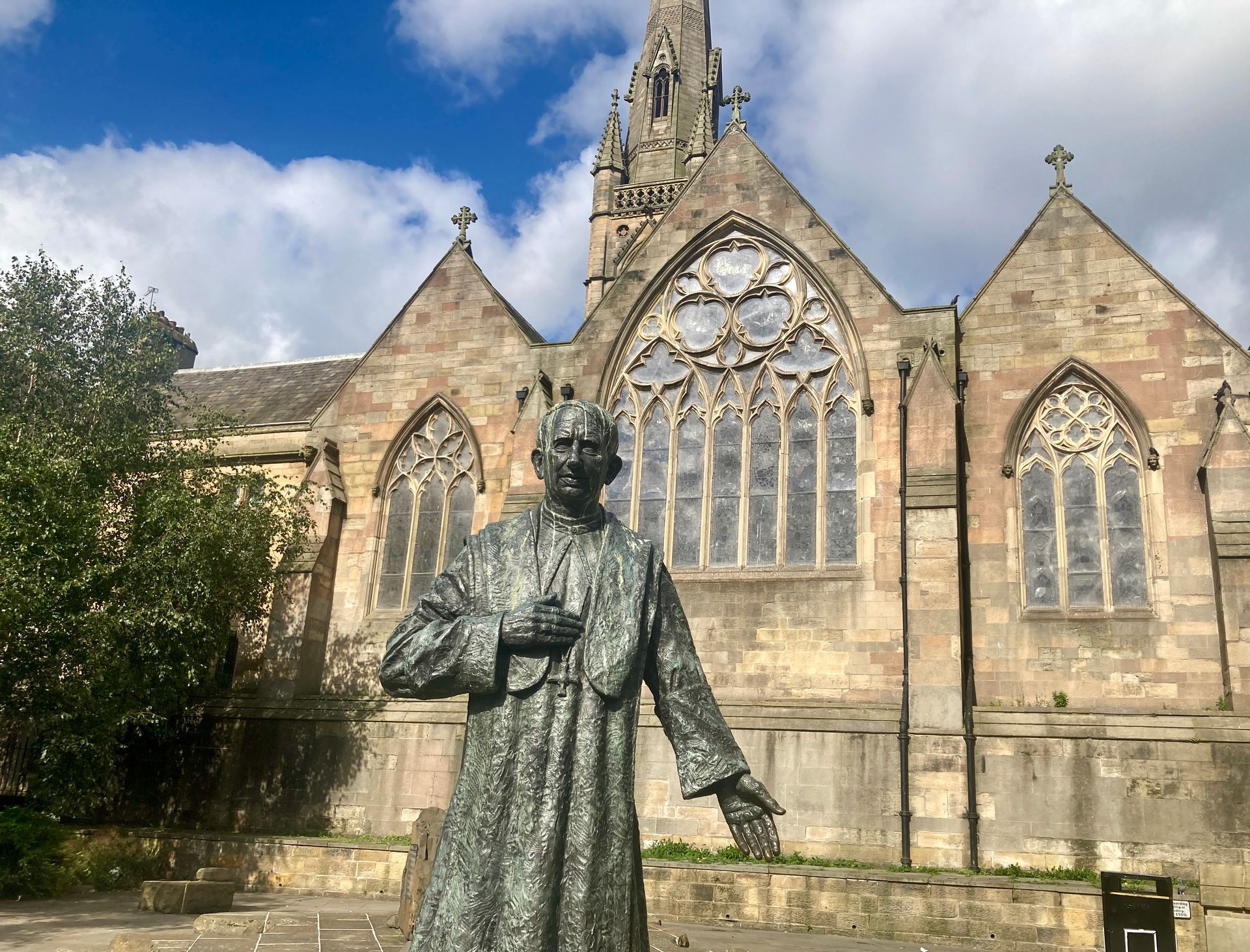
In 1838 Newcastle Catholics decided to endeavour to erect a ‘large and handsome church’, with capacity for 1,200. By 1842 £6,500 had been raised and a site purchased. A.W.N. Pugin, was commissioned to prepare designs, including a tower and spire, but the budget did not allow for these to be built immediately. The church was opened in 1844.
After the restoration of the hierarchy in 1850, St Mary’s became the cathedral of the new Diocese of Hexham (from 1861 Hexham and Newcastle). The cathedral was consecrated in 1860. In 1872 the upper stages of the tower and a spire were added. In 1894 the interior was enriched with stencil decoration. The cathedral suffered bomb damage in the WWII.
In 2002 the Cardinal Hume memorial garden was opened by Queen Elizabeth II.
WALKING PILGRIMAGE FROM THE CATHEDRAL
The Holystone Way starts at the Cathedral. More details here.
Lancaster: The Cathedral Church of Saint Peter
 CATHEDRAL WEBSITE
Address
Balmoral Rd, Lancaster, LA1 3BT
Description
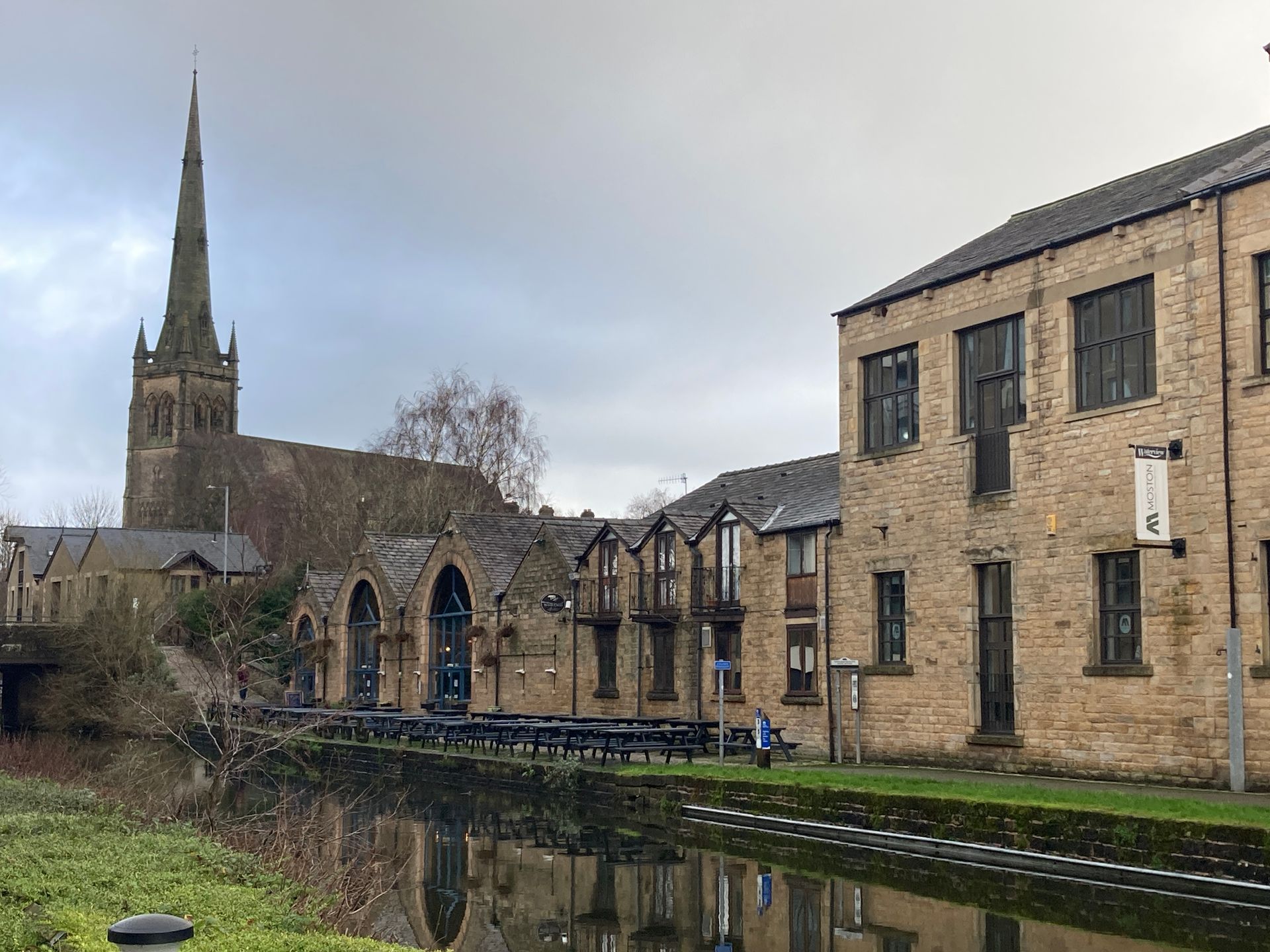
Lawful Catholic worship in Lancaster started with the building of a chapel (now the Palatine Hall) in Dalton Square in 1799. By 1847 this chapel had become too small for the growing congregation, and a 3-acre plot was bought at Greenfield. The school, convent and cemetery were built first. The new church was consecrated and dedicated in 1859. It is a fine building of warm buff stone with a tall steeple. The interior is light and well proportioned.
In 1924 the Liverpool diocese was divided, and St Peter’s became the Cathedral for the new Diocese of Lancaster.
WALKING PILGRIMAGE FROM THE CATHEDRAL
The Way of Our Lady of Fernyhalgh and St Alphonsa starts at the Cathedral. More details here.
Leeds: The Cathedral Church of Saint Anne
 CATHEDRAL WEBSITE
Address
Great George St, Leeds LS2 8BE
Description
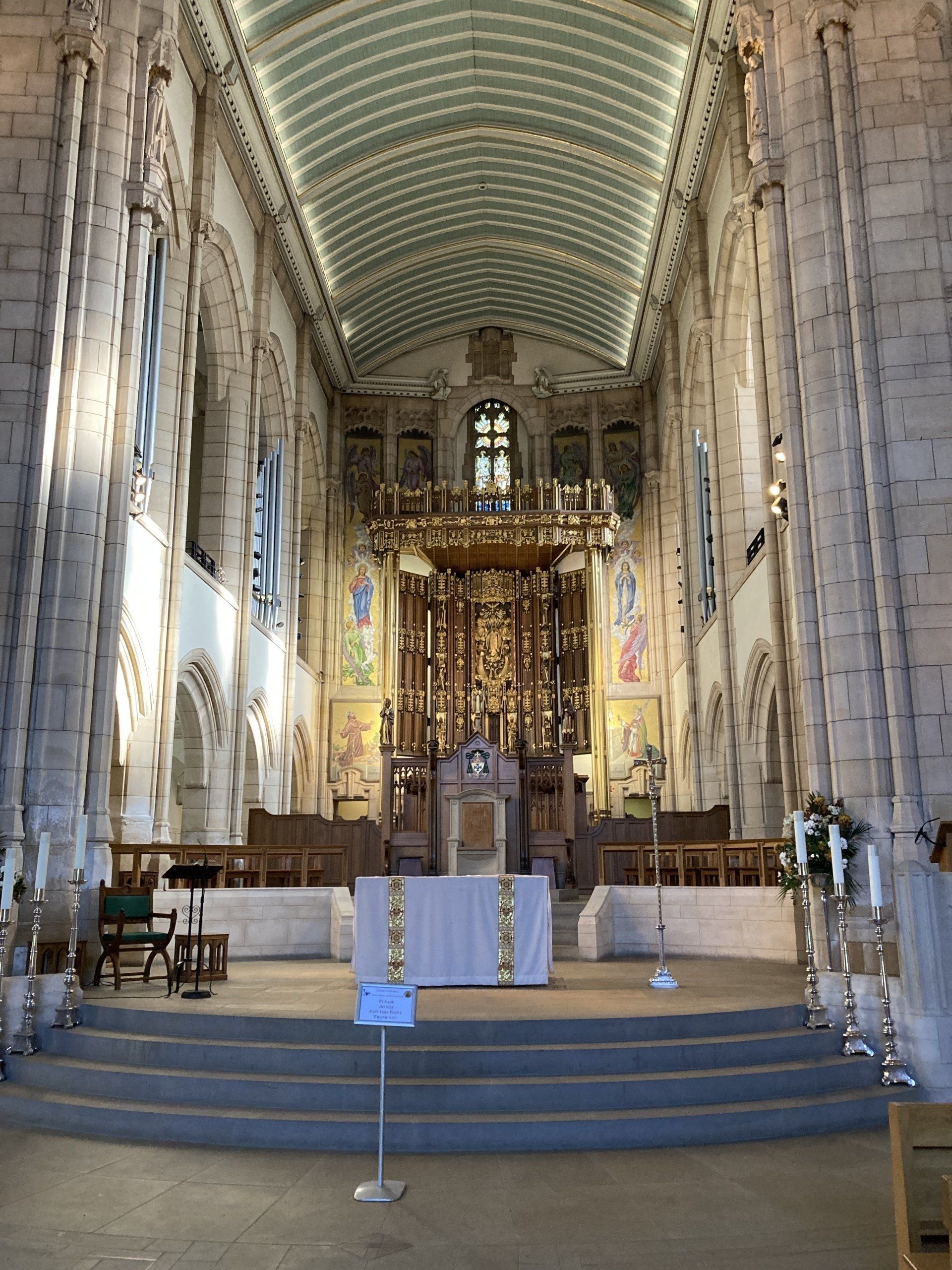
In 1838 St Anne's Church was built and it was granted cathedral status in 1878. In 1899 Leeds Corporation compulsorily purchased the cathedral and the Diocese accepted land from the Corporation next to the original site. The current Cathedral was designed in the Arts and Crafts Gothic Revival style with no transept because of the limited site. Building began in 1901 and the cathedral opened in 1904.
After renovation in 2005–2006 relics of Yorkshire martyrs, Blessed Peter Snow and Ralph Grimston, were placed in the altar.
WALKING PILGRIMAGE FROM THE CATHEDRAL
The St Wilfrid's Way starts at the Cathedral. More details here.
Liverpool: The Metropolitan Cathedral Church of Christ the King
 CATHEDRAL WEBSITE
Address
Mount Pleasant, Liverpool L3 5TQ
Description
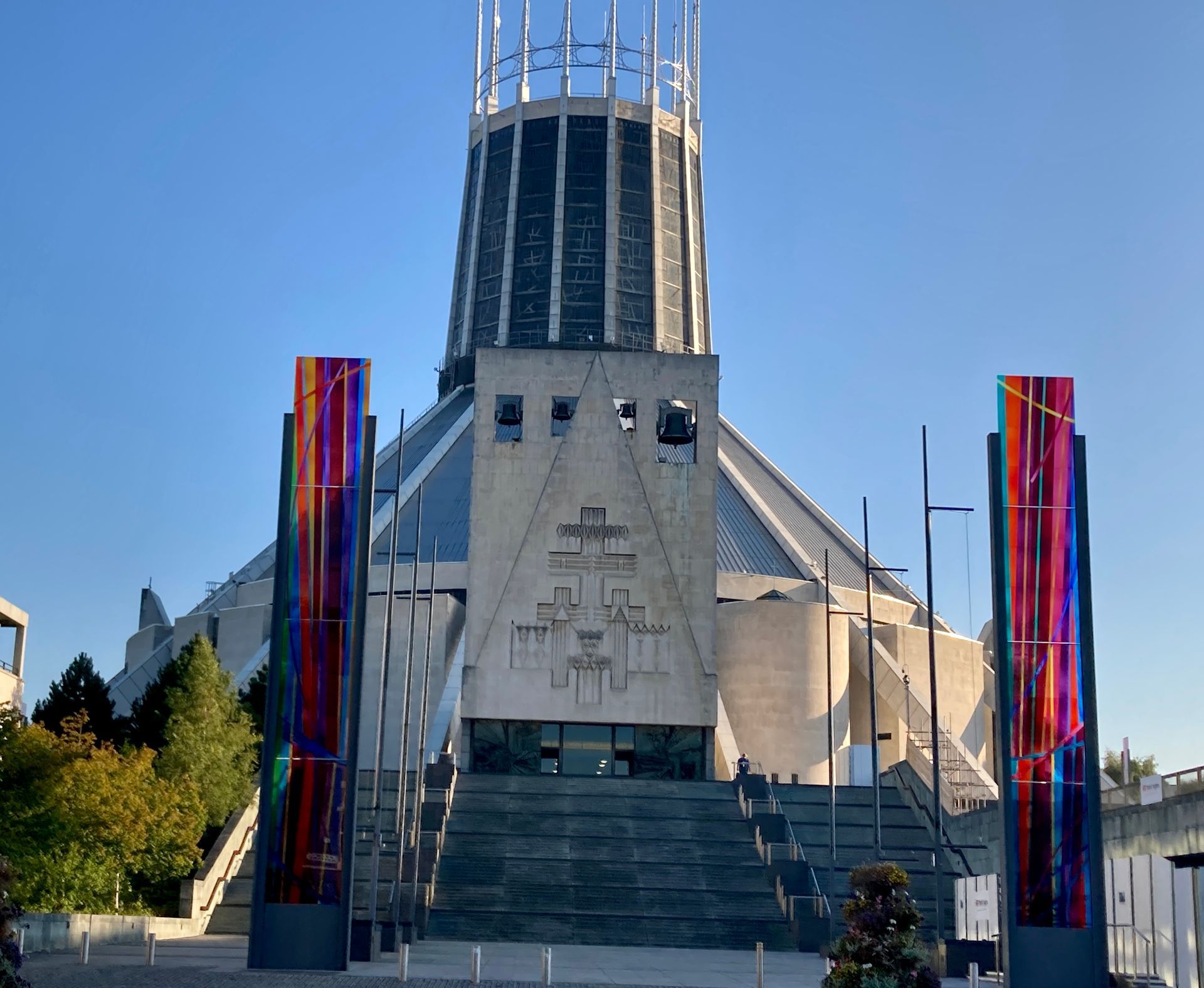
The Cathedral is recognised as one of the most important British buildings of the C20.
The crypt, designed by Sir Edwin Lutyens, is all that remains of Archbishop Downey’s grandiose scheme to eclipse Liverpool’s Anglican Cathedral and rival St Peter’s in Rome. Work started in 1933 and continued steadily until 1941, when the builders were needed for urgent war work. The crypt was completed in 1958 but the original plans for the superstructure were unaffordable.
A competition for a new design was held in 1959, which was won by Sir Frederick Gibberd. The Cathedral was completed in 1967. The interior is a single space, seating 2,000 people, with a ring of outer chapels between the buttresses. The sloping roof rises to a central funnel-shaped tower over the main altar filled with stained glass. The Cathedral was opened in May 1967, but the tight budget and revolutionary design led to major technical problems which were not resolved until 2003. Today the Cathedral is a stunning church, holding many fine pieces of modern British art.
WALKING PILGRIMAGE FROM THE CATHEDRAL
The Way of Blessed Dominic Barberi & St Edmund Arrowsmith starts at the Cathedral. More details here.
Liverpool: The Co-Cathedral Church of Saint Mary of the Isle
 CATHRDRAL WEBSITE
Address
Hill Street, Douglas, Isle of Man, IM1 1EG
Description
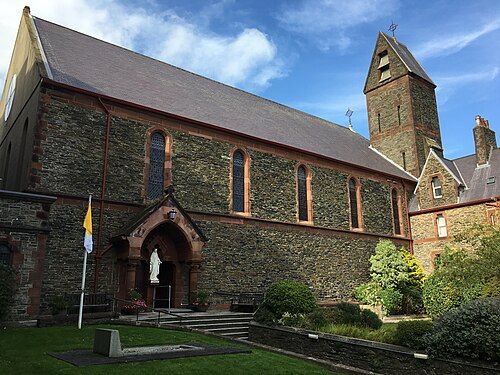
The first Catholic Chapel on the Island to be constructed after the Reformation was built by Father Miles McPharlan who was in post from 1803 to 1820. In 1826 a church of St. Mary was opened at Castletown, then the capital of the Isle of Man. Douglas gradually outgrew Castleton and in 1857 the foundation stone of a new, larger St Mary's in central Douglas was laid. The church opened for worship in 1859.
In 2022, as part of the late Queen Elizabeth's Platinum Jubilee celebrations, Douglas was awarded city status. Following this Pope Francis granted cathedral status to the Church of Saint Mary of the Isle. The Church is a co-cathedral within the Archdiocese of Liverpool with the Metropolitan Cathedral of Christ the King. It was the first Catholic co-cathedral in the British Isles.
WALKING PILGRIMAGE FROM THE CATHEDRAL
To be developed in 2026!
Middlesbrough: The Cathedral Church of Saint Mary
 CATHEDRAL WEBSITE
Address
Dalby Way, Coulby Newham, Middlesbrough, TS8 0TW
Description
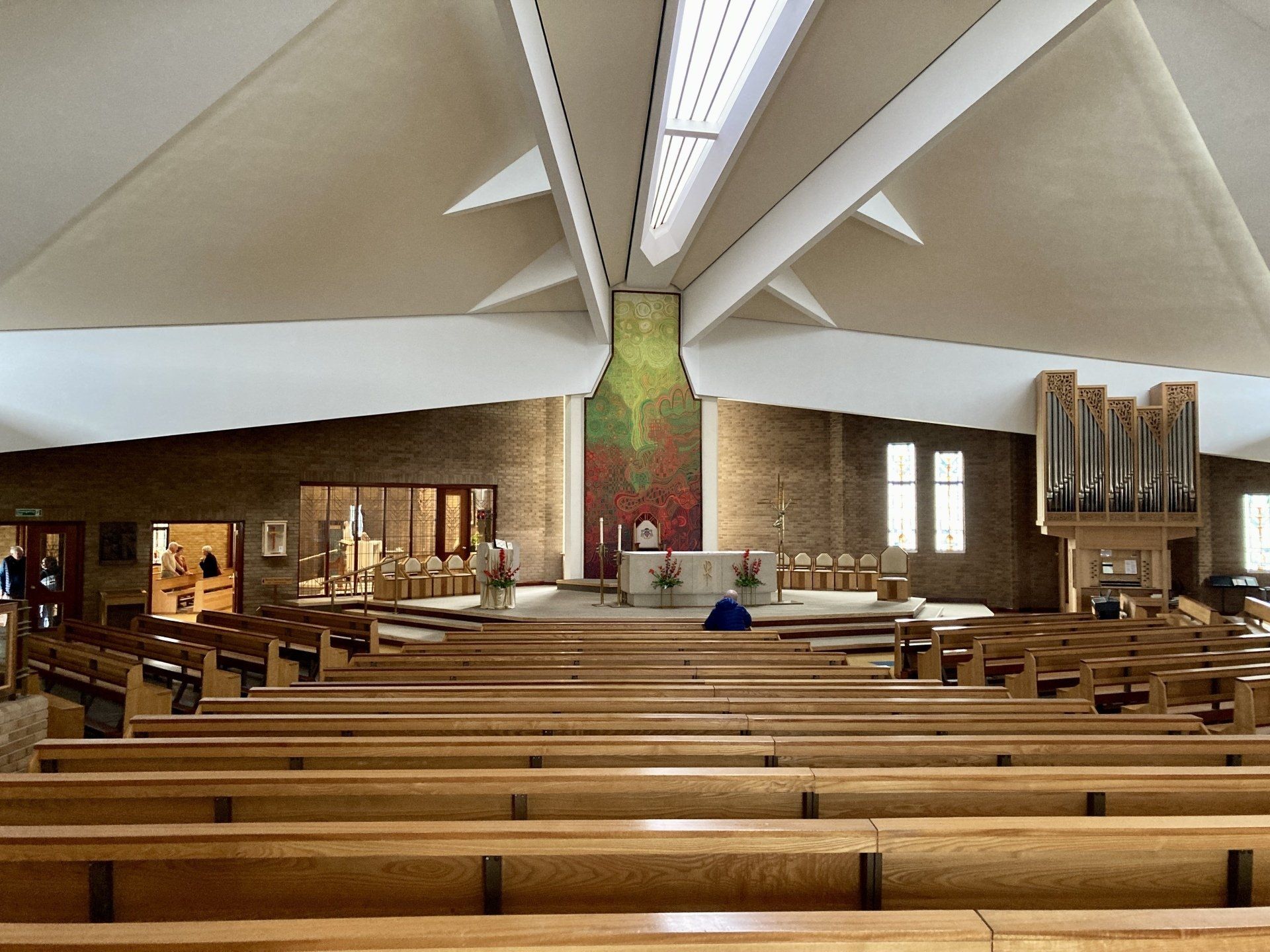
The Cathedral of St Mary is the mother church of the Diocese of Middlesbrough.
It is a low, brick building, constructed in 1987 and surrounded by out-of-town shops and busy roads. Inside the space is warm and welcoming and focussed on the high altar.
WALKING PILGRIMAGE FROM THE CATHEDRAL
The Way of Our Lady of Mount Grace starts at the Cathedral. More details here.
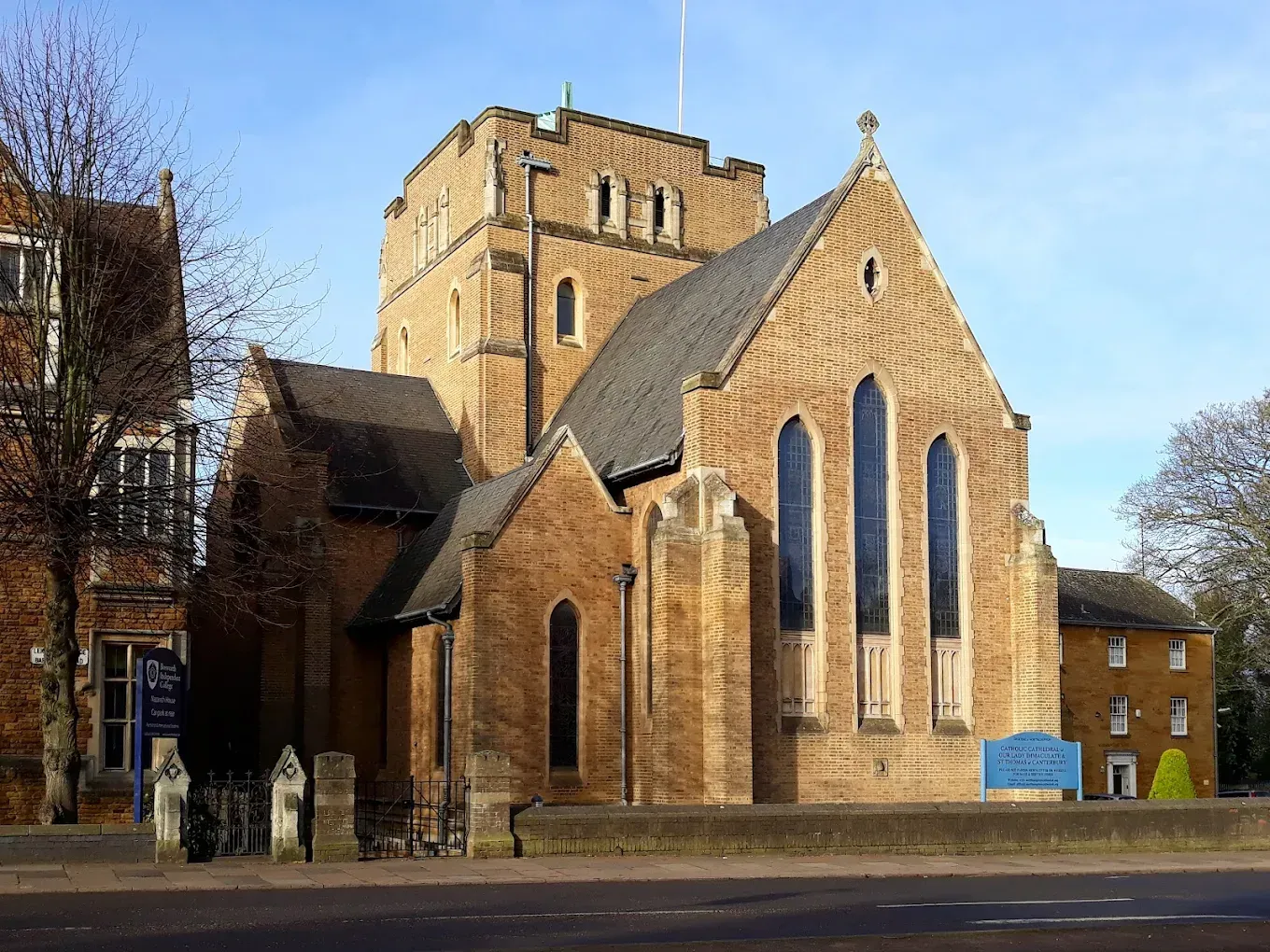
Northampton: The Cathedral Church of Saint Mary and Saint Thomas
 CATHEDRAL WEBSITE
Address
Primrose Hill, Northampton, NN2 6AG
Description
The Cathedral is built on the site of the former Cluniac Priory of St Andrew, founded between 1093 and 1100. The Scottish Franciscan philosopher and theologian John Duns (commonly known as Dun Scotus) was ordained into the priesthood at St Andrew's in 1291. St Thomas Becket stayed in the Priory during his trial in 1164 and before sentencing, he escaped from the Priory to France.
The Cathedral originated as a small chapel and residence in 1825, both of which survive. A further church was built in the 1840s to designs by A.W.N. Pugin. Following the restoration of the hierarchy and the creation of the Diocese of Northampton, E.W. Pugin prepared ambitious designs for a new cathedral in 1860, but these were only partly implemented. Much of the earlier church survived until the 1950s, when it was demolished to make way for a new tower, transepts and chancel, built to designs by A. Herbert. The interior has undergone several re-orderings.
WALKING PILGRIMAGE FROM THE CATHEDRAL
The Way of Our Lady of Guadalupe starts at the Cathedral. More details here.
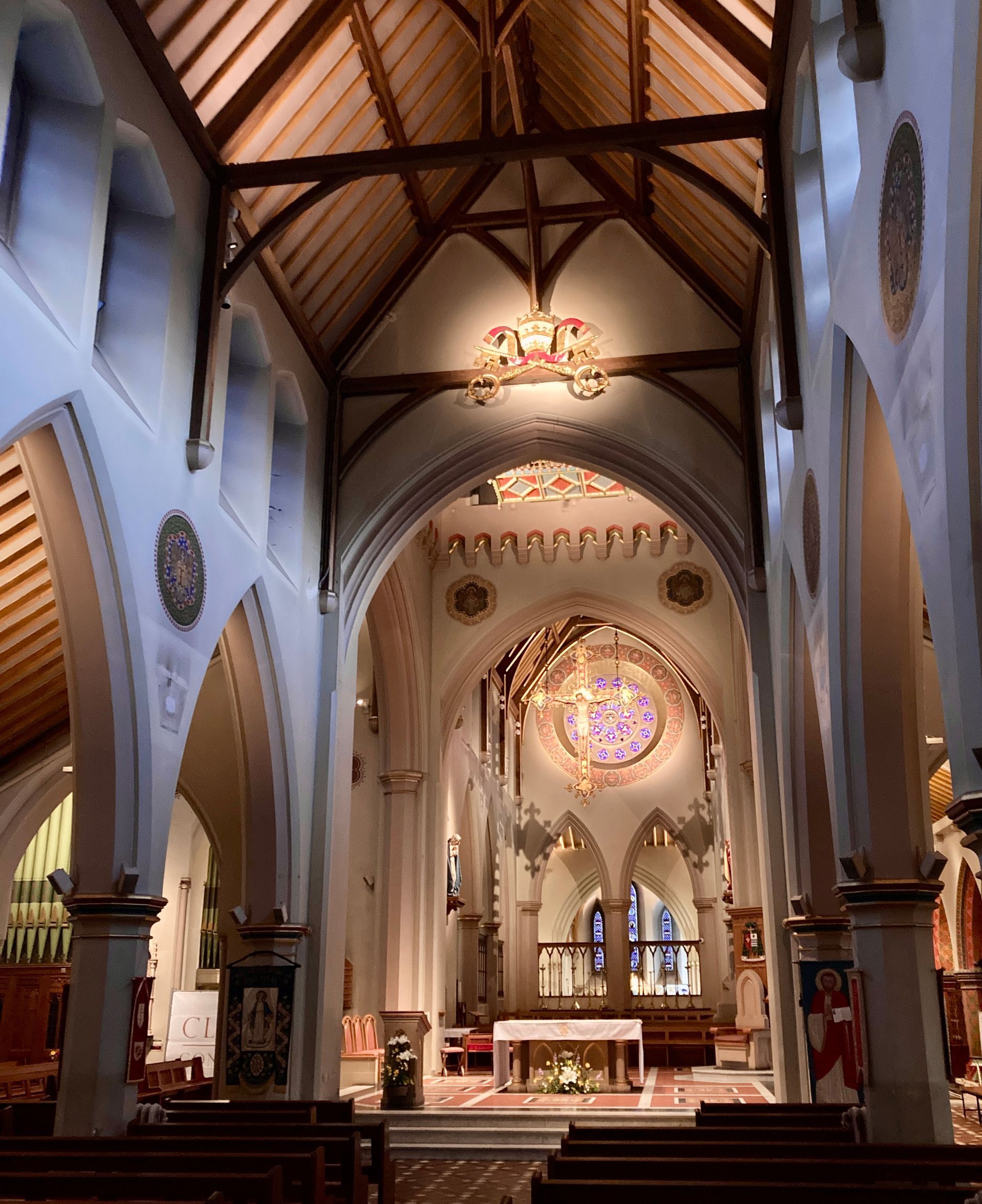
Nottingham: The Cathedral Church of Saint Barnabas
 CATHEDRAL WEBSITE
Address
North Circus St, Nottingham NG1 5AE
Description
In 1825 the congregation of the Nottingham Catholic mission numbered about 150. Three years later the Church of St John the Evangelist in George Street was opened. This building survives today in secular use. As the Catholic population grew a larger church was needed, and in 1841 a site on Derby Road was acquired. AWN Pugin was appointed architect and in November 1842 the foundation stone of St Barnabas’ Church was laid by Bishop Wiseman. The building, which is in the Early English Gothic style, was largely funded by Pugin’s patron Lord Shrewsbury. At the time it was the largest Catholic church built in England since the Reformation.
With the restoration of the Catholic hierarchy in 1850 St Barnabas’ became the cathedral church of the new Diocese of Nottingham, and the first Bishop, Joseph Hendren, was enthroned in December 1851. The original interior design was of rich colour. This has undergone several transformations, but the most recent, in 1993, sought to reinstate some of Pugin’s original concept.
WALKING PILGRIMAGE FROM THE CATHEDRAL
The Way of the Blessed Cyprian Tansi starts at the Cathedral. More details here.
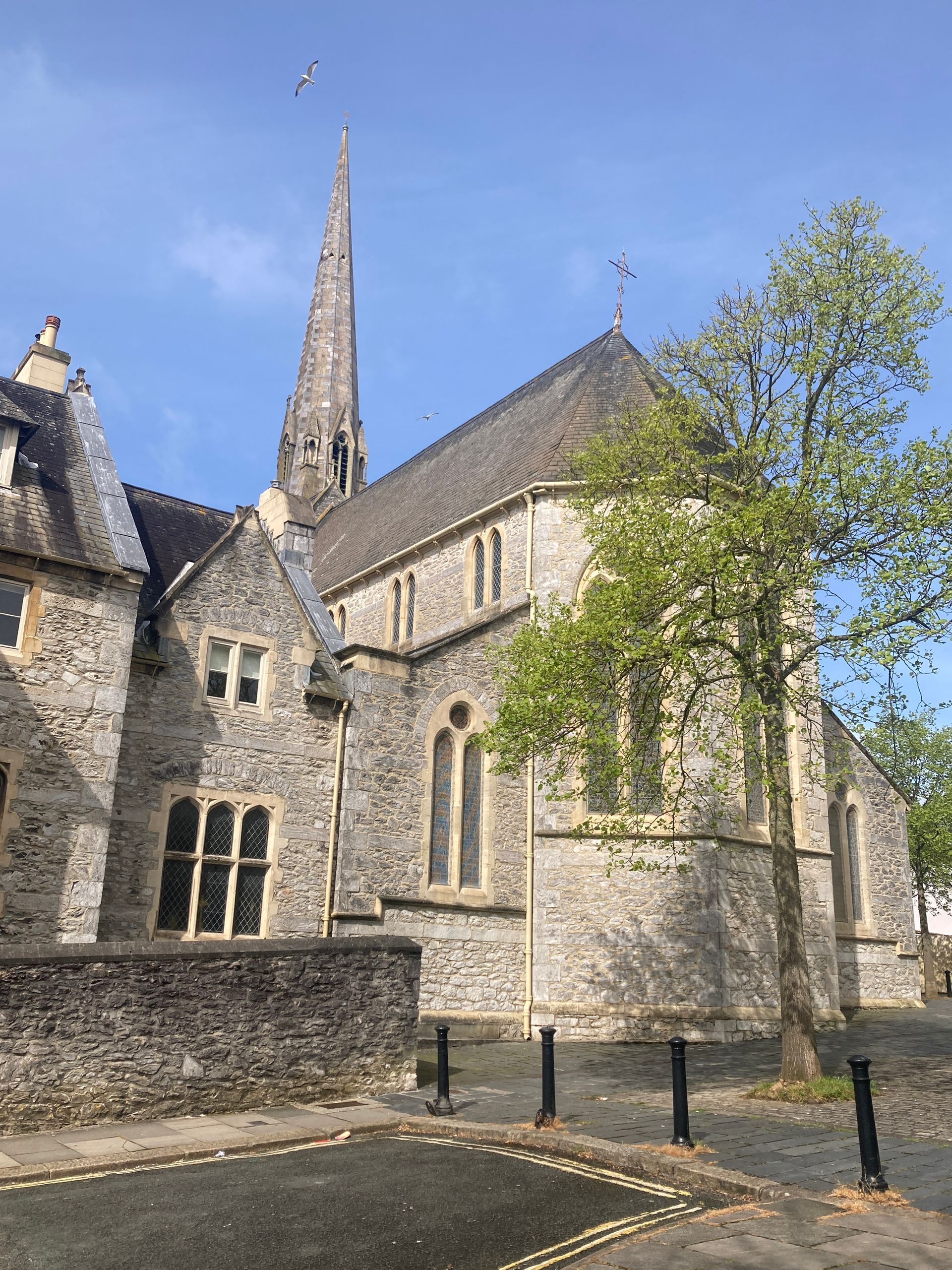
Plymouth: The Cathedral Church of Saint Mary and Saint Boniface
 CATHEDRAL WEBSITE
Address
45 Cecil Street, Plymouth, PL1 5HW
Description
Catholicism almost died out in the Plymouth area during the penal years, but a mainly Irish congregation grew in the late C18 around the docks. In 1792 a chapel was built over a stable attached to an inn in Plymouth Dock. In 1806-07 a little chapel dedicated to SS Mary & John the Evangelist was built near the Naval Hospital.
With the restoration of the Catholic hierarchy in 1850 Dr George Errington was appointed 1st Bishop of Plymouth and this little chapel was designated the cathedral of the new diocese. In 1856 Errington’s successor at Plymouth William Vaughan was able to purchase a site for a cathedral to be built in the Early English style. Construction proceeded quickly and the cathedral opened in 1858. At the time it was perhaps the grandest of the new Catholic cathedrals. The tower and spire were added in 1866. The cathedral suffered some damage in the Plymouth blitz. In 1958 new stone Stations of the Cross were installed in the aisles, from designs by Joseph Cribb, influenced by the Stations at Westminster Cathedral by Eric Gill, to whom Cribb was apprenticed. Re-orderings were undertaken in 1972 and 1994.
WALKING PILGRIMAGE FROM THE CATHEDRAL
The Way of St Cuthbert Mayne starts at the Cathedral. More details here.
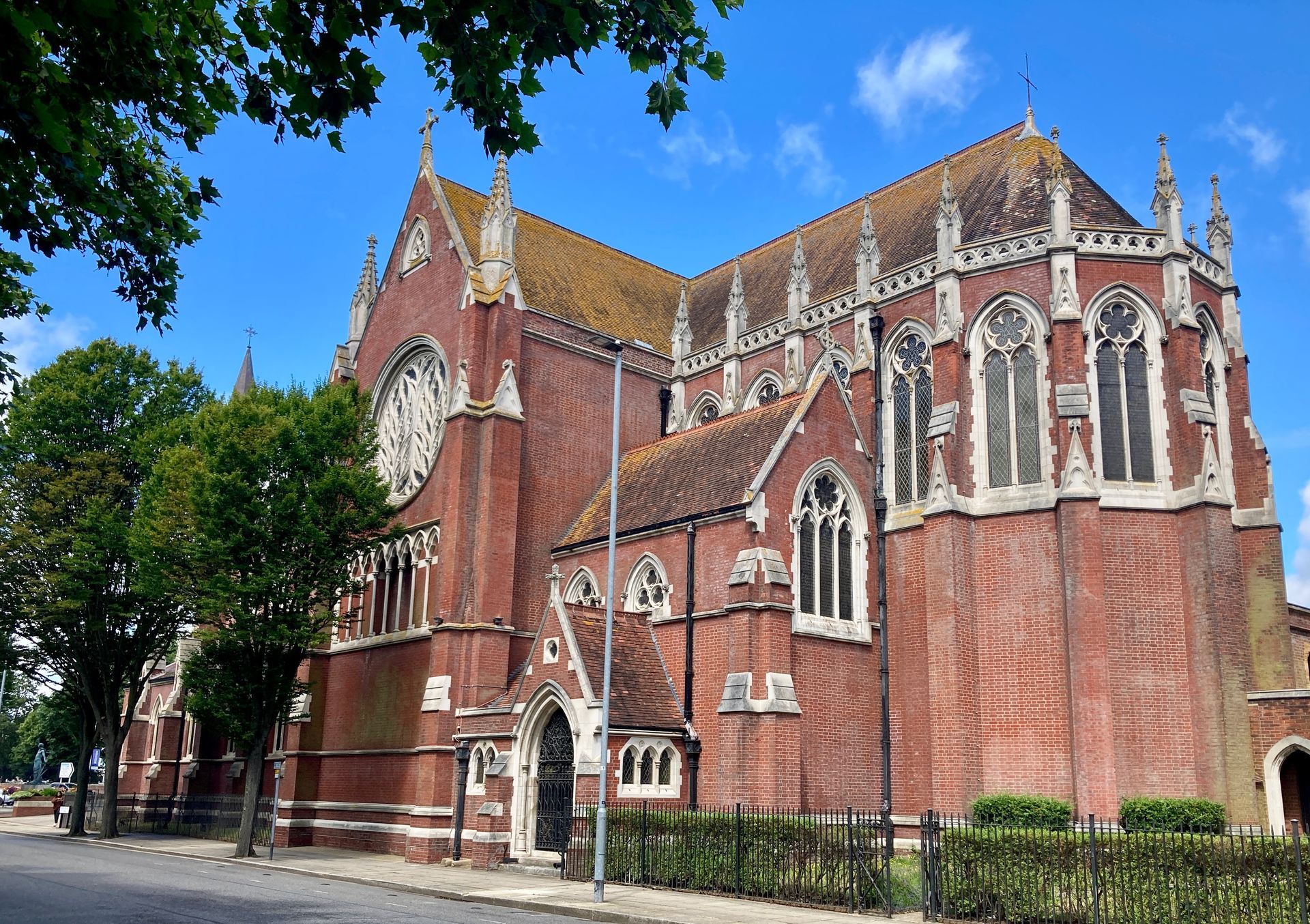
Portsmouth: The Cathedral Church of Saint John the Evangelist
 CATHEDRAL WEBSITE
Address
Bishop Crispian Way, Portsmouth, Hampshire, PO1 3HG
Description
Catholic practice virtually disappeared in Portsmouth after the Reformation, and until 1791 those few Catholics who remained were served by the chaplains attached to the households of old Catholic families. After the French Revolution, many French and other priests sought refuge in the Portsmouth area, and several chapels were built.
In 1880 the foundation stone for a substantial red brick and stone Decorated Gothic church was laid. When the Diocese of Southwark was divided in 1882 the new Diocese of Portsmouth was created, and the church became the cathedral. The incomplete building (five bays of the nave) was consecrated in 1887 and several extensions were made over the years. St Patrick’s chapel was added in 1924.
In 1941 the Cathedral and Bishop’s House were extensively damaged by bombing. Rebuilding and restoration followed in 1946-50. The sanctuary has undergone several re-orderings, the most radical in 1971, when a new Portland stone altar with ceramic figures was installed.
WALKING PILGRIMAGE FROM THE CATHEDRAL
The Way of St Joseph starts at the Cathedral. More details here.
Salford: The Cathedral Church of Saint John the Evangelist
 CATHEDRAL WEBSITE
Address
Chapel Street, Salford M3 5LL
Description
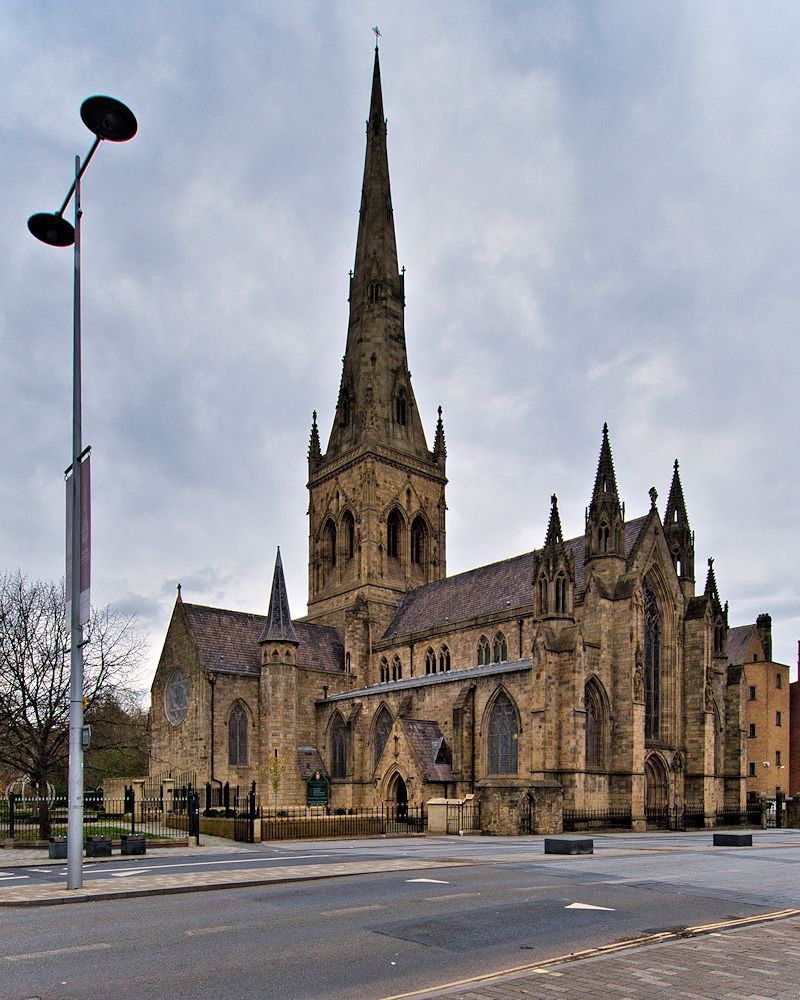
This is said to be the first Catholic church since the Reformation built on a cruciform plan, and one of the largest, most ambitious and impressive Catholic churches of its day. The building was inaugurated in 1844 and 6000 people are said to have attended the laying of the foundation stone. When it was opened in 1848 the service was attended by Catholics from all over the country, including eight English bishops. The various fixtures and fittings included a magnificent reredos and sanctuary furnishings.
At the restoration of the Catholic hierarchy in 1850 the Diocese of Salford was created, and the church elevated to cathedral status. In 1972 a new sanctuary with an altar was formed in the crossing of the nave. In 1983 another reordering involved the high altar, pulpit, side altars and other furnishings and in 1990 the reredos was reduced to its base. During the 2020s the building will be restored, re-roofed, and some of the Victorian heritage reinstated.
WALKING PILGRIMAGE FROM THE CATHEDRAL
St Theodore's Way starts at the Cathedral. More details here.
Shrewsbury: The Cathedral Church of Our Lady Help of Christians and Saint Peter of Alcantara
 CATHEDRAL WEBSITE
Address
Town Walls Shrewsbury Shropshire SY1 1UE
Description
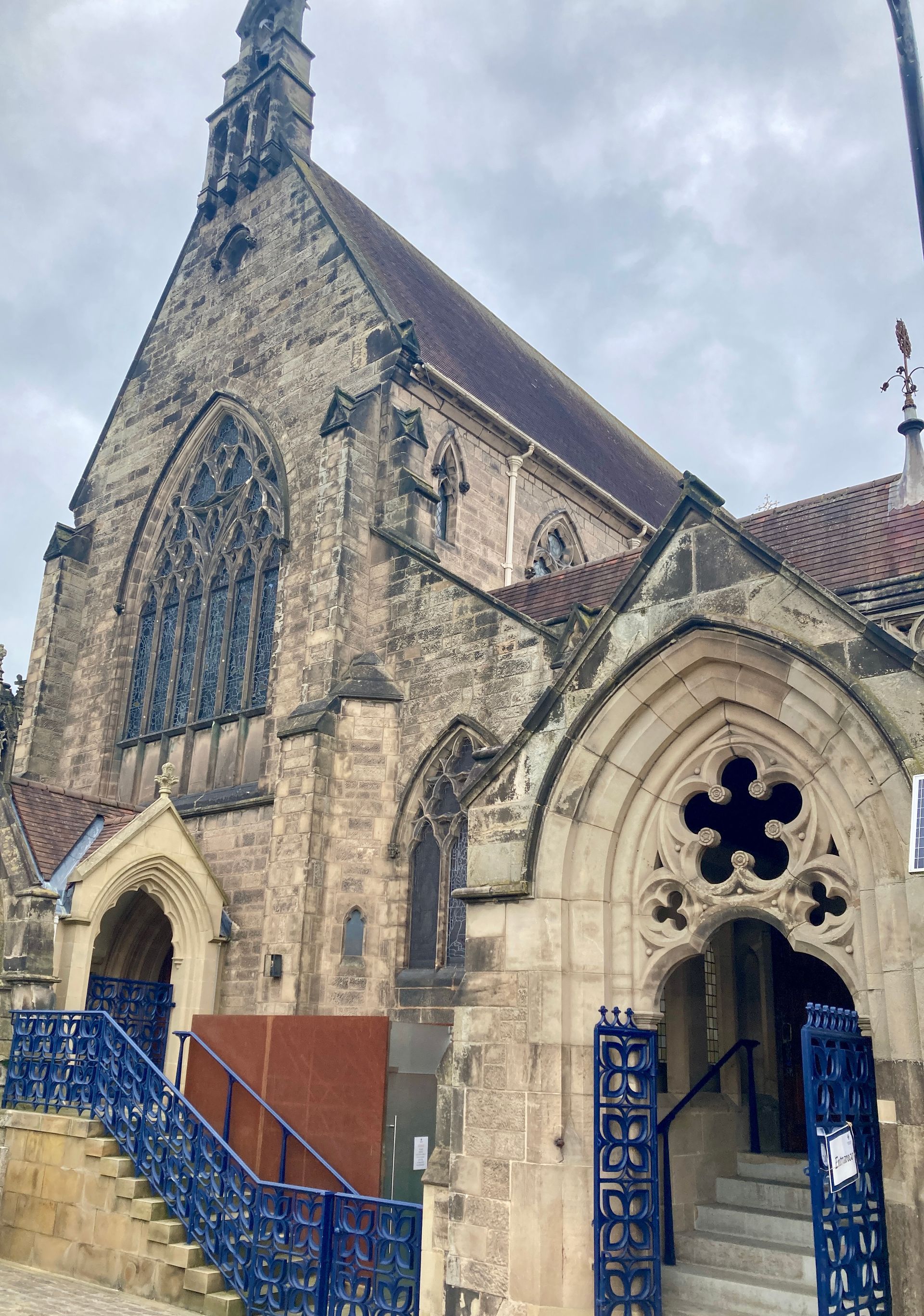
A chapel was built in Town Walls in 1776, 15 years before the building of public Catholic chapels became legal. The building was discreetly located behind the priest’s house, which in turn was set back from the road. This chapel was enlarged in 1826 to seat 250 and extended again in 1840. The site of what is now the cathedral was purchased in the late 1840s.
With the restoration of the Catholic hierarchy in 1850, the Diocese of Shrewsbury was created, partly in honour of the 16th Earl of Shrewsbury, a great benefactor to the Catholic Church in England. A.W.N. Pugin: was appointed architect but after he died in 1852 the task passed to his son E.W. Pugin. The foundation stone was laid on 12 December 1853. Lord Shrewsbury chose the dedication, to Our Lady of the Immaculate Conception and St Peter of Alcantara, a Spanish Franciscan from whose intercession he believed he had benefitted. Pope Pius IX suggested a change of the first part of the dedication to Our Lady Help of Christians.
The cathedral was opened in 1856 and consecrated in 1890. The external appearance is modest due to site constraints; an intended tower and spire were never built. The building has been augmented over the years. Most recently the 1980s re-ordering has been reversed, access improved, and original decorations restored.
WALKING PILGRIMAGE FROM THE CATHEDRAL
The Way of St Philomena starts at the Cathedral. More details here.
Southwark: The Metropolitan Cathedral Church of Saint George
 CATHEDRAL WEBSITE
Address
Lambeth Rd, London SE1 7HY
Description
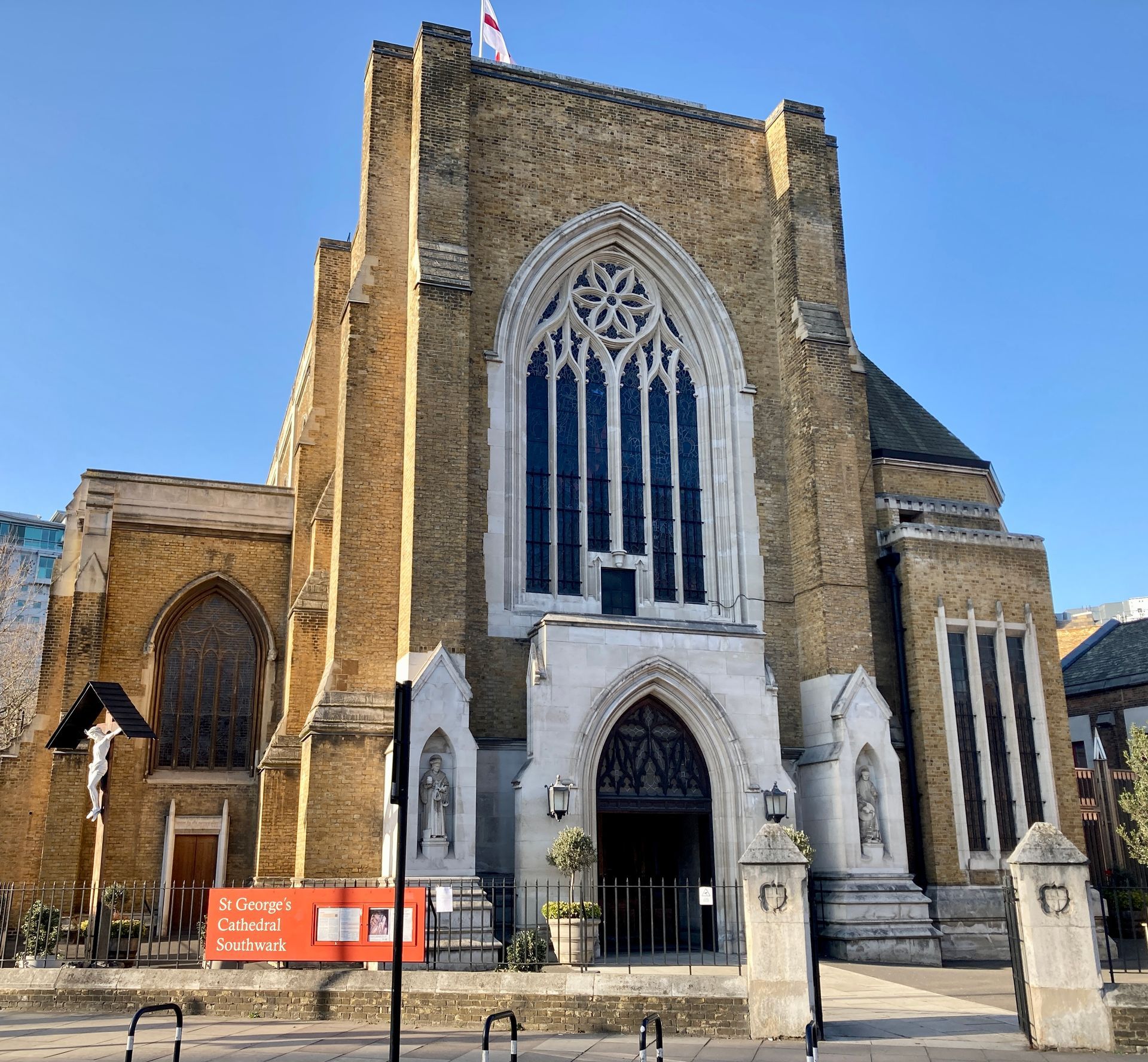
The Cathedral was originally built by A.W.N. Pugin in 1841-48 and at the time was the largest Catholic church in England, and the obvious choice of a cathedral for the new Diocese of Southwark, created in 1850. The cathedral contains several important furnishings by Pugin and his son Edward.
The building was badly damaged by wartime bombing and rebuilt in a different form by Romilly Craze. The new design is impressive, but the non-completion of the tower diminishes the impact on the locality.
WALKING PILGRIMAGE FROM THE CATHEDRAL
The Romero Way starts at the Cathedral. More details here.
Westminster: The Metropolitan Cathedral Church of the Most Precious Blood
 CATHEDRAL WEBSITE
Address
Victoria St, London SW1P 1LT
Description
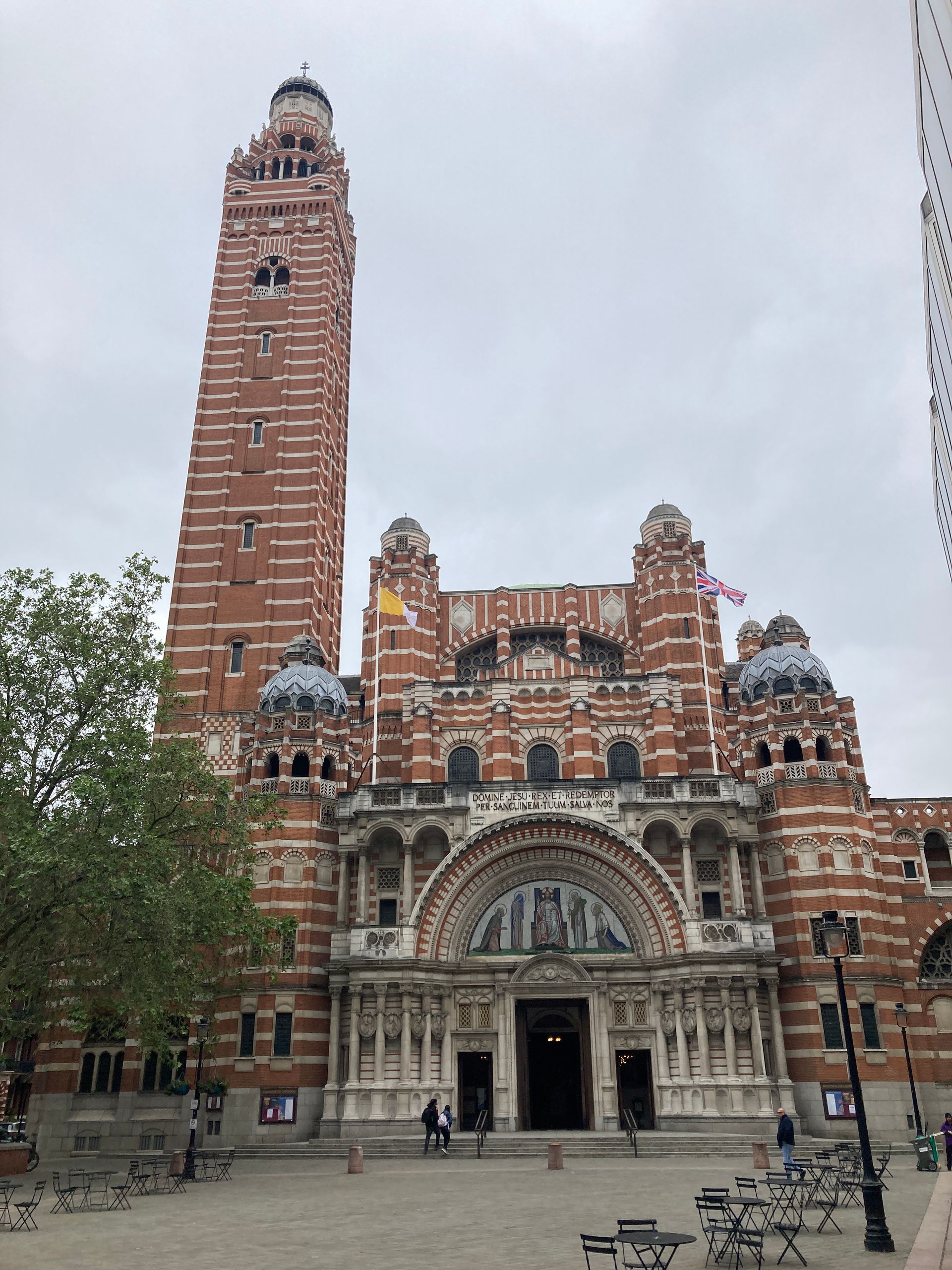
The Cathedral of the Archdiocese of Westminster, and the mother church of the Catholic community in England and Wales, was built in 1895-1903 in the Italo-Byzantine style. It was designed allow for later enrichment and over the years much has been added. Despite this much of the walls and roof remain unadorned.
The building dominates the area, and the tall, slender campanile is a landmark for miles, and provides a stunning viewpoint. Since 1975, the west front has been open to view from Victoria Street across the piazza. The Cathedral is a busy inner-city community, and casual visitors mingle with daily mass goers as the liturgies progress through the day.
WALKING PILGRIMAGE FROM THE CATHEDRAL
The Way of Two Cathedrals and Four Shrines starts at the Cathedral. More details here.
Wrexham: The Cathedral Church of Our Lady of Sorrows
 CATHEDRAL WEBSITE
Address
Regent St, Wrexham LL11 1RB
Description
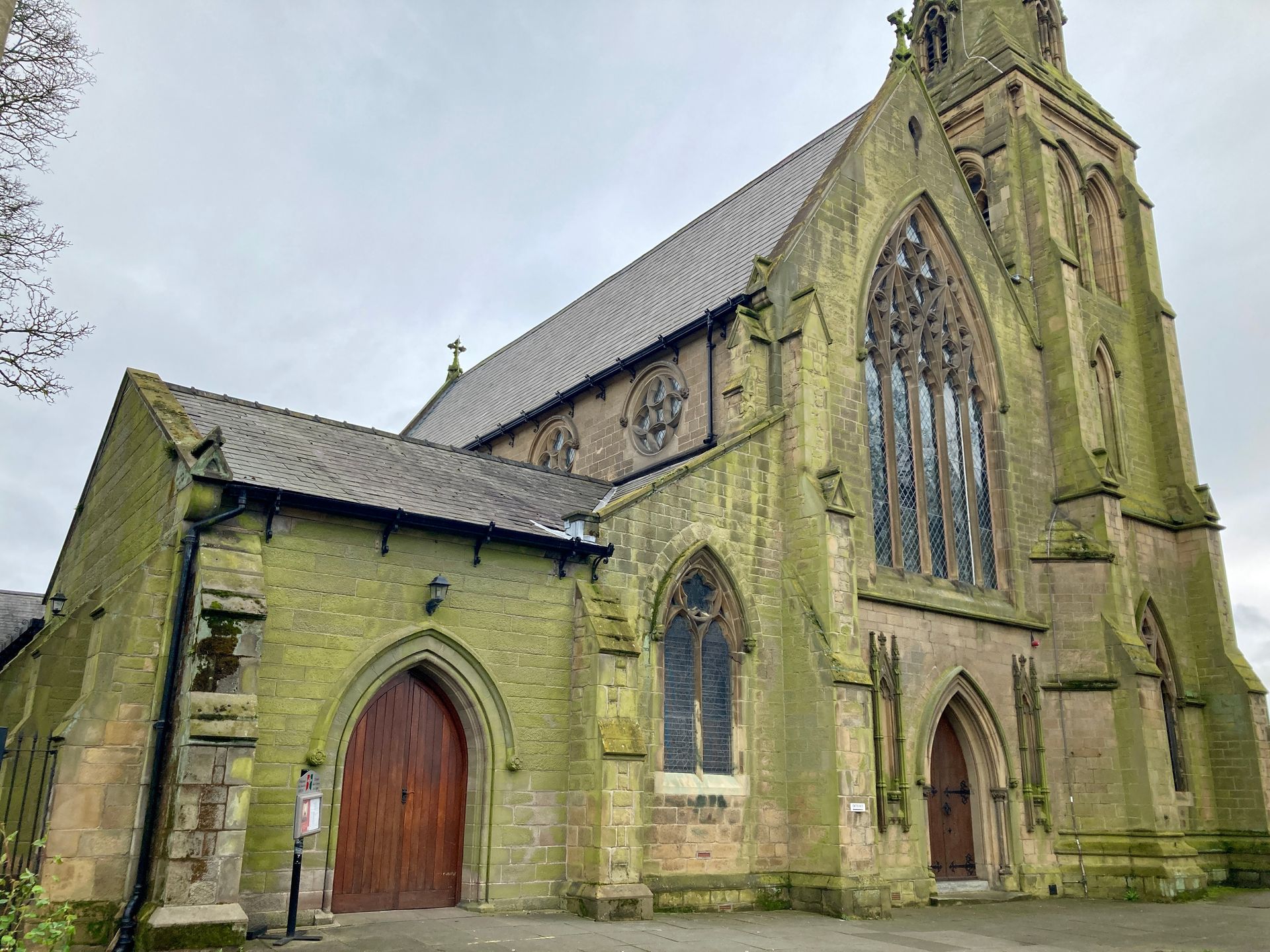
From 1824 Mass was celebrated at Wrexham in a house in Market Street and later in Cutler’s Entry. In 1828 a chapel was built in King Street at the expense of Richard Thompson, a member of an English family of ironmasters who had moved from Wigan to help develop the coal and iron industries. When the congregation became too large for the chapel, Thompson provided funds for the building of the present church. E. W. Pugin was appointed as architect for the church and presbytery in 1857 at the age of 23, making it one of his earliest commissions.
In 1898 the Diocese of Menevia was created with Wrexham as the episcopal seat, and Our Lady of Sorrows was consecrated as pro-cathedral in 1907. In 1957 a northwest porch and sacristies were added, and further alterations and additions followed in 1966. The tower has been rebuilt twice due to mining subsidence.
Since 1987 the building has been the Cathedral of the Diocese of Wrexham. It houses the shrine of St Richard Gwynn, who was executed for his faith on 15 October 1584 and is one of Forty Martyrs of England and Wales canonised by Pope Paul VI in 1970.
WALKING PILGRIMAGE FROM THE CATHEDRAL
The Holywell Way starts at the Cathedral. More details here.
Bishopric of the Armed Forces: The Cathedral Church of Saint Michael and Saint George
 CATHEDRAL WEBSITE
Address
19 Queen's Ave, Aldershot GU11 2BY
Description
The Bishopric of the Armed Forces is a military ordinariate of the Catholic Church which provides chaplains to British Armed Forces based in the UK and overseas. Its bishop is a full member of the Catholic Bishops' Conference of England and Wales. The chaplains are drawn from the dioceses of the UK and the Commonwealth, as well as from some religious orders. Chaplains have spiritual and pastoral care of military personnel and their families.
The church was designed in 1892 in the Early English Gothic Revival style to be the principal church for the Anglican chaplaincies of the British Army. The foundation stone was laid by Queen Victoria. Catholics worshipped nearby in a large wooden barn like building.
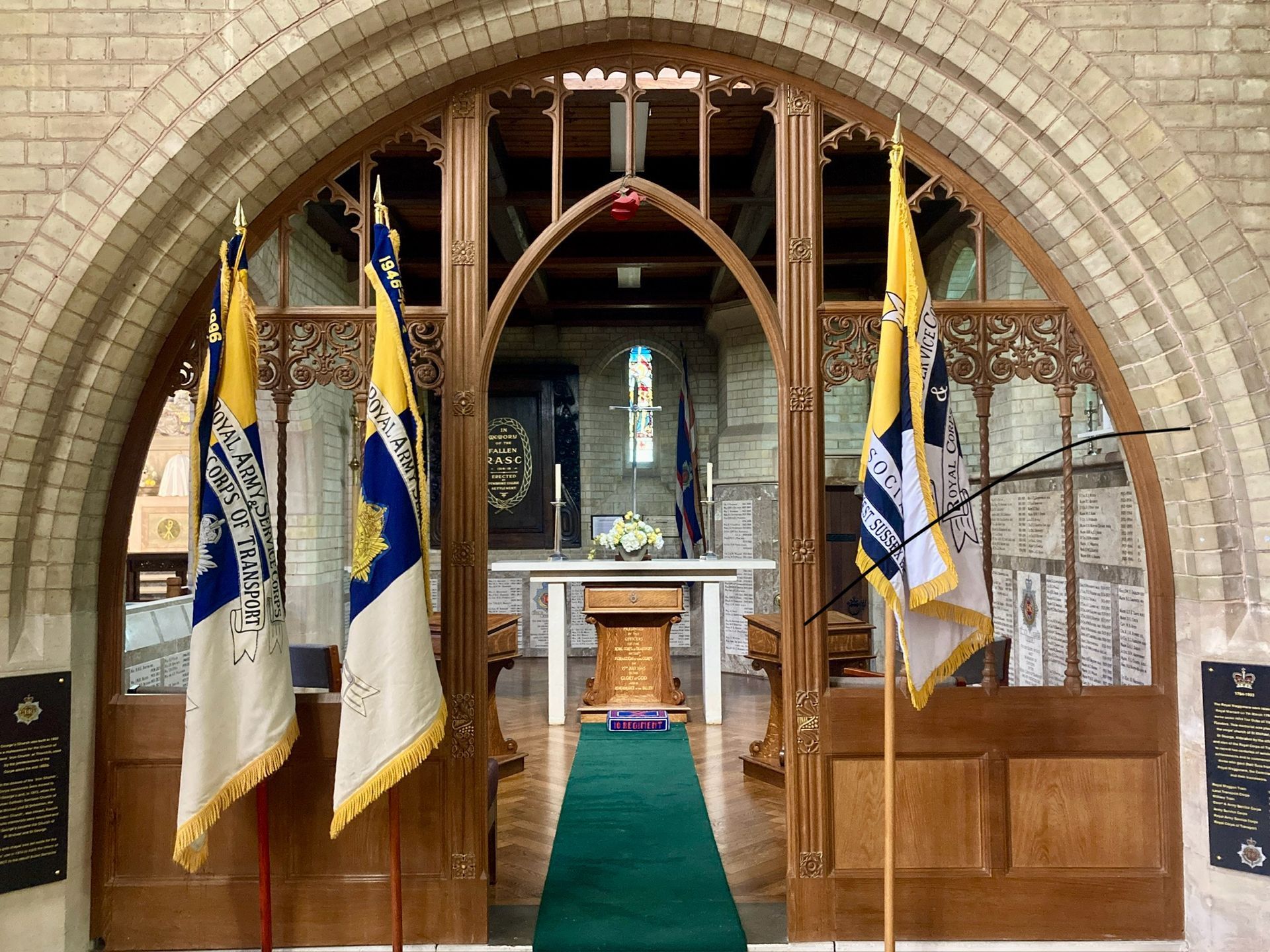
By the early 1970s St George's was not needed by the Anglican chaplaincies and the number of Catholic soldiers was increasing, so in 1973 the church became the seat of the Catholic Bishop of the Forces and was dedicated to SS Michael & George. The Blessed Sacrament Chapel was constructed in 1998. In 2015 a crucifix made from the parts of 23 aircraft from the 1930s to the present was blessed and dedicated in the cathedral as a link to all who serve in the RAF.
The Royal Army Service Corps holds a memorial service in the Cathedral each year and their Chapel of Remembrance is to the south of the Sanctuary.
WALKING PILGRIMAGE FROM THE CATHEDRAL
The Cathedral is on the St Joseph's Way. More details here.
Syro-Malabar Eparchy: The Cathedral Church of Saint Alphonsa
 CATHEDRAL WEBSITE
WALKING PILGRIMAGE FROM THE
Address
St Ignatius Square, Preston PR1 1TT
Description
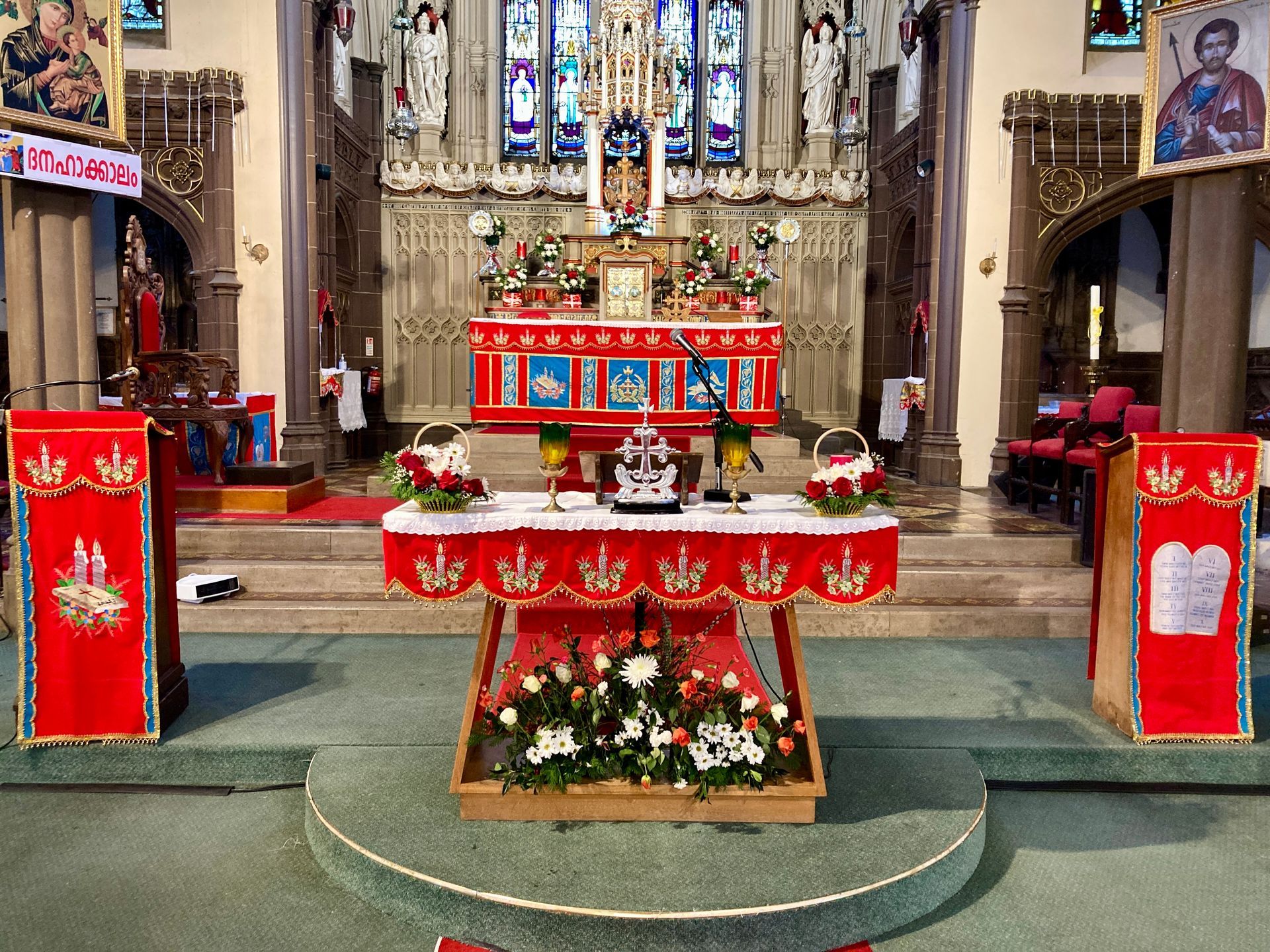
The Syro-Malabar Church is an Eastern Catholic Church based in Kerala, India, in full communion with the Pope and the worldwide Catholic Church. The Church traces its origins to St Thomas the Apostle in the C1 and uses the East Syriac Rite liturgy. It is headed by the Major Archbishop of the Syro-Malabar.
St Ignatius’ was the 3rd chapel built by the Jesuits to serve the burgeoning Irish immigrant population of Preston, but it soon became too small and had to be enlarged. It is a Gothic Revival church with later adaptations by major C19 Catholic architects. The spire is a major landmark in the town. The poet Francis Thompson was baptised here in 1859, and the Jesuit priest and poet Gerard Manley Hopkins was curate in the late 1880s. The Jesuits moved on and in 2014 the church was closed.
Significant migration of Syro-Malabar people to the UK occurred from 2000 onwards. In 2016 Pope Francis established the Syro-Malabar Eparchy of Great Britain. In 2016 the church became the Cathedral of the Catholic Syro-Malabar community in Great Britain, and Masses are celebrated in that rite.
Today there are 68 priests serving 4 parishes, 52 missions, 30 proposed missions and nearly 50,000 Syro-Malabar Catholics in Great Britain.
WALKING PILGRIMS FROM THE CATHEDRAL
The Cathedral is on the Way of Our Lady of Fernyhalgh and St Alphonsa. More details here.
Ukranian Eparchy: The Cathedral Church of the Holy Family in Exile
 CATHEDRAL WEBSITE
Address
Duke St, London, W1K 5BQ
Description
The Ukrainian Catholic Church is an Eastern Rite Church with its own hierarchy but in full communion with Rome.
The Cathedral of the Holy Family in Exile is the mother church of the Ukrainian Catholic Eparchy of Great Britain (not Northern Ireland). In 1957 an Apostolic Exarchate, overseen by the Holy See, was established for the Ukrainian Catholic faithful in England and Wales. In 1968 the Exarchate’s remit was expanded to the whole of Great Britain, so excluding Northern Ireland. In 2013 the Exarchate was elevated to eparchial status, which is equivalent to a diocese in the Latin Church. Today the faithful number approximately 13,500 served by 16 priests in 15 parishes and 20 mission points.
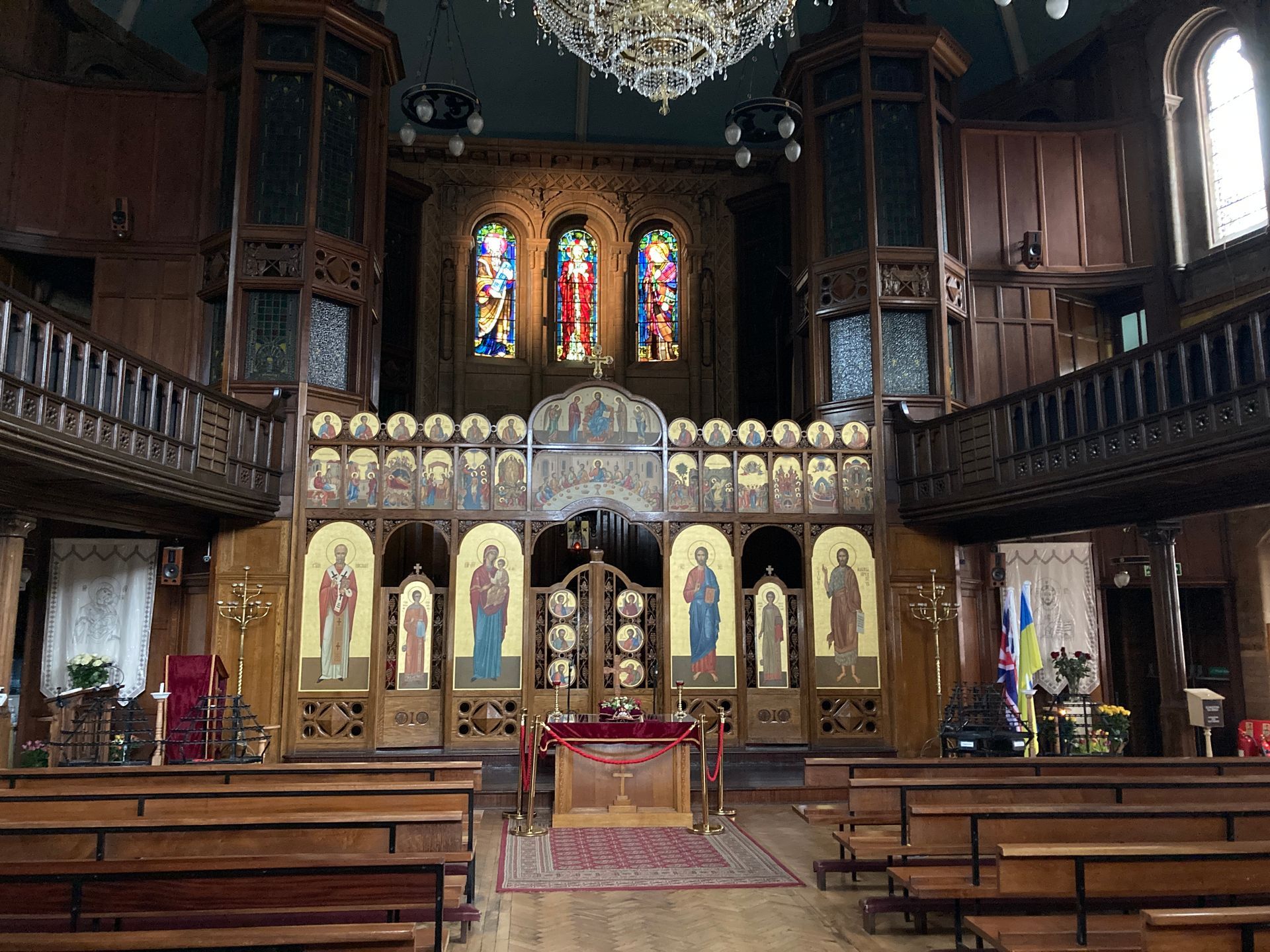
The Cathedral building was originally a Congregational church, completed in 1891. In 1965, the congregation merged, and the freehold was bought by the Ukrainian Exarchate. The move to the Byzantine liturgy involved some alterations, including the removal of the organ and pulpit, replacing chairs with pews, and the installation of an iconostasis and a confessional.
The dedication of the Cathedral is particularly poignant since the invasion of Ukraine in 2022 and the exile of so many Ukrainian families.
WALKING PILGRIMAGE FROM THE CATHEDRAL
The Cathedral is on the Way of Two Cathedrals and Four Shrines. More details here.