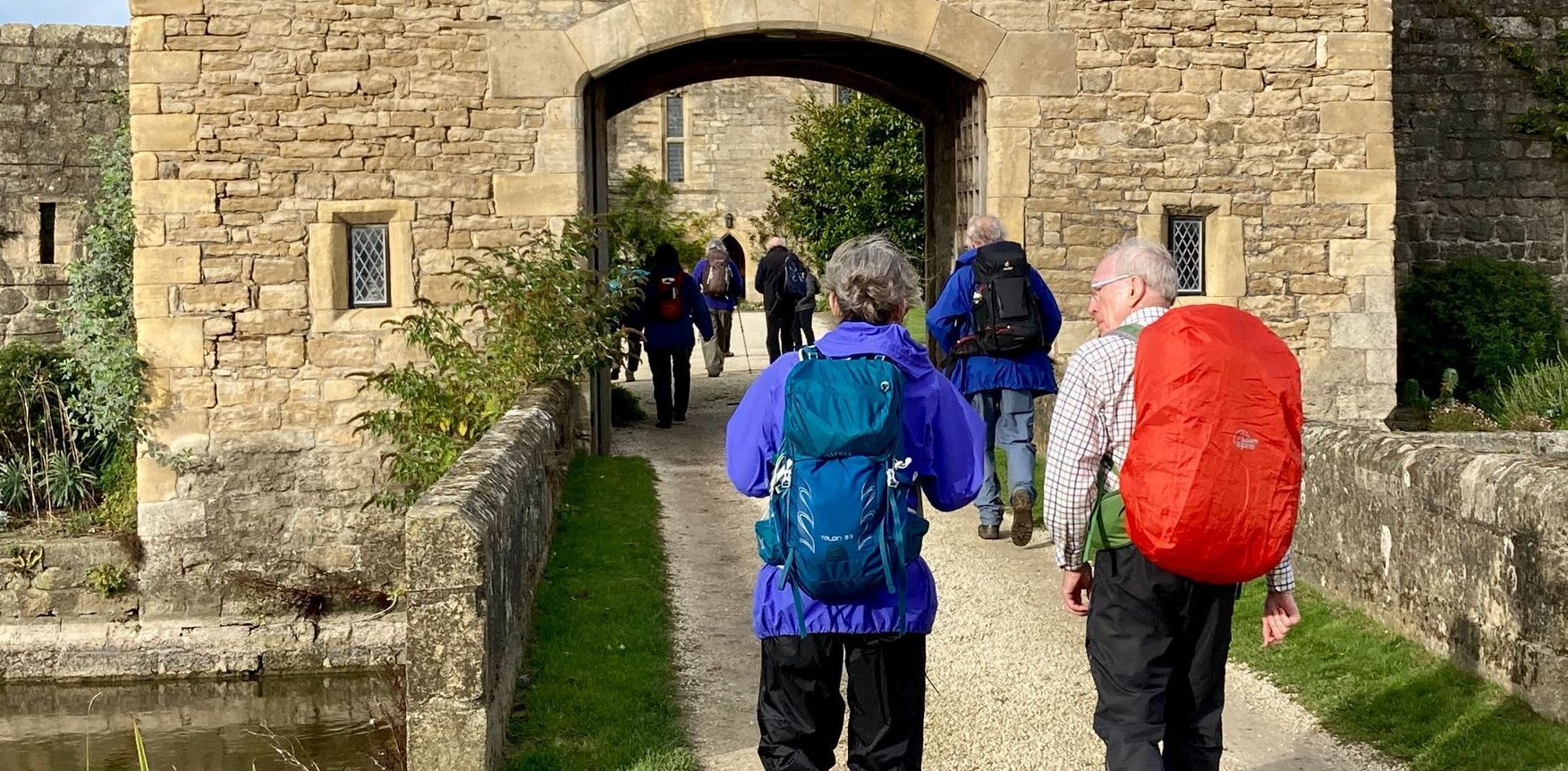
'Heart speaks unto heart': A pilgrimage with Dr Newman
A Pilgrim Way for the Archdiocese of Birmingham following St John Henry Newman’s spiritual path. The route was walked to mark Newman being proclaimed a Doctor of the Church on 1st November 2025.
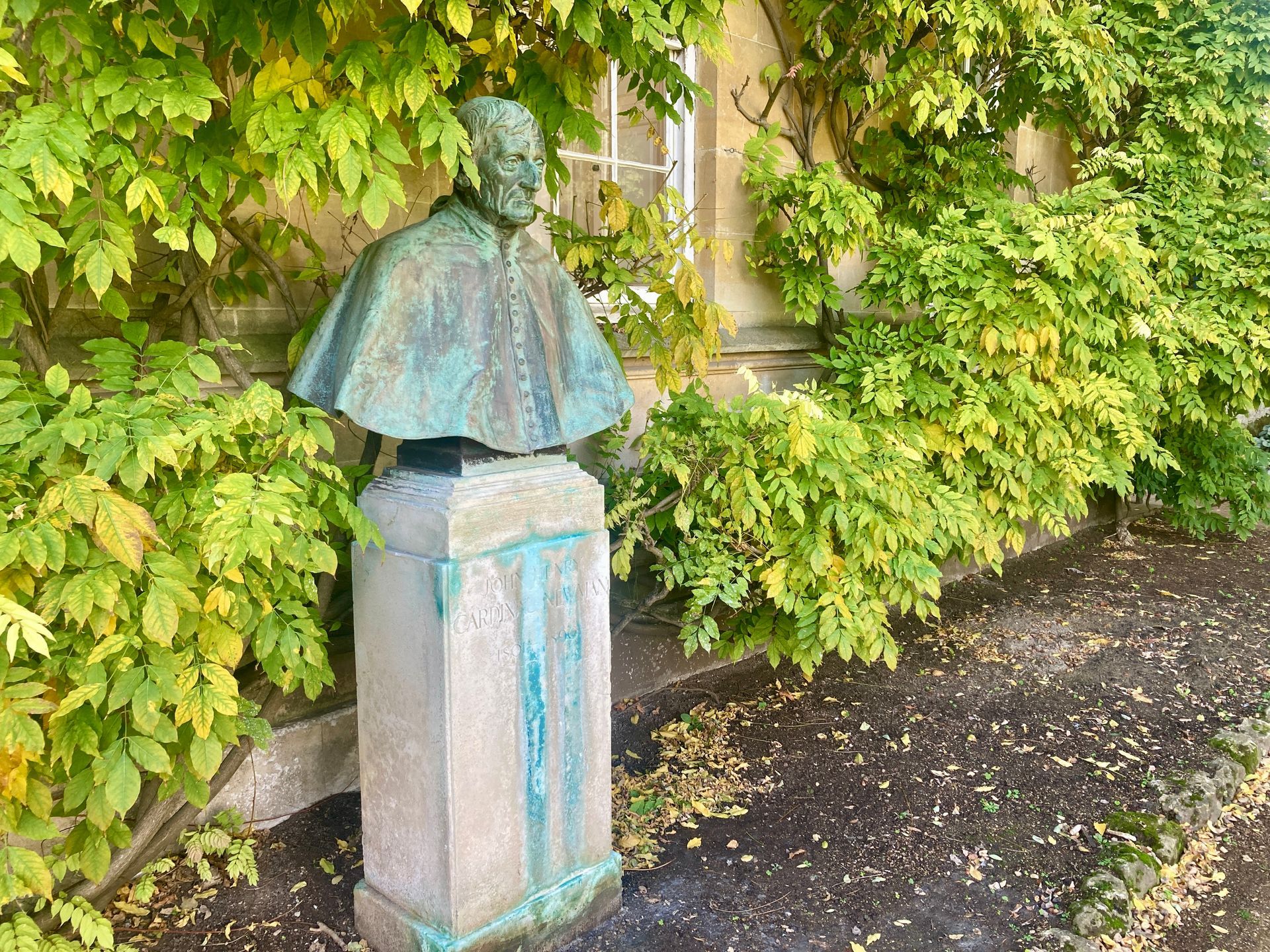
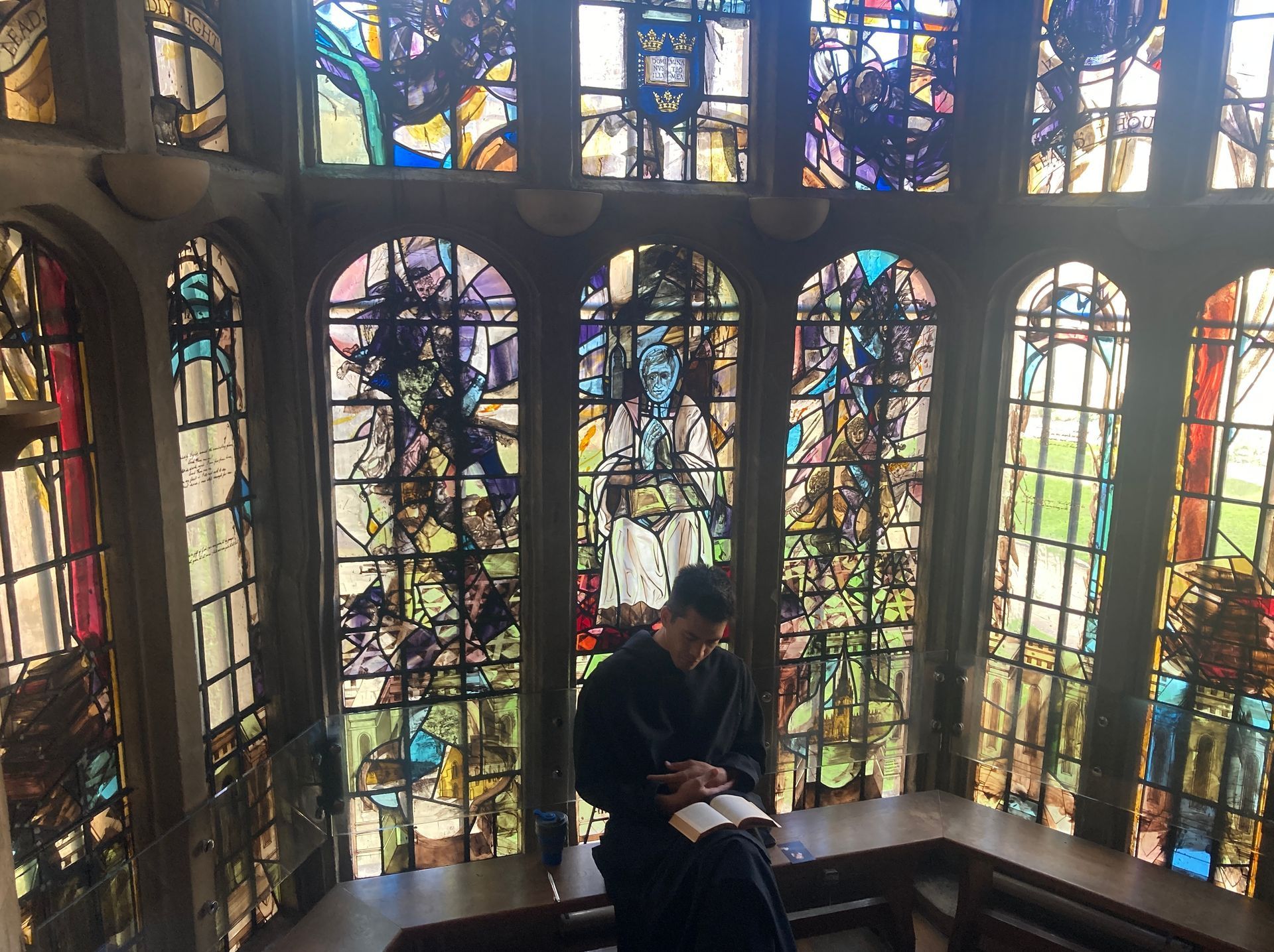
Bust of Newman at Trinity College, Oxford
About the route
St John Henry Newman (1801 – 1890) was an English Catholic theologian, academic, philosopher, historian, writer, and poet. He was previously an Anglican priest, and after his conversion to Catholicism, became a cardinal. He was an important figure in the religious history of England in the C19.
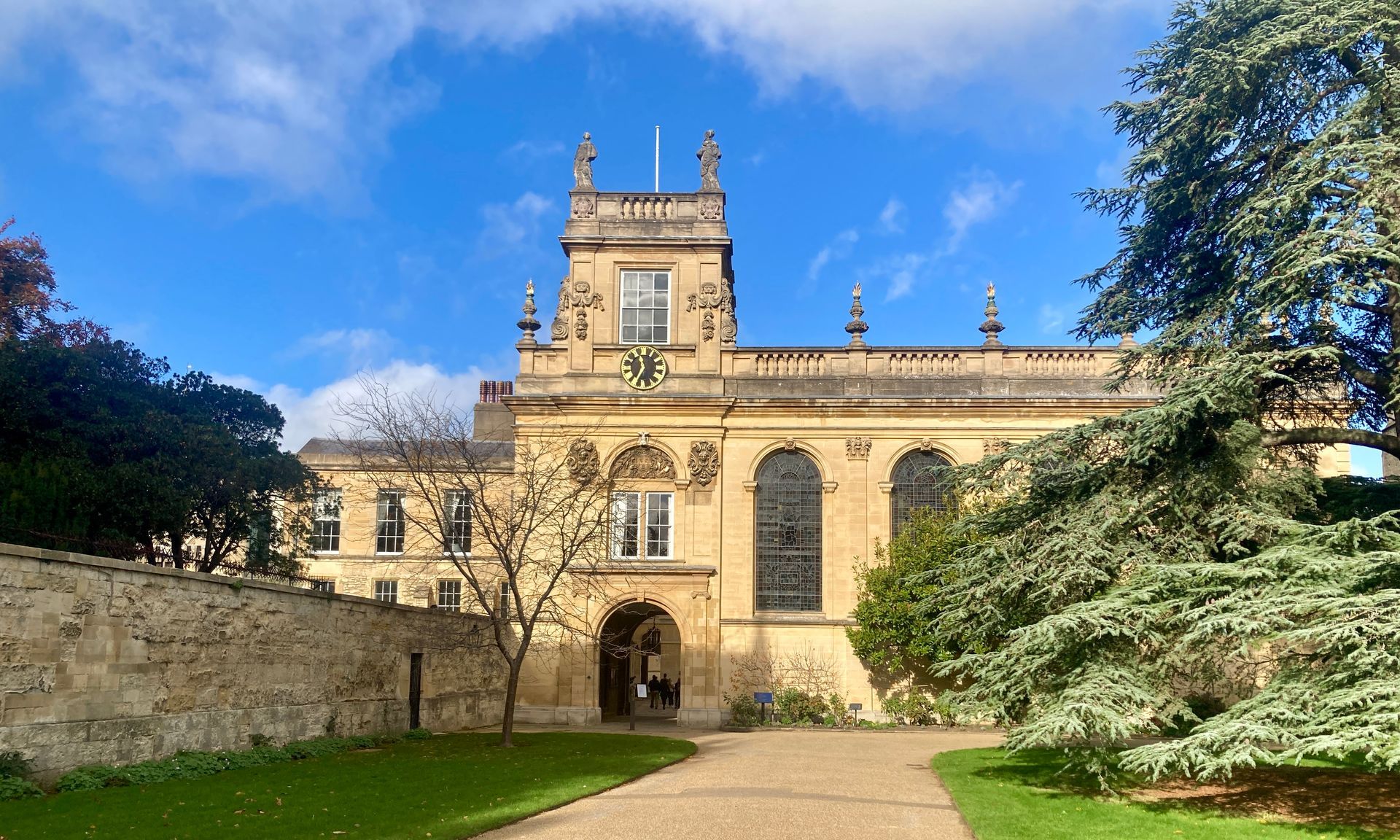
The way starts at Deddington where Newman gave his first public address in 1825, via Over Worton, where he preached his first sermon as an Evangelical Anglican priest. The pilgrimage continues through Oxford where Newman was educated, was ordained as an Anglican minister and led the High Anglican Oxford Tractarian Movement. The route ends at Littlemore where Newman founded a High Anglican church. Here in 1845, he became a Catholic.
This pilgrimage is an adaption of the existing Newman Pilgrimage which was created by Rev Hugh White and is based on the journeys Newman made as a young man from Oxford to Deddington. Newman walked the eighteen miles to Over Worton from Oxford, starting at 4am and arriving ‘punctually at the breakfast table’! Details of that pilgrimage can be found at: http://www.newmanpilgrimage.org/. Neither route follows Newman's probable path which is now a busy road.
You can find out more about the Way and download the GPX file clicking on the LEARN MORE tab in the
interactive map below
Guidance
You can use the tabs in this section to find the information you need for your pilgrimage.
The Outer Way provides practical advice about the route.
The Inner Way describes the spiritual highlights.
Walking guidance: you can download the inner and outer way notes and the walking directions and maps.
Stages: route, food & drink, accommodation and public transport
1. The Church in Deddington to Great Tew: 6.3 miles
Deddington can be reached by bus from Oxford and Banbury. The route is over quiet farmland and lanes. Public footpaths across some fields may be ploughed. There are pubs, cafés and shops in Deddington but no facilities enroute. There is a pub with accommodation in Great Tew and a café and delicatessen next door. There are occasional buses to Chipping Norton and Middle Barton from Great Tew.
2. Great Tew to Ramsden: 12.9 miles
The path crosses open parkland and countryside by quiet lanes and tracks. There are no facilities enroute until a pub in Finstock with accommodation in cabins. There is a pub with accommodation in Ramsden. There is a railway station in Finstock with trains to Oxford and bus stops at Fawler, Finstock and Ramsden.
3. Ramsden to Eynsham: 9.3 miles
The route is through countryside and small villages. There are pubs at Freeland and Church Hanborough and shops beside the A40 crossing. There are bus stops at Freeland on the A442 and in Eynsham. It may be possible to stay with the Anglican Franciscan Community of Saint Clare, in Freeland. There are shops, cafés, pubs and accommodation in Eynsham.
4. Eynsham to Littlemore: 11.4 miles
As far as Oxford much of the route is along the Thames Path. The Way passes through the suburb of Jericho and then through central Oxford. The Thames Path is rejoined south of the city until the A423 where the river is crossed and the path is through a housing estate to reach Littlemore. There are pubs at Wolvercote, Binsey, Iffley lock and opposite Newman College. There are all facilities in central Oxford including railway and coach stations.
Public transport links
Trains:
https://www.nationalrail.co.uk/
Coaches:
https://www.nationalexpress.com/en
Buses:
The Inner Way: “Heart Speaks Unto Heart”
Newman was a pilgrim in life, constantly searching for the truth. You can use this pilgrimage to reflect in his spiritual journey.
1. The Church in Deddington to Great Tew: Newman’s first conversion
John Henry Newman was born in 1801 in London into a prosperous family. They were practising Anglicans and Newman became an avid reader of the Bible. At the age of 15 he had a life changing religious experience. Later he described falling ‘under the influences of a definite Creed’ which had the effect of ‘confirming me in my mistrust of the reality of material phenomena, and making me rest in the thought of two and two only absolute and luminously self-evident beings, myself and my creator.’ He would describe this as his first conversion.
2. Great Tew to Ramsden: Newman the Evangelical
In his final year of school, Newman underwent a kind of evangelical conversion. Evangelicalism emphasises the Bible as the sole, divinely inspired authority, the centrality of Jesus’ death and resurrection for salvation, the necessity of a personal, transformative spiritual rebirth, and active missionary work. Aged 16 Newman became an undergraduate at Trinity College, Oxford. After his studies he was elected to a fellowship at Oriel College and decided to take Anglican orders and remain celibate as a way of dedicating his whole life to God. In 1825, he was ordained a priest in Christ Church Cathedral and became curate of St. Clement's Church, Oxford. Newman was known for visiting his parishioners, especially the sick and the poor. He became a popular preacher at the University Church of St Mary the Virgin, combining a great knowledge of scripture with a deep understanding of the human heart.
3. Ramsden to Eynsham: Newman and the Oxford (Tractarian) Movement
Newman’s studies at Oriel included the Church Fathers, the teachers of early Christianity. This led him to understand the universal nature of the Church, and the line of apostolic succession which had preserved and transmitted the faith since the earliest days. In 1833 on a trip to Sicily, Newman became seriously ill with a fever and was close to death for 10 days. He considered this another great conversion as it led him to surrender himself even more to God. On his return Newman banded together with likeminded friends including John Keble and Edward Pusey. They believed that Anglicanism could be a ‘via media’ between what they saw as the errors of Protestantism and the excesses of Catholicism, but they despaired at the state of the Church of England. They promoted their views through popular pamphlets or ‘tracts’. The first began with a challenge to the Church of England: ‘Should the Government and Country so far forget their God as to cast off the Church, to deprive it of its temporal honours and substance, on what will you rest the claim of respect and attention which you make upon your flocks?’ Between 1833–41 90 tracts were published. As Newman continued to study and teach Christian history and especially apostolic succession he began to reconsider his own hostility towards Catholicism.
4. Eynsham to Littlemore: Newman’s passage to Rome
In Tract 90, published in 1841, Newman argued that the Thirty-Nine Articles, defining the doctrines of the Church of England, could be interpreted as compatible with Catholicism. Many at the university were outraged and the Bishop of Oxford called for the Tracts to end. Newman left Oxford for Littlemore, to live a quasi-monastic life with friends. Here, he continued to devote himself to study, fasting and prayer. In 1843 he resigned from St. Mary’s Church, Oxford. He was now convinced that the Catholic Church was the one nearest to the spirit of early Christianity but struggled with aspects of Catholic faith that seemed not to be found in scripture, such as purgatory and papal supremacy. The result of his studies was his great ‘Essay on the Development of Christian Doctrine’. He argued that for an idea to remain truly itself, it must be able to change and develop. Ideas and doctrines are 'living', not static intellectual beliefs or fixed rules. Rather they should live in the hearts of Christians and the body of the Church: ‘To live is to change, and to be perfect is to have changed often.’
By 1845 many of those who lived in Newman’s community had become Catholics, and on 8th October Fr Dominic Barberi, an Italian Passionist priest in England on missionary work, arrived and began to hear Newman’s confession, which Newman continued the following day. He then received him into full communion with the Catholic Church. This lost Newman most of his Anglican friends, his family rejected him and he could no longer be a fellow at Oxford. Despite this he felt deep interior peace and wrote:
‘I was not conscious to myself, on my conversion, of any change, intellectual or moral, wrought in my mind. I was not conscious of firmer faith in the fundamental truths of Revelation, or of more self-command; I had not more fervour; but it was like coming into port after a rough sea.’ Apologia, p. 238
5. After Littlemore: Newman as a Catholic
In 1846, Newman was sent to Rome to further his studies and on May 30th, 1847, he was ordained a priest. He was attracted to a model of community life pursued by the Oratorians of St. Philip Neri. In 1848, with the approval of Pope Pius IX, Newman established the 1st Oratory of St. Philip Neri in the English-speaking world in Birmingham. The following year he founded a 2nd Oratory community in London. In 1854, he was appointed Rector of the new Catholic University of Ireland, now University College Dublin. He achieved much but struggled with the role, and in 1858 he resigned and returned to the Birmingham Oratory.
The next two decades of Newman’s life were difficult. As editor of a Catholic periodical called The Rambler, he was attacked for advocating that the faithful be consulted on the definition of dogmas. Some bishops saw him as dangerous, and one reported him to Rome for heresy. For the next 8 years, Newman was under a cloud of suspicion. In 1864 Charles Kingsley, an Anglican clergyman, Cambridge Professor and author of the Water-babies, accused Newman of never honestly being an Anglican. Newman responded by writing his Apologia pro Vita Sua in which he gave an account of what led him to become a Catholic. His honesty and candour did much to restore his reputation amongst Anglicans and Catholics.
In 1878 Newman returned to his beloved Oxford for the first time in 32 years to receive the 1st honorary fellowship of Trinity College. Then in 1879 Pope Leo XIII, who admired Newman’s fierce religious orthodoxy, appointed him a cardinal, a vindication of his loyalty to the Church. Newman chose as his motto ‘Cor ad cor loquitur’, ‘heart speaks to heart’. He asked to be allowed to remain living in community in Birmingham, and this was granted. He continued to write and to give spiritual guidance. When he died in 1890 tens of thousands lined the streets of Birmingham for the passing of his funeral cortege. He was buried in the Oratory’s cemetery.
Newman’s earthly pilgrimage was complete, but his intellectual legacy grew in influence within the Catholic Church and more widely. His work was influential during the Second Vatican Council. He was declared a Saint in 2019 and a Doctor of the Church in 2025.
For more about St John Henry Newman read ‘John Henry Newman, A Mind Alive’ by Mgr. Roderick Strange. DLT, London, 2008.
ABOUT THE ARCHDIOCESE OF BIRMINGHAM
The Catholic Archdiocese of Birmingham extends from Stoke in the North to the Thames in the South. It includes seven cities and five counties; an area with over five million people. It serves a Catholic population of c. 450,000 through a network of 217 parishes and some 240 schools. There are some 150 active and 60 retired priests, and some 80 deacons. The Parishes are grouped into 11 Deaneries which themselves are grouped into three Areas - each being overseen by an Auxiliary Bishop responsible for the Area.