St Cuthbert: his medieval cult and pilgrimage
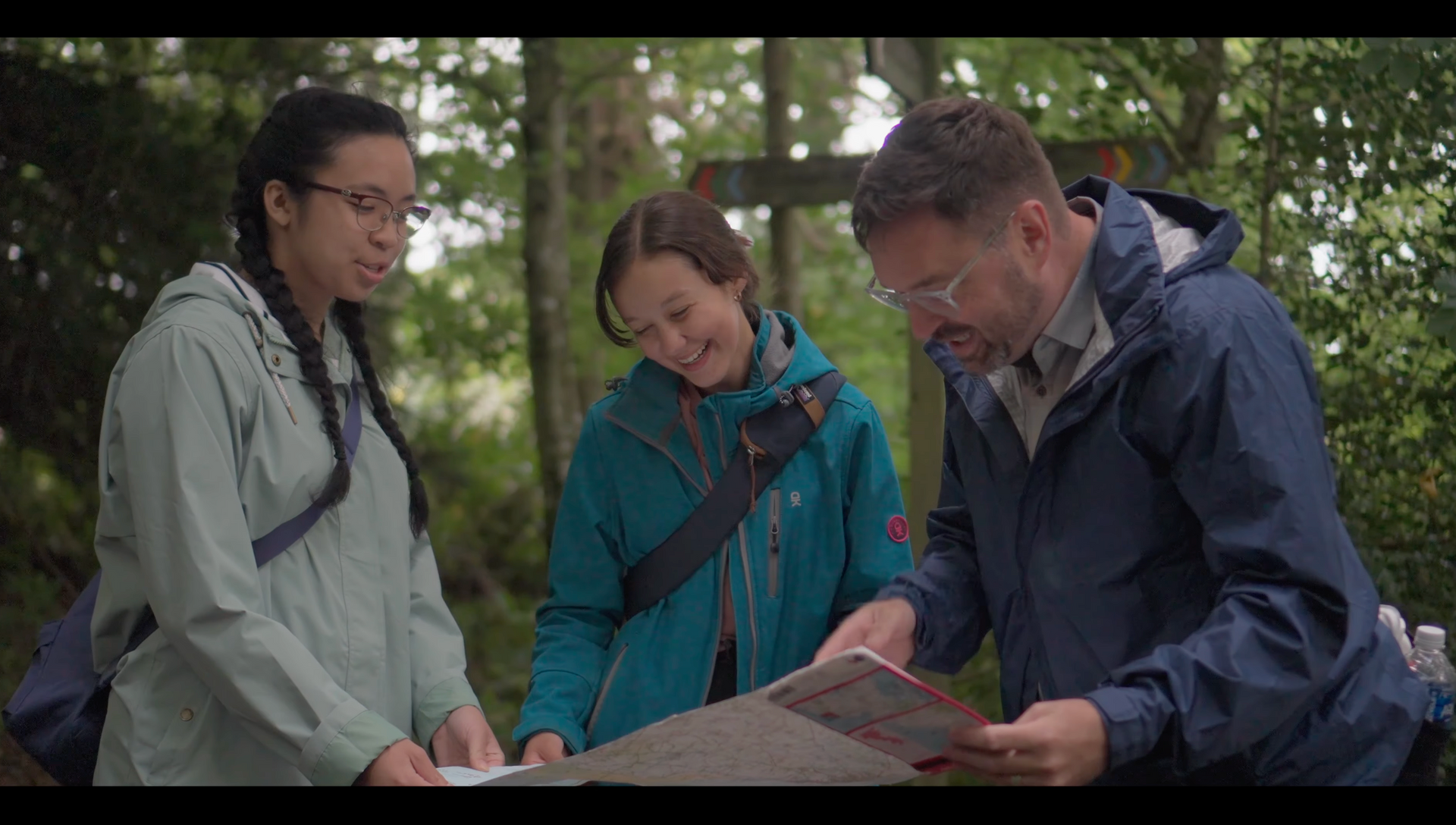
At the recent Hearts in Search of God Spring Gathering we viewed a wonderful new film following a group of American students as they walked the Way of St Cuthbert. More about the film can be found here.
Cuthbert's shrine is in Durham Cathedral (see photo above) but who was he? Dr Anne E Bailey explains what we know.
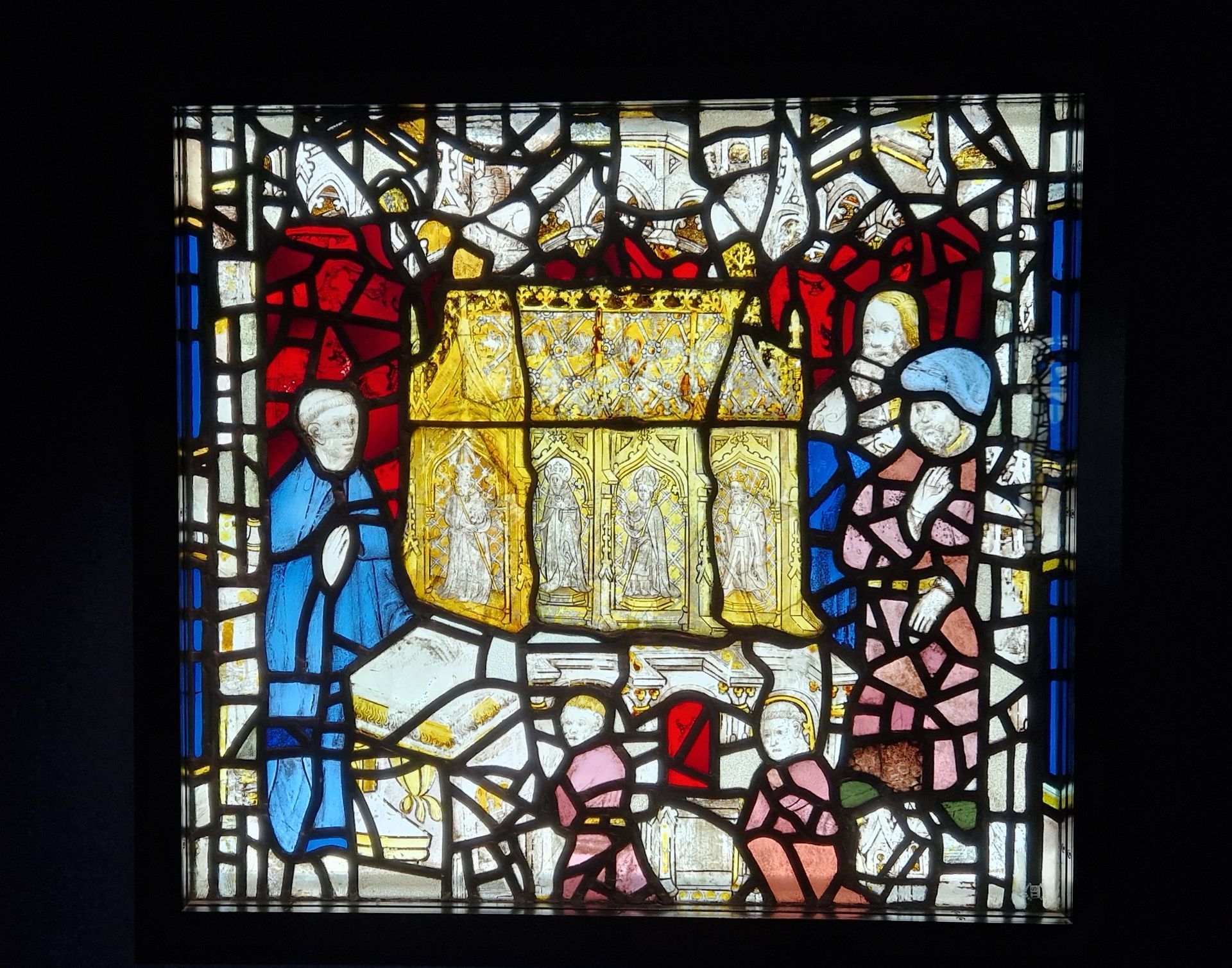
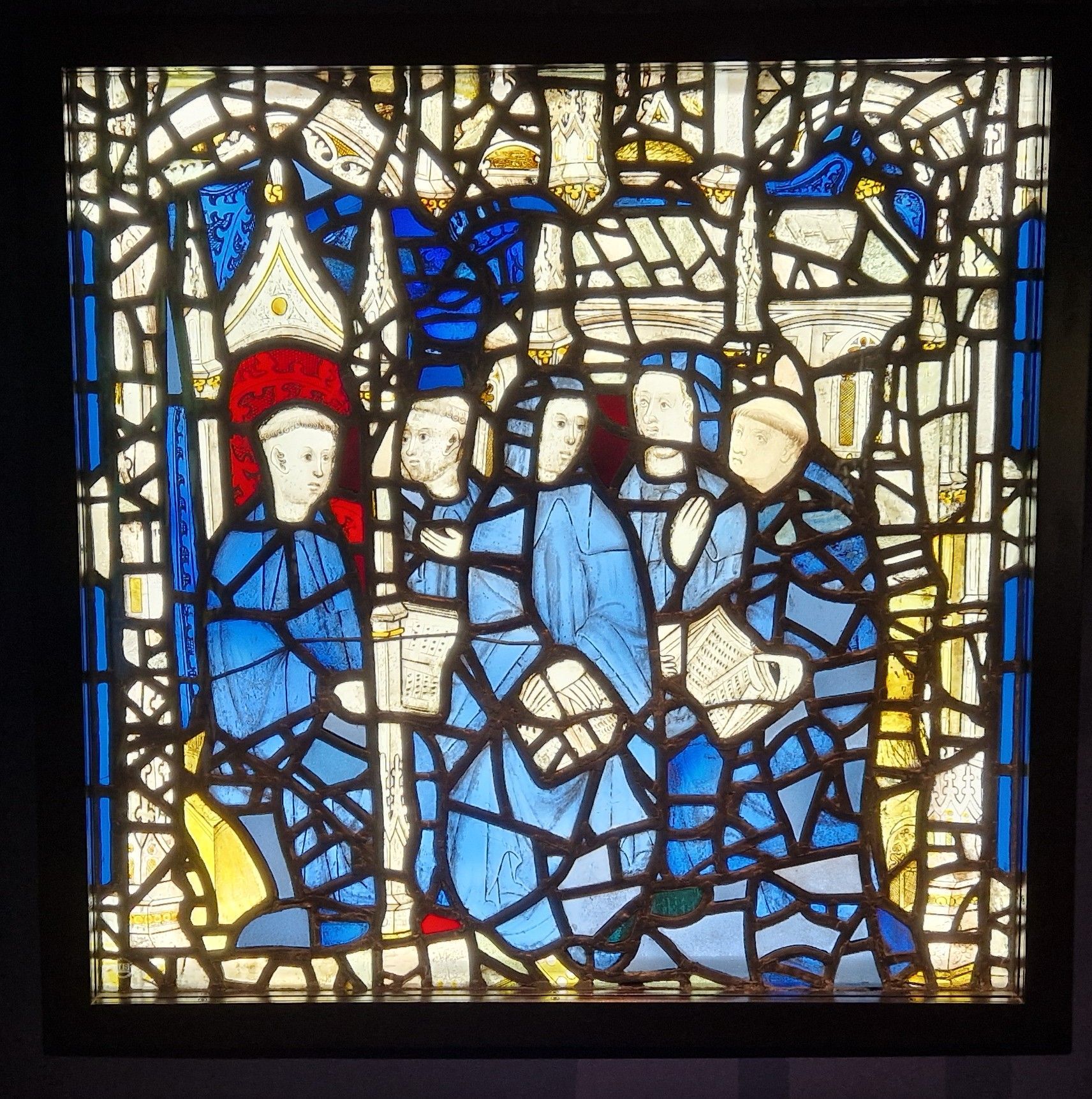
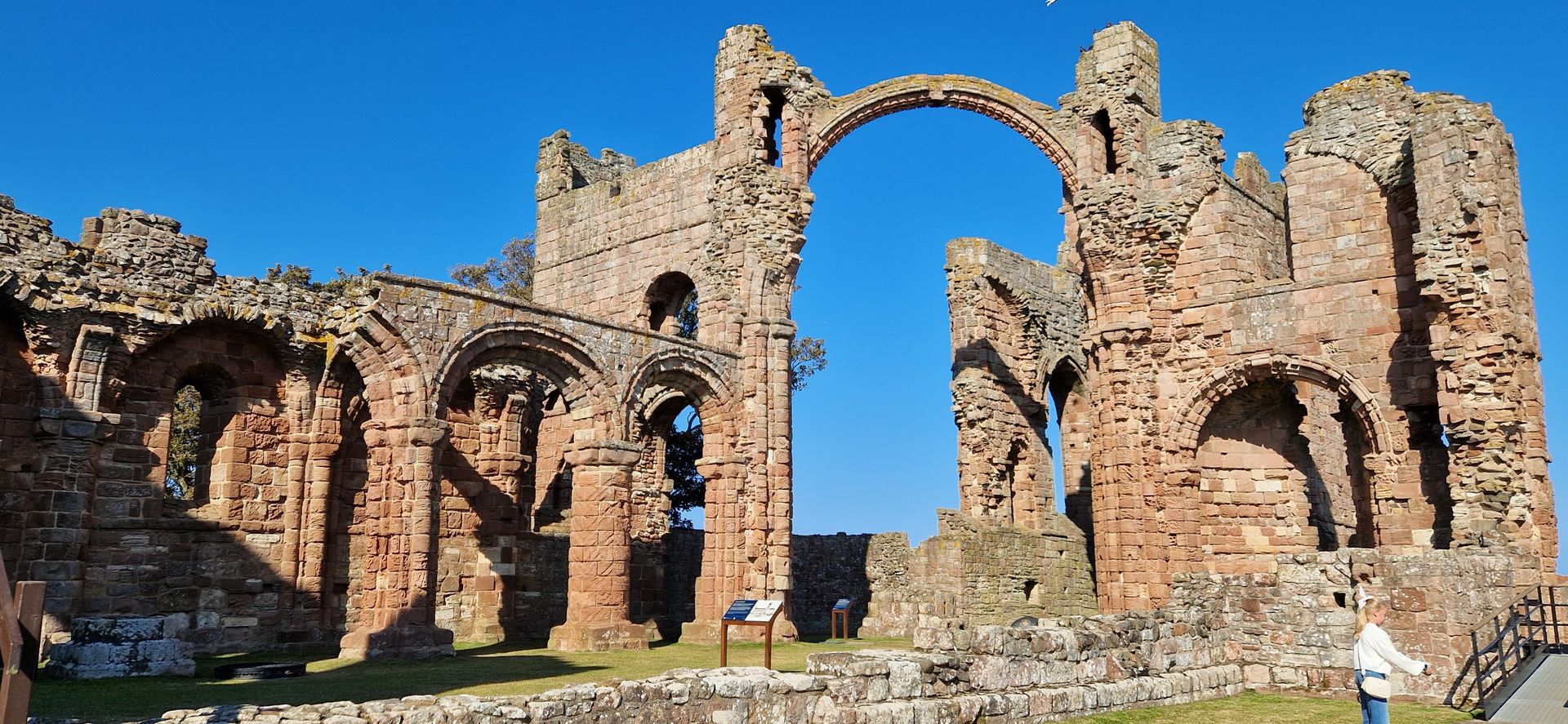
St Cuthbert (AD 634 – 687) was one of medieval England’s foremost saints, a religious celebrity whose fame spread well beyond his home region of Northumbria. While his life – moving between the monastic houses of Ripon, Hexham, Melrose and Lindisfarne as monk, bishop and latterly as a hermit – had been an interesting one, his afterlife is more interesting still.
Cuthbert’s Posthumous Adventures
Cuthbert’s posthumous career begins on the tidal island of Lindisfarne at the monastery founded by St Aidan in AD 635. It opens not with the saint’s death in AD 687, but eleven years later when the monks are said to have found his body miraculously undecayed. This was a sure sign of sanctity, so Cuthbert was enshrined as a saint. And here he might have stayed, resting peacefully in the care of his fellow monks, had it not been for the Vikings.
The Danes first attacked Lindisfarne in AD 793. The raiding continued and, eight decades later, a group of monks made the decision to leave their monastery. Although the exact reason for this move has been disputed, what is clear is that they packed up their precious possessions including the most precious of all – the body of St Cuthbert – and set off on what was to become a momentous journey. They weren’t the first monks to take such action. In the face of imminent Danish attack, the relics of Edmund of Bury were similarly placed in a cart and taken on a lengthy journey, settling for a time in London. However, Cuthbert’s posthumous travels were far more extensive and – unlike Edmund – the Northumbrian saint was never to return ‘home’.
After wandering back and forth, crisscrossing Northumbria for seven years, the monks arrived at Chester-le-Street where they stayed for just over a century. There followed a brief move to Ripon, and a final one to Durham where – except for a short interlude at Melrose – Cuthbert’s relics have resided ever since. An important moment in the cult came in 1104 with the translation of Cuthbert’s relics into Durham’s new Norman cathedral. When the coffin was opened, it was discovered that Cuthbert’s body was still incorrupt, and that he had been buried with the Venerable Bede, the head of St Oswald, and an ancient Gospel book. Cuthbert’s shrine became a big draw for visitors, and the twelfth century saw pilgrimage to Durham at its height.
The Sources
We know about Cuthbert’s posthumous history thanks to the survival of some important hagiographical texts describing these events. The first, an anonymous Life of St Cuthbert, dates to about a decade after Cuthbert’s death. Bede also wrote a Life in the early eighth century along with an account in his Ecclesiastical History of the English People. The Norman cult at Durham is detailed by texts by two Norman monks of the Cathedral, Symeon of Durham (c.1090-c1128), and Reginald who wrote a substantial miracle collection telling us much about pilgrimage in the twelfth century.
Cuthbert’s Pilgrims
What can these writings tell us about Cuthbert’s cult and the experiences of medieval pilgrims? The first thing to note is that the cult began even before Cuthbert’s death. Like other famous holy men, Cuthbert was a bit of a celebrity in his lifetime. Bede explains that his reputation for miracles and healing attracted visitors from across Britain. These early pilgrims confessed their sins to him and told him their troubles. He also cured those he came across in the towns and villages through which he travelled spreading his evangelising message. These ranged from a nun with a headache to a youth with a wasting disease and a woman on the point of death.
However, it was at Durham in the twelfth century where Cuthbert’s cult really came into its own. This was a time when pilgrimage was becoming big business – both metaphorically and literally – and Cuthbert had some serious competitors. These included St Godric of Finchale just up the road, St Wilfrid not far away in Ripon, St John of Beverley, and – more significantly – Thomas Becket following his martyrdom at Canterbury Cathedral in 1170. In promoting Cuthbert’s cult, the miracle stories boast that Cuthbert was a more powerful miracle worker than his rivals.
The pilgrimage experience at Durham focused on Cuthbert’s shrine. Today, Cuthbert’s tomb lacks the splendour and majesty of its medieval predecessor but in the twelfth century the reliquary – ornamented with precious metals and jewels – was raised high above ground on nine pillars in prime position behind the high altar and set on Italian marble paving. The height was testimony to Cuthbert’s elevated status, but it also allowed pilgrims to kneel beneath the reliquary and draw close to the relics.
Pilgrims visited all year round, but late-medieval offerings suggest that by far the busiest times were Cuthbert’s feast days on 20 March and 4 September when people from across the diocese came to honour their patron saint. They would have been treated to a spectacle of grand processions, colourful vestments and decorations, a full mass, and a sermon instructing pilgrims on the life and miracles of Cuthbert.
Cuthbert as Guardian and Healer
The popularity of the cult at Durham predominantly rested on two facets of Cuthbert’s posthumous character. First, he was regarded as a guardian and protector of his territory and its inhabitants. Like a manorial lord, he was both a paternal figure to those under his care but also a formidable adversary to his enemies, often protecting his territory with cruel vengeance. Miracle stories show him punishing those who dared to threaten his land and people. In one example, a boy who dares to steal bird nests from Cuthbert’s church is struck down with paralysis of the offending hand. This aspect of Cuthbert spilled over into his other claim to fame: his reputation as a miracle worker. In a more kindly role Cuthbert was a spiritual mediator or intercessor, bending the ear of God on behalf of petitioners who came to him with their prayers for healing and other favours.
Pilgrim Rituals
Because Cuthbert’s healing power was believed to be stronger closest to his relics, pilgrims desired to get as near as possible to his shrine. Reginald of Durham describes how a knight with toothache pressed his swollen face against it for a cure. Pilgrims also brought candles and coins as offerings. One story tells how a candle was left too close to the shrine and set light to the embroidered cloths on the altar. More expensive items such as jewellery might be left by wealthier pilgrims. Thanksgiving tokens were also gifted once a cure had been granted. The knight with toothache returned a few days later to donate his troublesome tooth that – it was assumed – had fallen out as a direct result of Cuthbert’s intervention.
Cuthbert’s healing power was believed to be transferred by touch and this extended to items that had come into contact with his body. The earliest texts describe how secondary relics – a girdle belonging to Cuthbert, soil taken from the ground where his body had been washed, and shoes worn by the saint – became vehicles for miracle cures. It wasn’t enough just to touch these items: the soil was mixed with water and drunk, the girdle was placed around the supplicant’s midriff, and the shoes worn on their feet. In the twelfth century, other miracle-working relics included Cuthbert’s hair and nail parings, fragments of his clothing, and dust from his tomb mixed with water. Saints’ cults were visceral in a way that may seem strange to us today.
Cuthbert Today
Cuthbert’s shrine was dismantled in the late 1530s at the time of the Reformation, and pilgrimage to Durham ceased. The story goes that, although the shrine was broken up and its riches purloined for the Crown, the men who came upon Cuthbert’s body were so spooked by the intact corpse that they hesitated in ridding themselves of it. Instead of suffering the fate of many of his fellow saints whose relics vanished, Cuthbert was reburied beneath the site of his medieval shrine where pilgrims can still find him today.
Although modern pilgrims no longer visit Cuthbert in the expectation of a miracle cure, one aspect of his medieval popularity still has resonance today. Cuthbert has remained, as he was in the Middle Ages, a symbol of regional identity and community, affectionally known by locals as Cuddy. People in Durham still think of him as ‘their’ saint, a benevolent father-figure looking out for them in times of need.
One of my favourite miracle stories is not medieval but takes place during World War Two. In the early hours of a May morning in 1945, a warning was given of the Luftwaffe approaching Durham. According to eyewitnesses, a dense fog suddenly descended over the Cathedral like a smokescreen, obscuring everything within a two-and-a-half mile radius. Mysteriously, it lifted as the all-clear sounded. Coined ‘St Cuthbert’s Mist’ by the people of Durham, this fortuitous weather phenomenon was a reassuring sign that Cuthbert was watching over them.
This story, still told today, is depicted in stained glass in Durham Cathedral’s RAF Memorial Window. So if, like medieval pilgrims, you find yourself drawn to Cuthbert at Durham, don’t miss this reminder of the continuing influence of one of England’s greatest saints.
Anne E Bailey
Dr Anne Bailey is an Associate Member of the History Faculty, University of Oxford, and has published on medieval and modern pilgrimage.
Photos courtesy of Anne E Bailey and the film still courtesy of Christian Holden