Genesis, Abraham, Covenant and Pilgrimage
In this article Frans A. Vossenberg explores the biblical roots of pilgrimage in the story of Abraham and his covenant with God.
Frans is a retired physician and an active pilgrim. This paper was written as part of his studies for a
Masters in Evangelisation and Culture at the Catholic University of America in Washington DC.
You can also download the presentation using the button below.
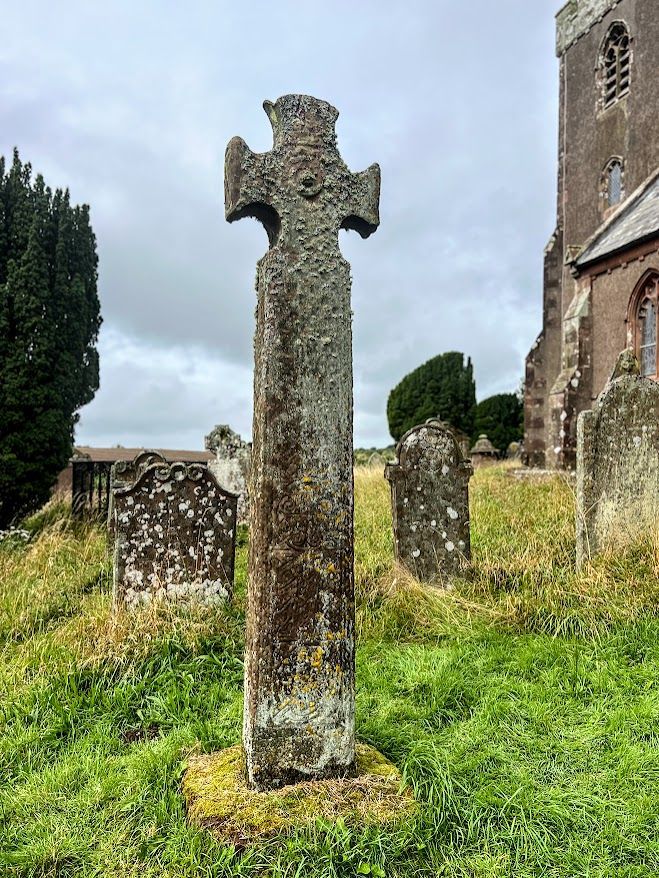
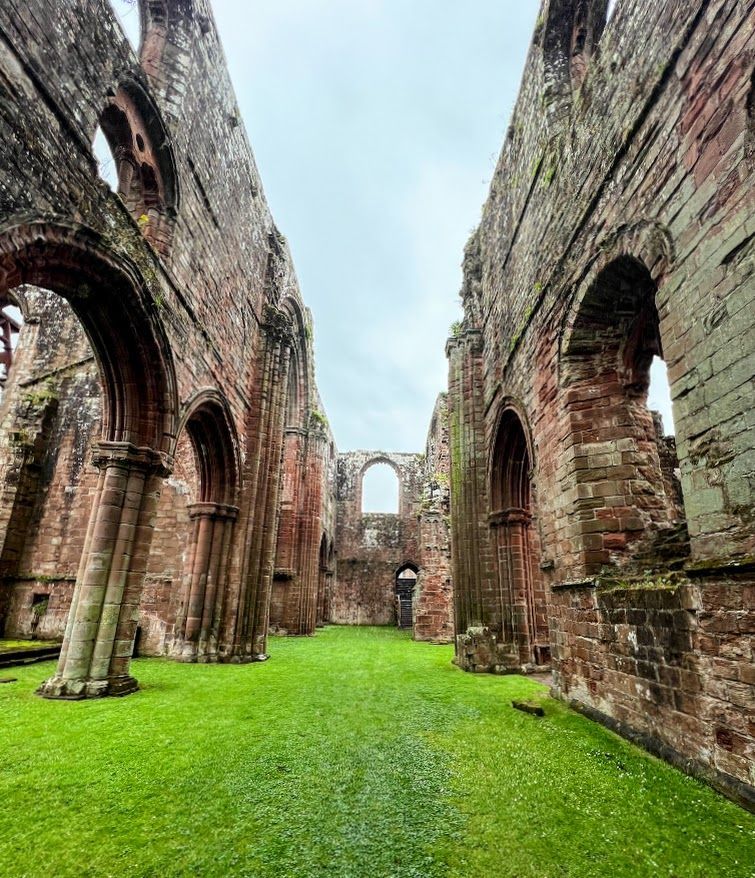
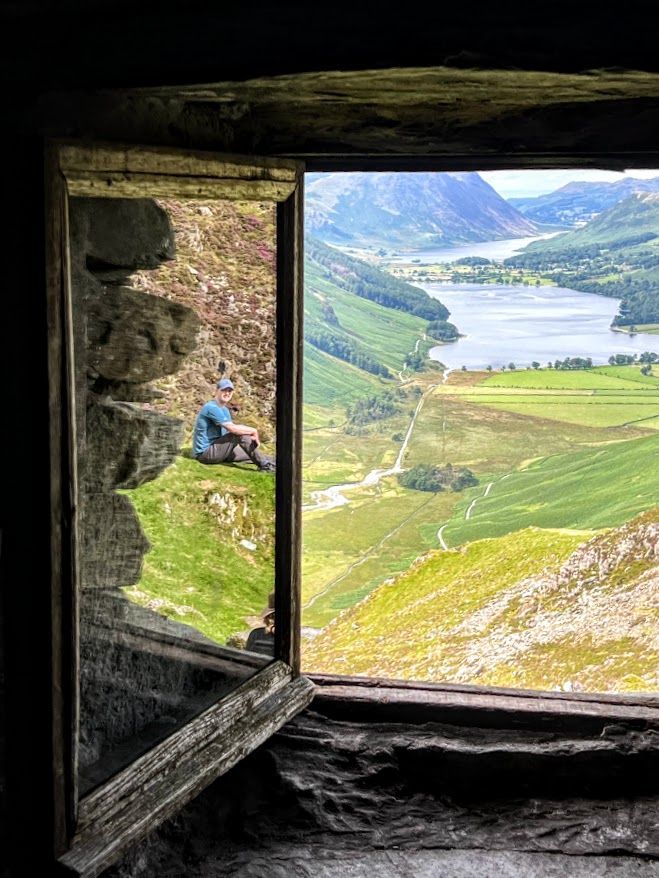
Introduction: Why Do We Walk on Pilgrimage?
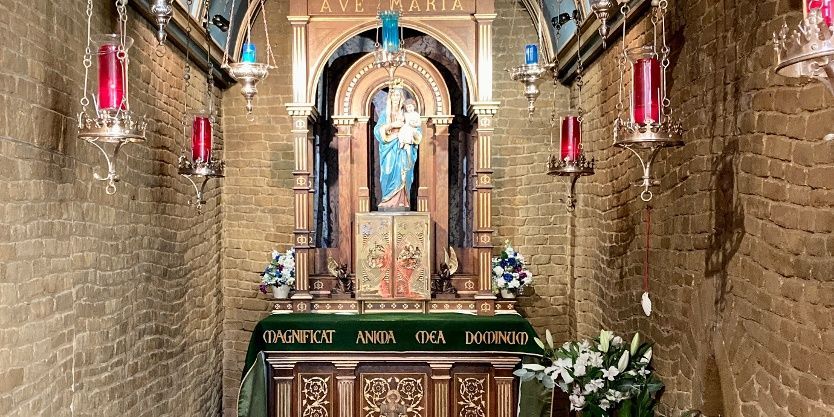
Imagine that you are standing before the altar of the eight saints of Cumbria in the Church of Our Lady Star of the Sea and St Michael in Workington, Northwest England. You are at the start of a 175 mile walking pilgrimage across the Cumbrian hills. You may be new to pilgrimage, so let us begin with its biblical roots: the story of Abraham and his covenant with God.
Medieval pilgrimage involved travel, hardship, detachment, a journey, and a destination. As the body grows weary, the mind turns to meaning. Where am I going? Why am I doing this? What is my purpose? My goal in this article is to offer Abraham’s life as the model for modern pilgrimage.
In the early chapters of Genesis, Enoch and Noah are said to ‘walk with God’. But everywhere East of Eden is still marred by envy, lust, greed and pride. Genesis 12 reveals that the call to holiness, that is, to be set apart for the worship of God, was a gift, freely bestowed on Abraham. God calls us to detachment as a spiritual discipline and responds to those who seek him by inviting us out of sin and into a family relationship. Hear his words to Israel in Leviticus:
You shall be holy to me; for I the Lord am holy, and have separated you from the peoples, that you should be mine. (Leviticus 20:26)
And I will walk among you, and will be your God, and you shall be my people. (Leviticus 26:12)
How Does Abraham Become a Pilgrim and Form a Covenant with God?
In Genesis 12, God singles out Abram, not for anything he has earned, but as a free and unmerited gift, and promises him nationhood, kingdom, and worldwide blessing.
Now the Lord said to Abram, “Go from your country and your kindred and your father’s house to the land that I will show you. And I will make of you a great nation, and I will bless you, and make your name great, so that you will be a blessing. I will bless those who bless you, and him who curses you I will curse; and by you all the families of the earth shall bless themselves.” (Genesis 12:1-3)
So, at the age of 75, Abram sets out from Haran and becomes the first pilgrim. Over the following decades, God establishes his three promises as covenants. God’s covenant of Nation, Kingdom and Blessing, as R. R. Reno writes, “quite simply is the divine plan.”
Biblical covenants typically included four parts: an Oath, a Sacrifice, a Meal and a Sign. Abraham’s sacrifices were intrinsic to God’s covenants, progressively intensifying from the divided animals to the offering of Isaac. The signs were the stars of heaven, the scar of circumcision, and the mountain named “The Lord will provide”. The meals were the bread and wine offered by Melchizedek and the dinner prepared for the three visitors at Mamre. The ram slain in Isaac’s place on Mt. Moriah points to Christ’s sacrifice on the Cross, made present in the Eucharist.
Notice that a covenant is much more than a contract. A contract demands property, whereas a covenant invites a familial relationship. Covenant is a reception, not a taking: God swears an oath, provides the sacrifice, feeds us, and marks us as His own. He asks only for our virtuous cooperation, as in Genesis 17:1:
“I am God Almighty; walk before me, and be blameless.”
How Does Abraham’s Journey Relate to Our Pilgrimage?
A 175-mile hike over the fells and undoubtedly through the rain of Cumbria is a holy invitation but a daunting task. On the Camino, it is said that “A tourist demands everything and accepts nothing; a pilgrim expects nothing and accepts everything.” Like Abraham, we must trust in God:
By faith Abraham obeyed when he was called to go out to a place which he was to receive as an inheritance; and he went out, not knowing where he was to go. (Hebrews 11:8) As we walk by faith on our personal pilgrimage, we renew our Christian covenant with:
• An Oath: Which is, for us, a renewal of our baptismal promises followed by prayerful walking with intentions of adoration, contrition, thanksgiving, and supplication. We aim to follow the advice of St. Paul:
Rejoice always, pray without ceasing, give thanks in all circumstances; for this is the will of God in Christ Jesus for you. (1 Thessalonians 5:16-18)
•
Sacrifice: Climbing fells and fording becks is offered AMDG, like the "living sacrifice" of Romans 12:1:
“I appeal to you therefore, brethren, by the mercies of God, to present your bodies as a living sacrifice, holy and acceptable to God, which is your spiritual worship.”
•
Meal: Every shared meal with your fellow pilgrims points to the Eucharist, the meal of the New Covenant, as Paul writes:
"Because there is one bread, we who are many are one body, for we all partake of the one bread.” (1 Corinthians 10:17)
•
Sign: Each pilgrim will choose a stone from Fleswick Beach to carry as an intention, an intercession, or a burden to lay down at the Eden Valley destination, as it is written in Hebrews:
“let us also lay aside every weight, and sin which clings so closely, and let us run with perseverance the race that is set before us.” (Hebrews 12:1)
Where Is Eden and How Do We Get There?
“The Path to Eden” is both literal and allegorical. The Footsteps of the Cumbrian Saints extend from west to east, leading the pilgrim from the Irish Sea area of St Bees to the Eden Valley region of Penrith. Daily prayers and reflections ask these holy men and women to guide us from our worldly preoccupations to God’s Edenic intentions. Isaiah 51:2-3 ties Abraham to this hope:
“Look to Abraham your father … For the Lord will comfort Zion … and will make her wilderness like Eden."
Our patrons on this journey include Saints Ninian, Kentigern, Cuthbert and Bega, who brought the faith to Cumbria between the 4th and 9th centuries. Our walk begins with a pilgrimage blessing at the altar of the Cumbrian Saints, extends down the Irish Sea coast and then Eastward through the Lake District. Our goal is to restore our faith and apply the lessons of Cumbria's saints to our own lives. We expect the physical stress of our journey will drain our bodies, but we trust that heavenly grace will fill our souls, as the Lord said to St. Paul:
“My grace is sufficient for you, for my power is made perfect in weakness.”
(2 Corinthians 12:9)
Rather than meeting our Creator at Moriah, Bethel or Sinai, we renew the covenant of Abraham, fulfilled in Christ, in the chancel of ancient rural churches and find God in the grandeur of Lakeland fells. Pilgrimage, as prayer in action, is a path which leads our hungry souls, like the rays of a scallop shell, to the Savior who has been seeking us.
So, on your path,“Walk firmly, Pray deeply, Sing proudly, and Stop when you hear His voice.”
Frans A. Vossenberg
1 October 2026