If you are undertaking a
Hearts in Search of God pilgrimage and are unfamiliar with the Catholic faith this brief resource explains some of the prayers and practices you may encounter, and what to expect when attending Mass.
Prayers
The Our Father
When the disciples asked Jesus how to pray, he taught them the Our Father, also known as The Lord’s Prayer. It is one of the most loved and widely used Christian prayers. Catholics do not say “For the kingdom, the power and the glory are yours, now and for ever" immediately after the end of the prayer because this phrase is not found in the Greek manuscripts of the Gospels (Matthew chapter 6, verses 9-13, and Luke chapter 11, verses 2-4).
Our Father, who art in heaven, hallowed be thy name; thy kingdom come, thy will be done, on earth as it is in heaven.
Give us this day our daily bread and forgive us our trespasses, as we forgive those who trespass against us;
and lead us not into temptation, but deliver us from evil.
Amen.
The Hail Mary
The Hail Mary is a prayer to Mary, the mother of God, mostly taken from the Gospel of Luke (chapter 1, verses 26-38). Pilgrims can use the prayer to ask Mary for help and prayers along the way.
Hail Mary, full of grace, the Lord is with thee; blessed art thou among women and blessed is the fruit of thy womb, Jesus.
Holy Mary, Mother of God, pray for us sinners, now and at the hour of our death.
Amen.
The Glory Be
The Glory Be is a short prayer in praise of the Trinity – the Father, Son, and the Holy Spirit. Pilgrims may find this a useful prayer to mark the end of a long climb, or to celebrate arriving at a beautiful viewpoint:
Glory be to the Father, and to the Son, and to the Holy Spirit, as it was in the beginning, is now, and ever shall be, world without end. Amen.
The Angelus
The Angelus commemorates the visit of the Archangel Gabriel to Mary and the Incarnation of Jesus Christ. Traditionally it is said at 6am, noon, and 6pm. Many churches ring a bell at these hours to call the faithful to prayer. On the road it can be a good prayer to say before your midday lunch stop. The leader says the lines marked V and the first part of the Hail Mary. Everyone else says text marked R and the second part of the Hail Mary. The final prayer is said by everyone.
The Rosary
The Rosary is a Scripture-based prayer centred on the lives of Jesus and Mary, his mother. It begins with the Apostles' Creed. The Our Father introduces each mystery followed by 10 Hail Marys and concluding with the Glory Be. The Rosary beads help you keep track. There are four sets of five Mysteries: Joyful, Luminous, Sorrowful, and Glorious. The Rosary can be prayed while walking alone or in a group. More about how to pray the Rosary can be found here:
https://marian.org/mary/rosary/how-to-pray
The Divine Office or Liturgy of the Hours
The Lord has commanded us to pray without ceasing, and this is what the Hours help us to do. Morning Prayer can be said at the start of the day's walk. There are daytime Prayers for mid-morning, noon and in the afternoon. Evening Prayer can be said at the end of the day's walk and Night Prayer before going to sleep. If you are walking alone it is wonderful to feel united with the whole Church as the globe turns. The prayers change with the seasons, feasts and days of the week. More can be found at:
https://universalis.com/index.htm
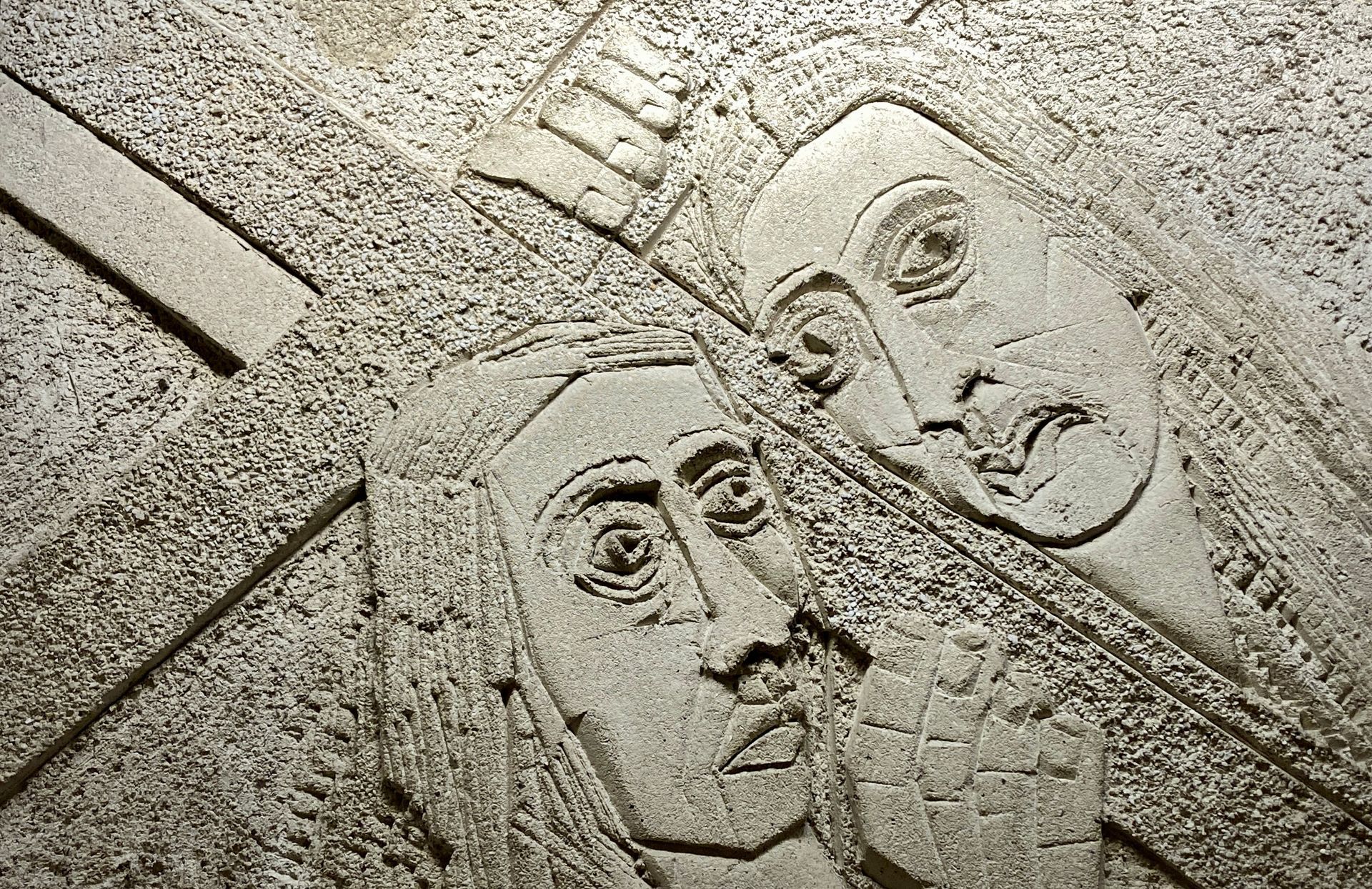
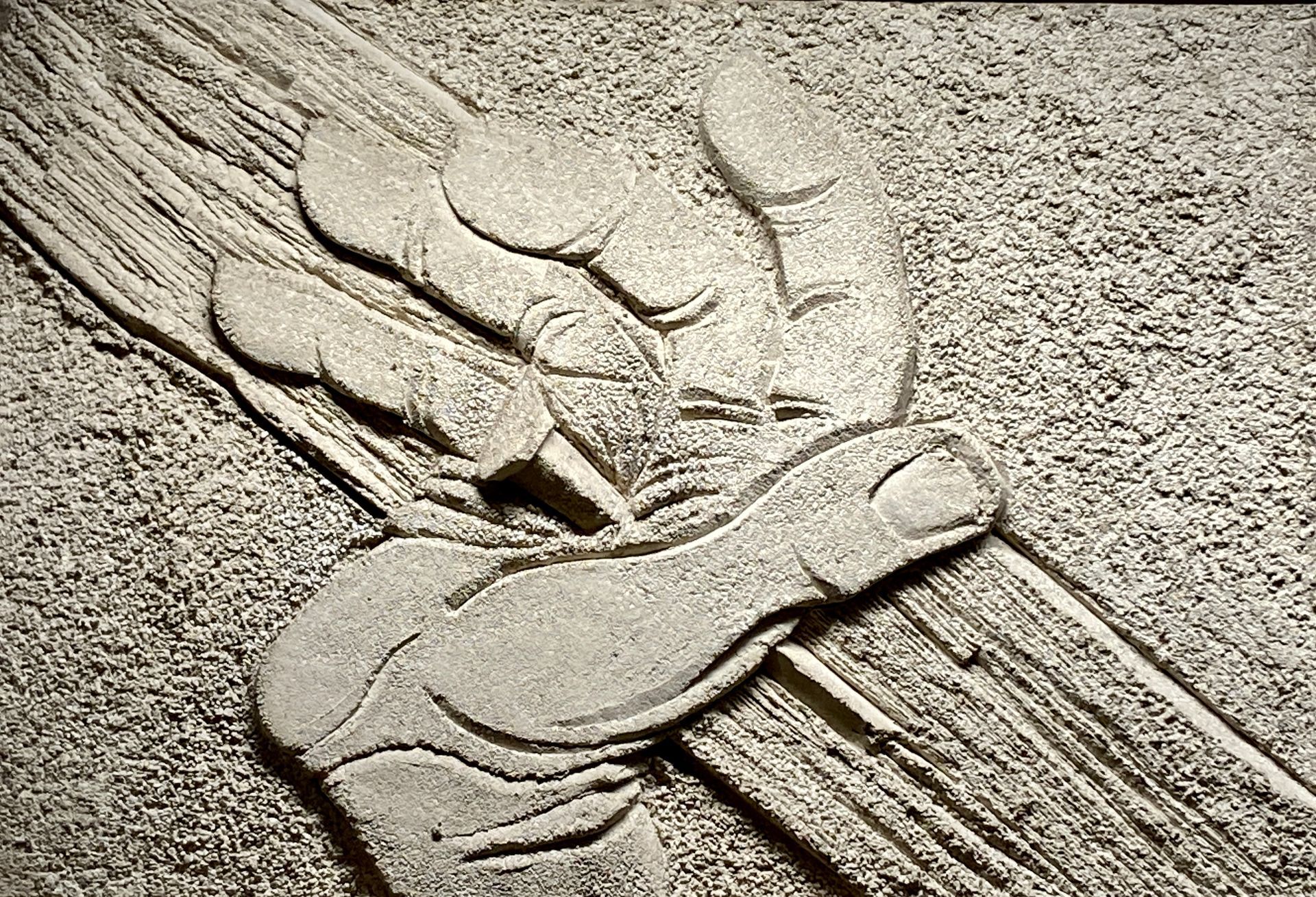
The Stations of the Cross
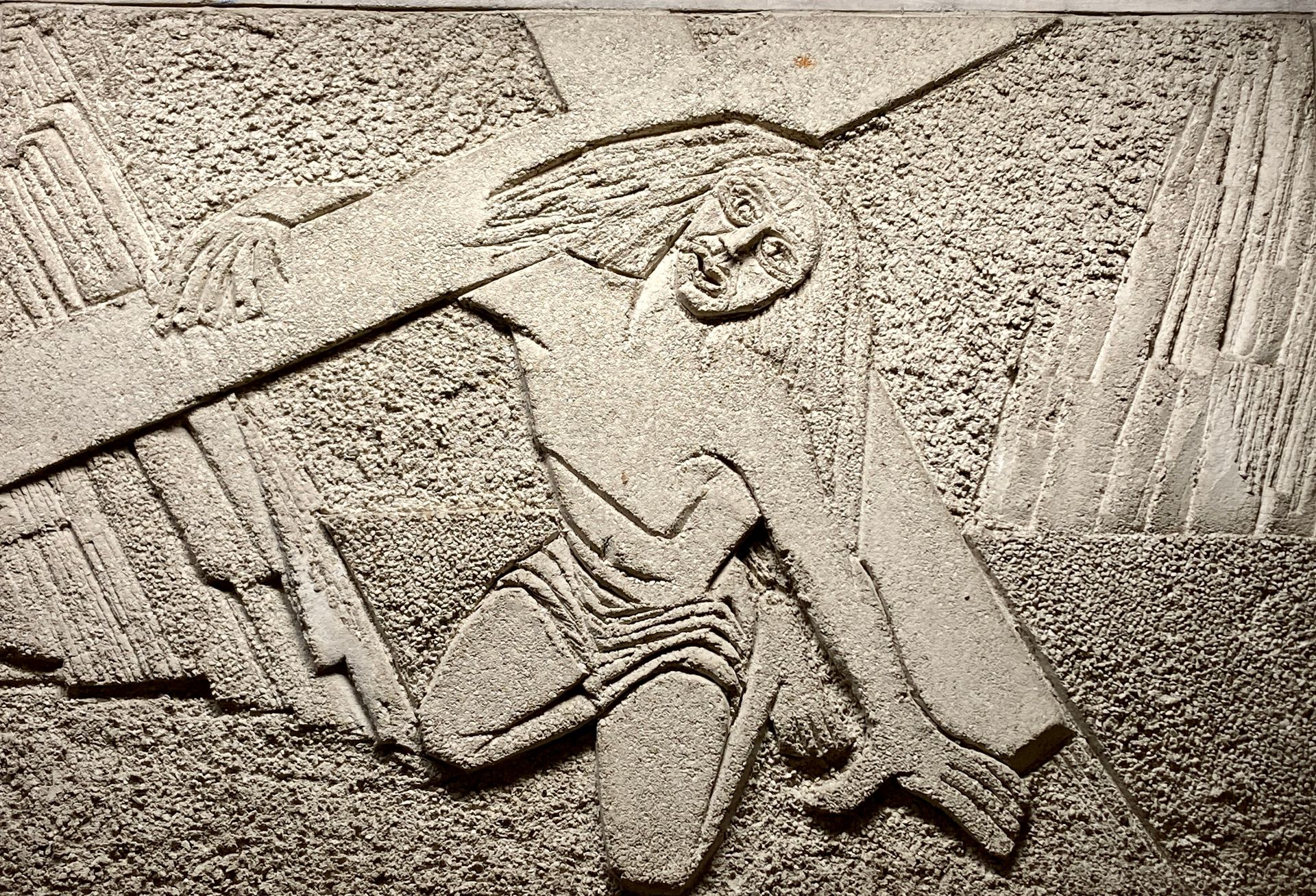
The Stations of the Cross traditionally consists of 14 points of reflection, tracing Jesus' path from his condemnation to his crucifixion, death and burial. All Catholic churches have images of these events, and walking round the stations and praying at each one can be a wonderful way to start a pilgrimage. More about the Stations of the Cross can be found here:
https://hallow.com/blog/how-to-pray-stations-of-the-cross/
The modern Stations below are from Clifton Cathedral.
Practices
Silent meditation before the Blessed Sacrament
An altar lamp is typically enclosed in red or clear glass and situated near the tabernacle, which is usually veiled. This practice traces back to the Old Testament command for a perpetual light to burn before God in the tent of meeting/temple (Exodus chapter 27, verses 20-21). The veil, and the continuously burning lamp, signify the Real Presence of Jesus Christ in the Blessed Sacrament, the consecrated Eucharistic hosts. You may wish to spend some time in silent meditation before the Blessed Sacrament before setting off on your pilgrimage.
Attending Mass
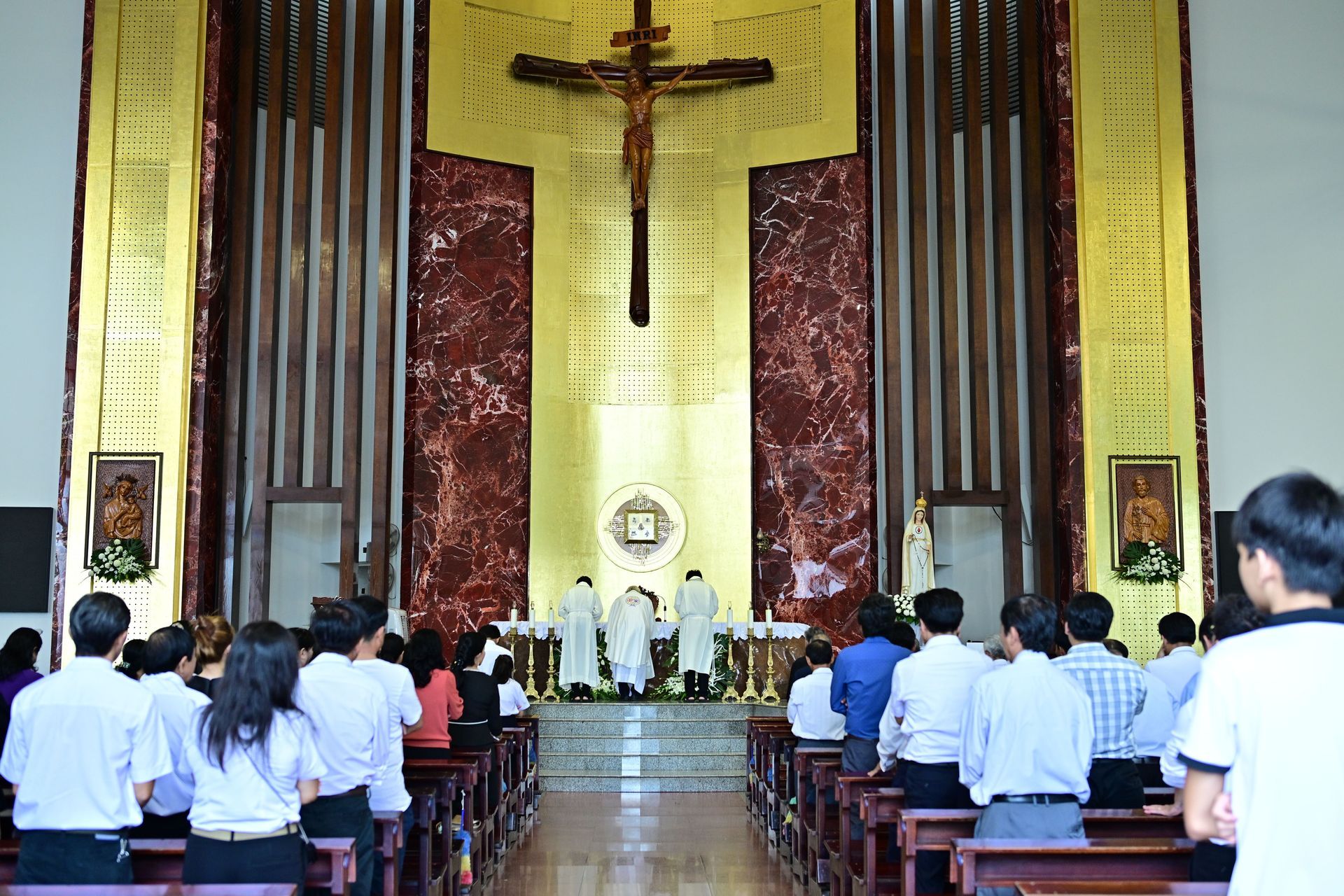
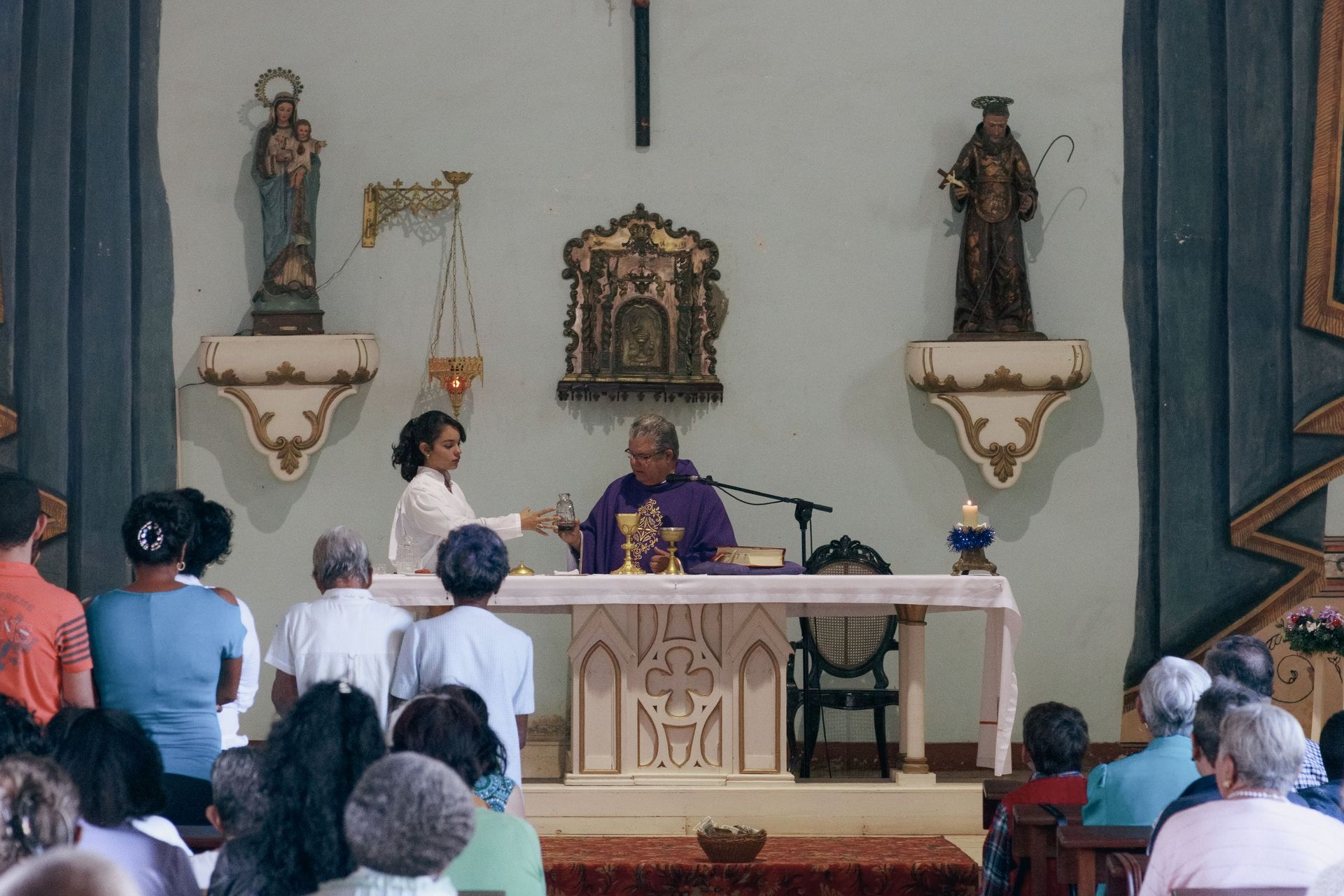
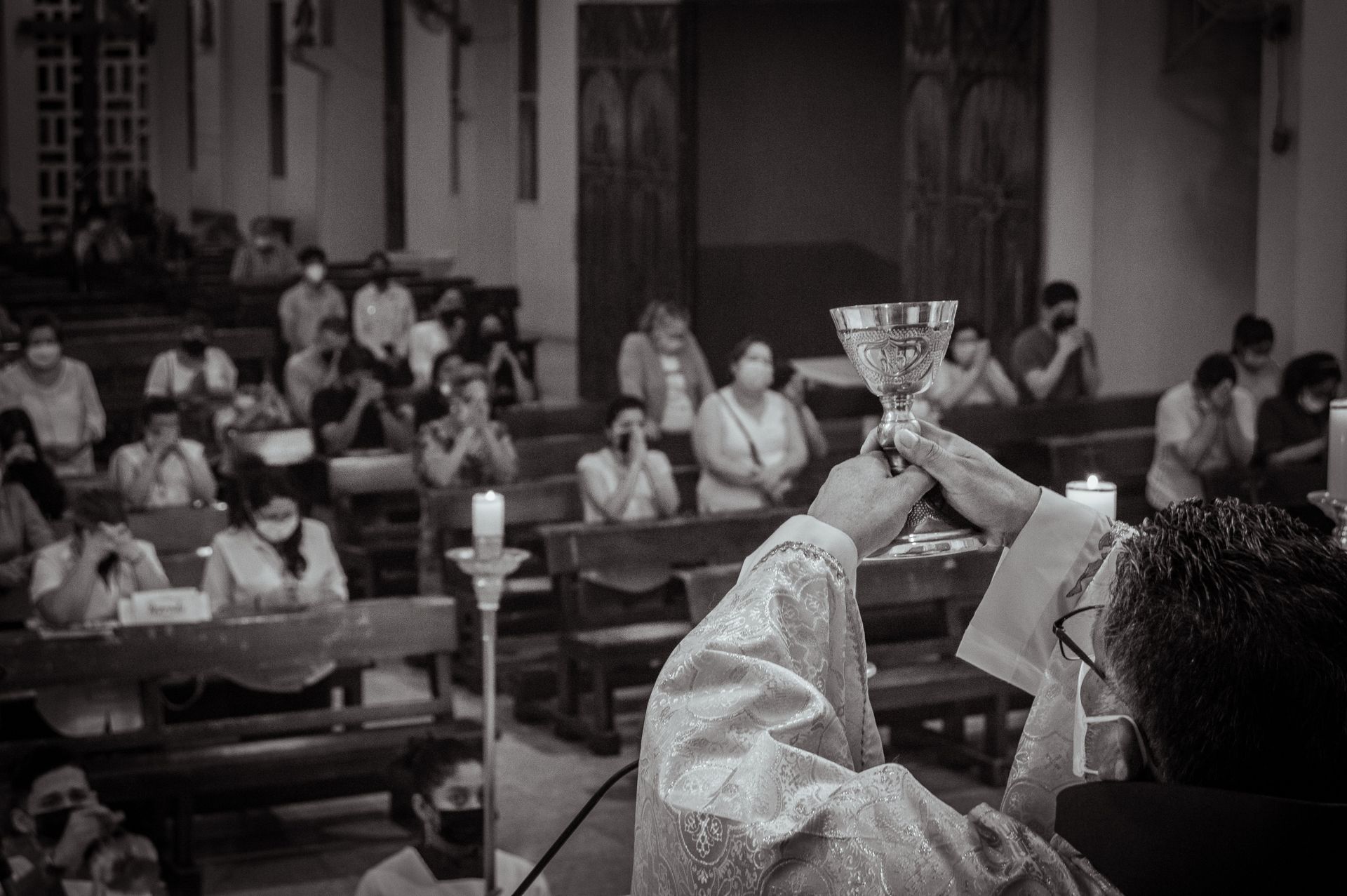
The Mass, or Eucharist, is the central act of worship and the greatest form of prayer in the Catholic Church. It commemorates the Last Supper, the meal Jesus shared with his disciples before his passion, death, and resurrection, and re-presents Christ’s single, eternal sacrifice on the cross. A video explaining the Mass can be found at:
https://www.youtube.com/watch?v=RS8NrJ0Y5O8
It is a joy when people who are not Catholic attend Mass and they are welcome to participate. It’s good to arrive a few minutes early to find any hymn books or leaflets with the readings and prayers for the day. Alternatively, you can find the prayers and readings at:
https://universalis.com/index.htm.
Please don’t worry about making a ‘mistake’ during Mass! You are welcome to stand, sit, and kneel along with the congregation, or to remain seated if you prefer not to kneel. Feel free to join in the people’s prayers and to sing the hymns. Otherwise, you should speak quietly or maintain silence before and during the Mass. Don’t forget to silence your phone!
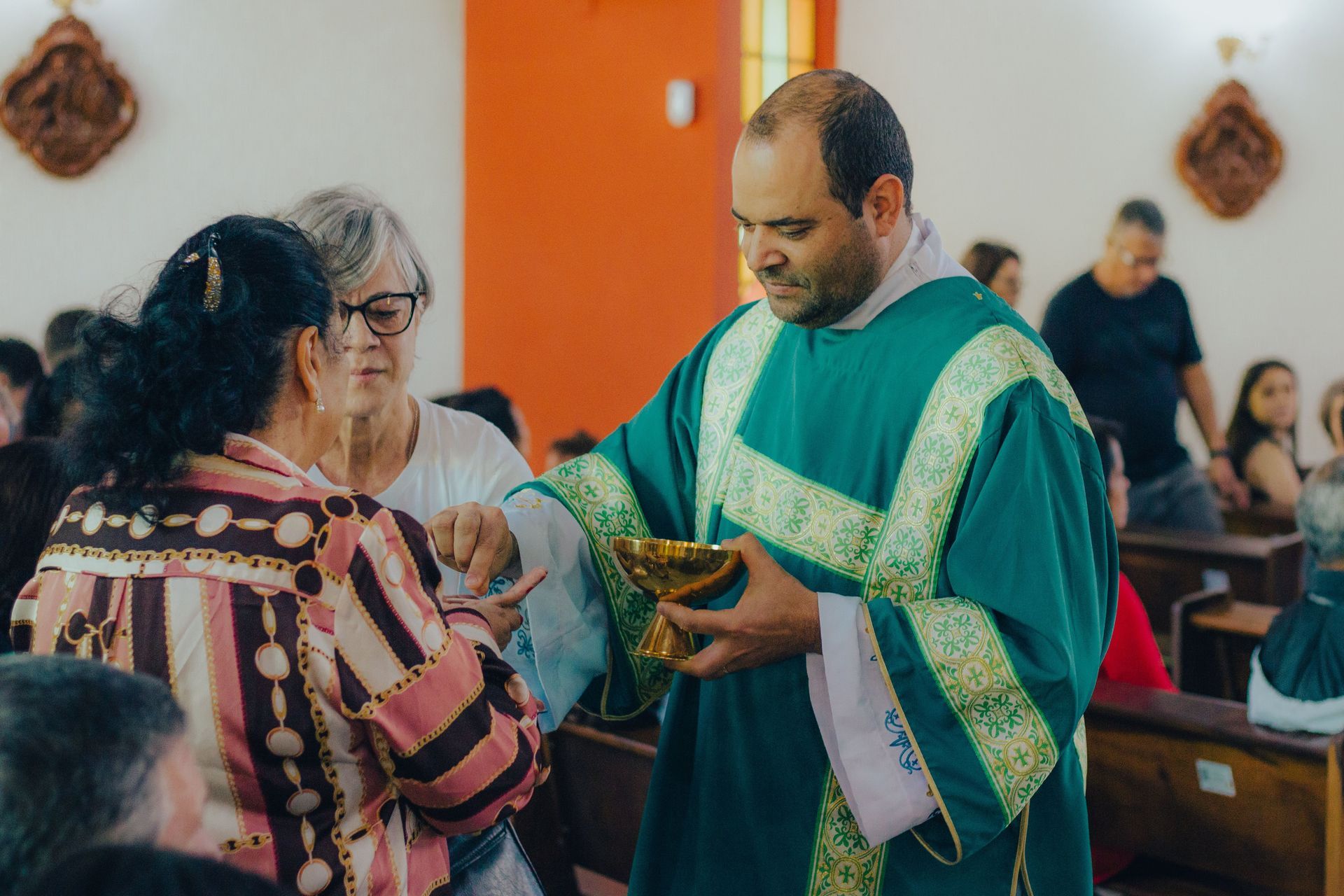
When it is time for Communion, you can either remain in your pew to pray or just be still, or join the line with your arms crossed over your chest (forming an "X" with your hands on your shoulders) to signal to the minister that you would like a brief personal blessing.
The Mass will end with a general blessing which will protect and encourage you along your pilgrim path! The word "Mass" comes from the Latin dismissal formula "Ite, missa est" ("Go, you are sent"), signalling that participants are sent out to live the Gospel as pilgrims in our everyday world.
Phil McCarthy, Hearts in Search of God project lead
I am grateful to Fr Simon Gillespie for his advice. Fr Simon is a member of the project's advisory panel and steering group.