Leading Pilgrims Faithfully
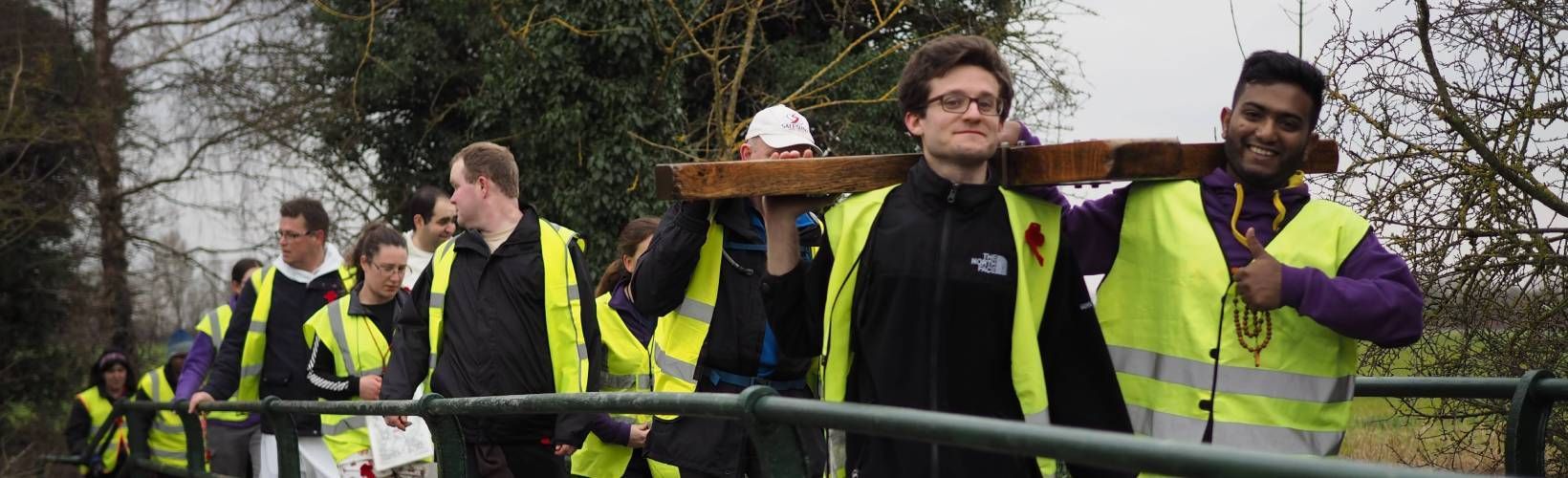
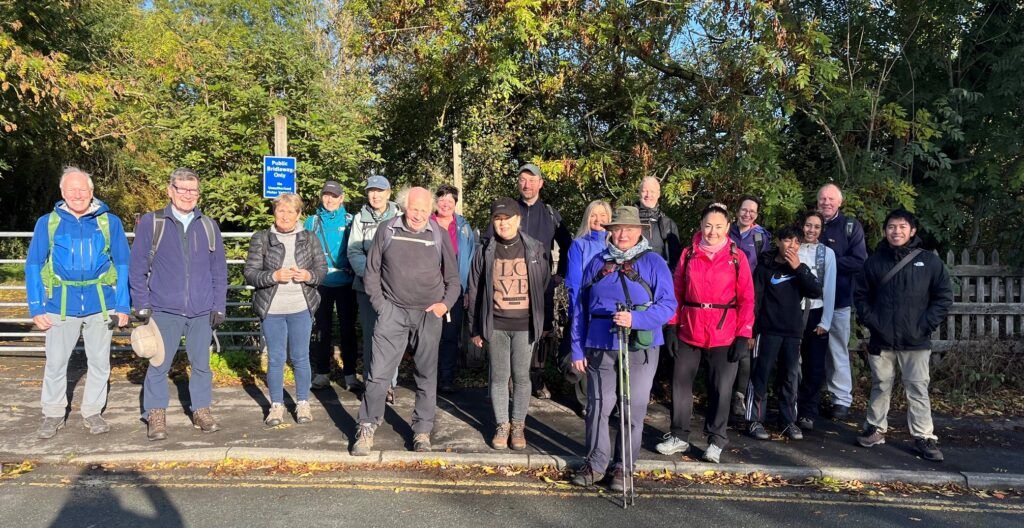
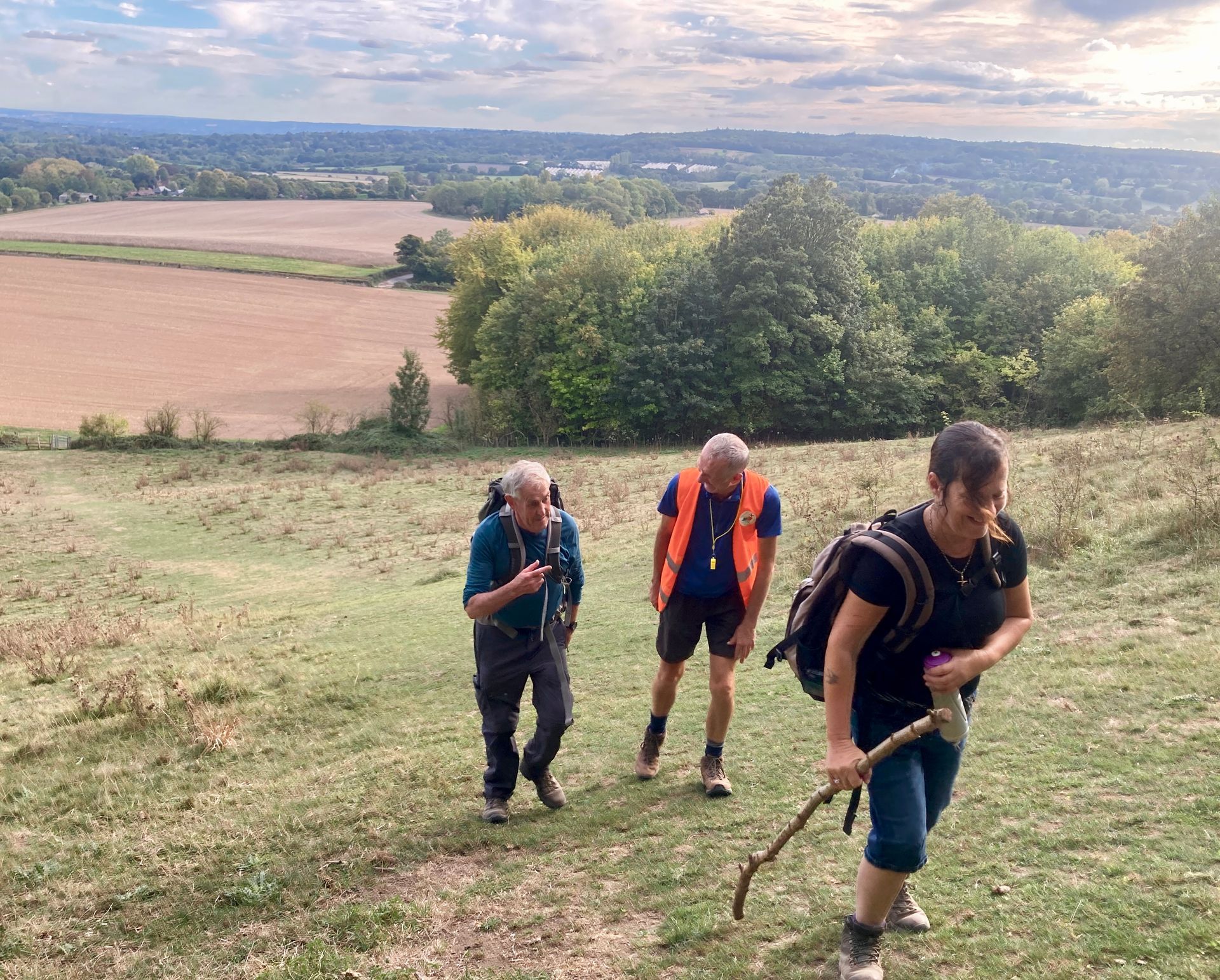
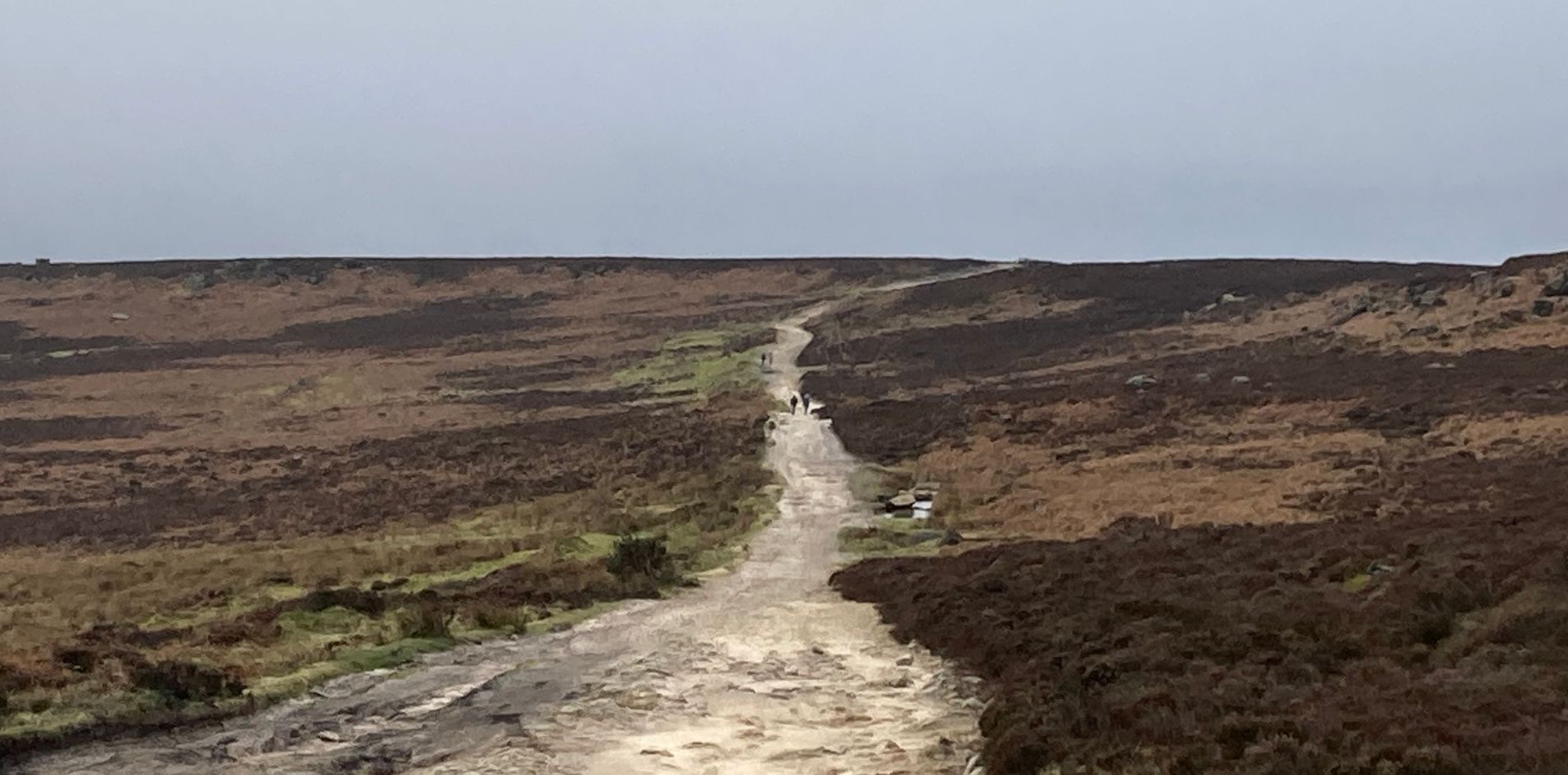
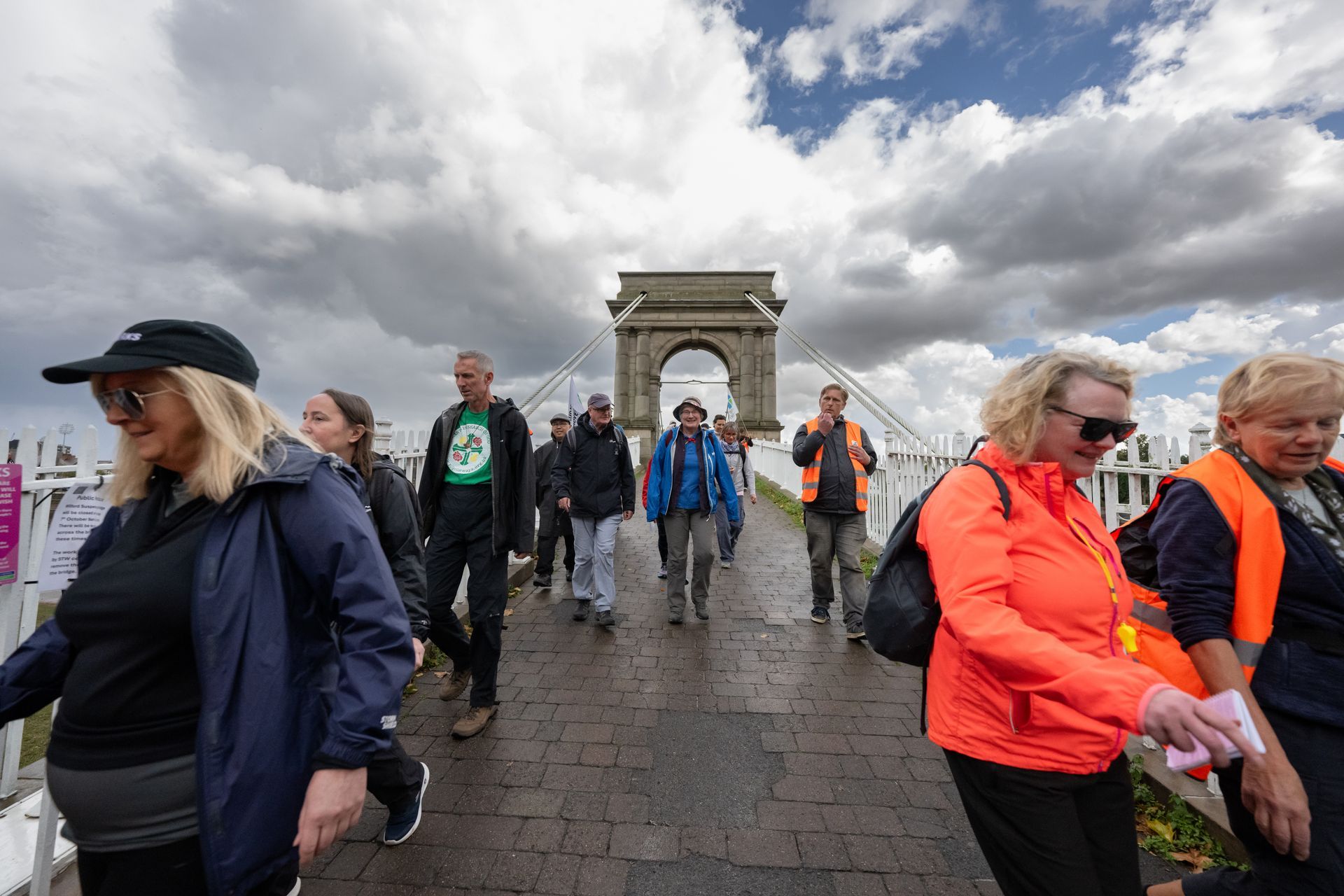
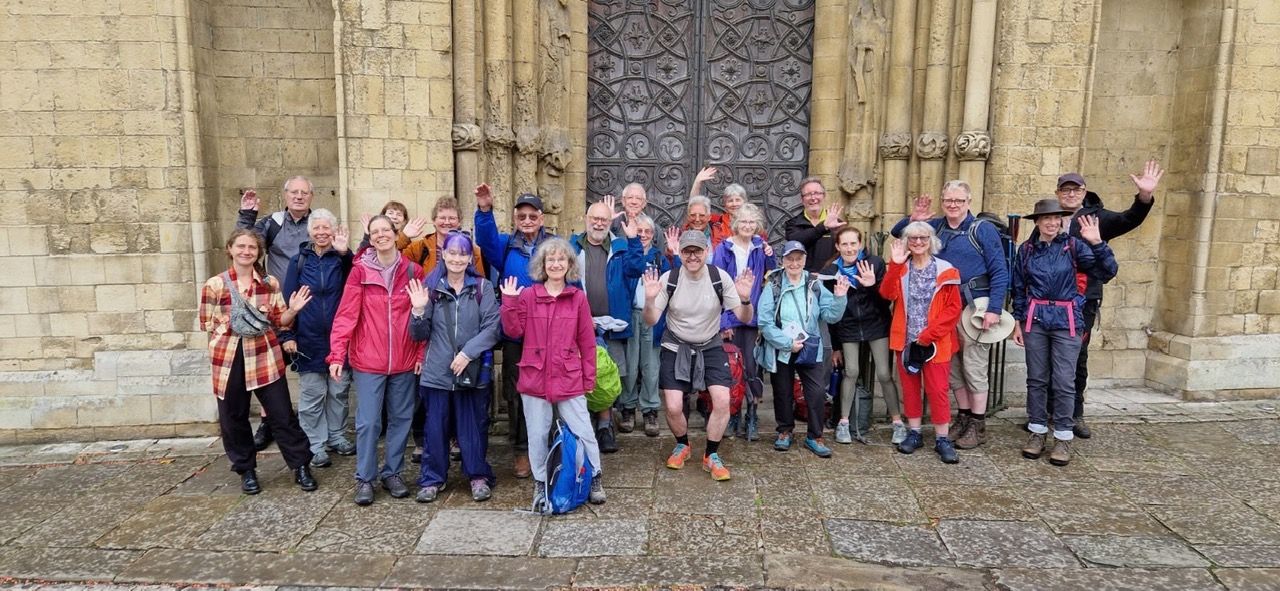
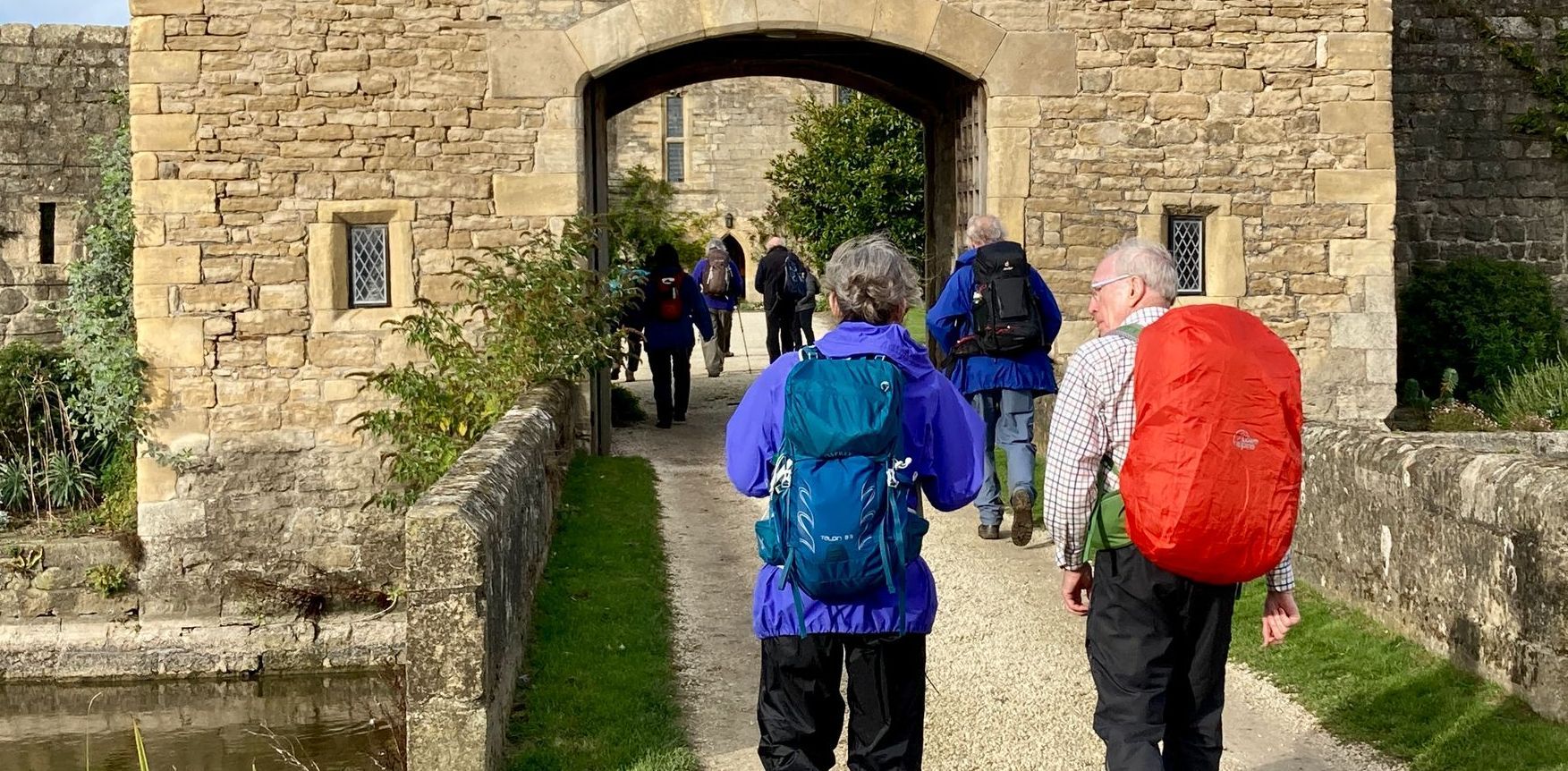
This talk is originally for the guides who will lead pilgrims on the 175-mile, 15-day walk along the Path to Eden: Walking in the Footsteps of the Cumbrian Saints, which runs from the Irish seacoast of West Cumbria, through the Lake District, and into the Eden Valley. However the principles can be adopted and adapted to any pilgrim walk. As leaders, you will guide and guard your walkers over the fells, across the becks, and through the lakes of the pilgrimage route. You will be guardians of a traveling domestic church as you walk myriad miles and climb many mountains.
Frans A Vossenberg is a retired physician and an active pilgrim. This talk was written as part of his studies for a Masters in Evangelisation and Culture at the Catholic University of America in Washington DC.
You can also download the presentation using the button below.

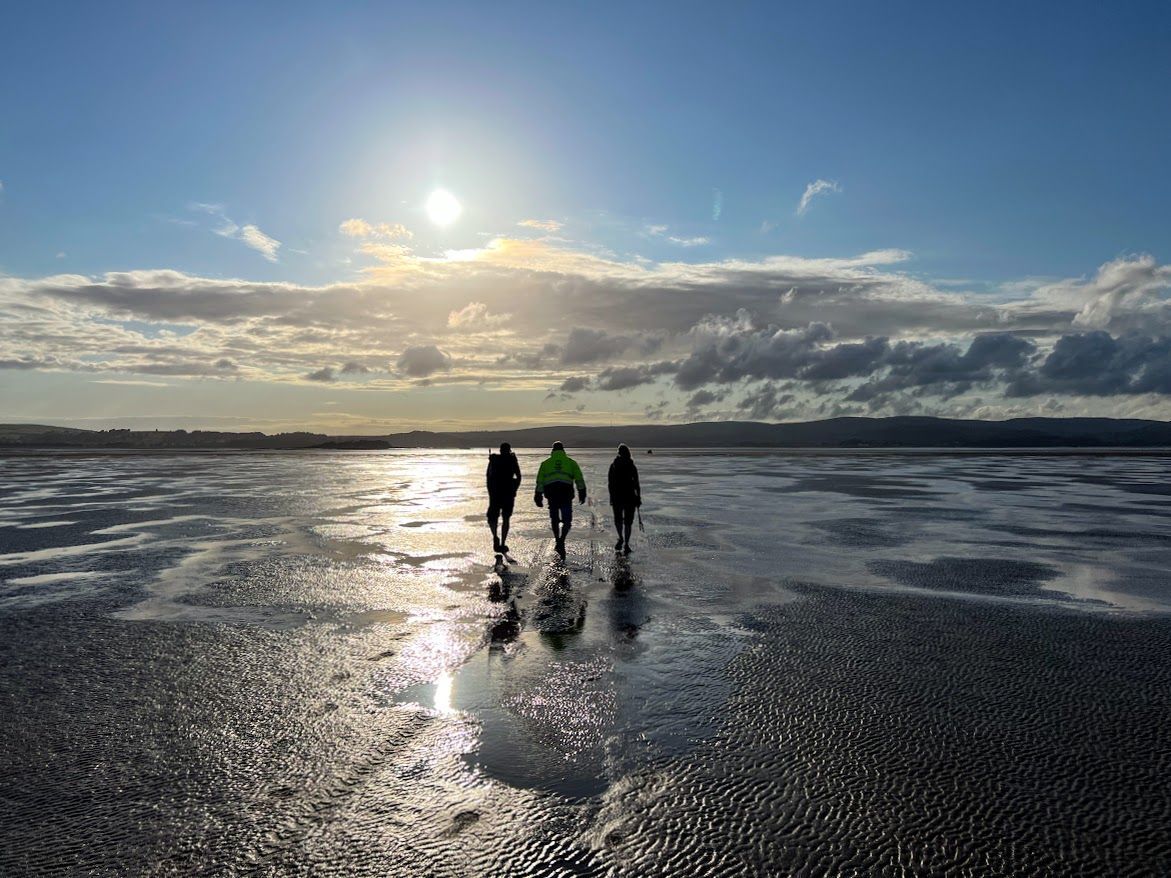
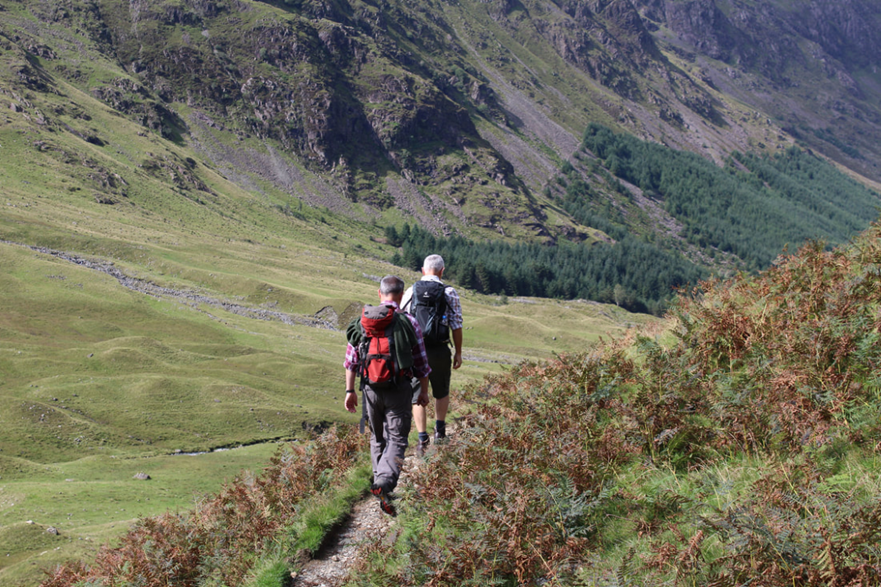

Recall Christ’s warning to Peter, James, and John in the Garden of Gethsemane before the Passion: “Watch and pray that you may not enter into temptation; the spirit indeed is willing, but the flesh is weak” (Mt 26:41). So too, pilgrims are often more ready to load their backpacks and plan their journey than to carry their burden and tread their road. During this pilgrimage, you will be as much a medic for sore feet as you are a guide for directionless minds.
After a few days on the road, navigating icy tarns and rocky trails, your pilgrim group will grow stronger, and your role will shift from physical custodian to spiritual mentor. Your higher mission will come into focus as you inspire the intellect, whet the will, and heal the hearts of those you lead. As you enter this most important phase of your stewardship, you must be attuned to the spiritual wounds that prompted your group’s physical journey. Your pilgrims carry weights on their souls and stones in their hearts, seeking relief. By this more interior stage of the journey, the body’s pain will diminish, yet the soul may still suffer. As Proverbs 18:14 says, “A man’s spirit will endure sickness; but a broken spirit who can bear?”
It is your duty and privilege to be sensitive to these spiritual injuries and to address your group’s transcendental needs. For this task, I recommend following St. Augustine of Hippo’s guidance on instructing beginners in the faith. He recognized our deepest longing, which transcends pleasure, wealth, glory, and honor, when he wrote, “For you have made us for yourself, and our heart is restless until it rests in you.” Your pilgrims in Cumbria know this in their minds, but they struggle to bring it into their hearts. They need your help to renew their place in God’s covenant by allowing Him to “put my law within them, and I will write it upon their hearts” (Jer 31:33). Your effort and their faith will enable the old pilgrim saying, popularly linked to Augustine, for spiritual discernment: “Solvitur ambulando,” “it is solved by walking.”
My talk today focuses on using prayer to appeal to God for answers to the soul’s questions and for respite from the afflictions of our spirits. I will address the theological background of one of your five exhortations, delivered three days apart over a fortnight of walking. The goal of your instructing pilgrims in faith is to preach a catechesis that will open “a spring that will extinguish the fires of our sin.” This lecture examines Matthew 13:54–18:35 through the interpretive framework of early twentieth-century biblical scholar Benjamin Wisner Bacon. His framework divides the Gospel of Matthew into five narrative-discourse segments, with an infancy-story prologue and a passion-resurrection epilogue. The theme of these central chapters of Matthew is “The Problem of Church Unity.” For you, today’s theme is maintaining pilgrimage unity by guiding your flock in the personal and corporate value of prayer. My goal over the next 10 minutes is to explain what Matthew’s text says and offer applications for the groups that you lead.
Your first step is to situate your listeners within salvation history. That is a tall order, but essentially, God’s revelation has brought Him to us, to bring us to Him. His endless, gratuitous love is matched only by His tireless mercy. He is an interventionist, non-competitive God whose glory is most manifest in the human being truly alive, aware, and appreciative of the cosmic love affair between the Creator and the created. As Vatican II’s Dei Verbum states:
“This plan of revelation is realized by deeds and words having an inner unity: the deeds wrought by God in the history of salvation manifest and confirm the teaching and realities signified by the words, while the words proclaim the deeds and clarify the mystery contained in them” (Second Vatican Council 1965, sec. 2). The Old and New Testament scriptures map the path to salvation. Hebrews 11 draws on the example of Enoch in Genesis to offer one of the most succinct soteriological kerygmata: “For whoever would draw near to God must believe that he exists and that he rewards those who seek him.” John 3:16 unites the Word with the deed: “For God so loved the world that he gave his only Son, so that everyone who believes in him may not perish but may have eternal life.”
Matthew’s narrative-discourse format emphasizes the deeds (narrative) and words (discourse) of Jesus. As He moves through Galilee and the northern Gentile territories, Christ frequently urges unity of word and deed, criticizing the Pharisees: “This people honors me with their lips, but their heart is far from me; in vain do they worship me, teaching as doctrines the precepts of men” (Mt 15:8–9). Our pilgrimage format for this day in the Western Fell district of Cumbria reiterates the narrative-discourse paradigm as we walk through the Lorton Vale. This rubric helps us understand prayer as the golden thread binding word and deed. Today, we will link prayer to pilgrimage by examining a prominent miracle and a meaningful parable from this fourth section of Matthew.
Our first example is Jesus walking on the water. After retreating to the mountains for solitary prayer (Mt 14:23), Jesus walks across the Sea of Galilee early in the morning, following a stormy night, to meet the disciples in their boat. Christ’s “It is I” (Mt 14:27) echoes the Old Testament “I AM” of Exodus 3:14. Along with the miracle of walking on the sea, this theophany answers Jesus’s question, “But who do you say that I am?” (Mt 16:13–15). Peter’s attempt to join Him on the water falters as the storm’s ferocity undermines his focus on Christ. Peter cries out in prayer, “Lord, save me” (Mt 14:30), and the Lord acts: he reaches out his hand and catches him (14:31). Peter supplies the word, and Jesus supplies the deed.
Here in the Lorton Vale, we can relate the prayer liturgies of our local saints to the miracle account of Walking on the Water. Today, we will walk from Buttermere to St. Cuthbert’s Church in Low Lorton. Cuthbert preached in Cumbria and often visited his friend, the hermit St. Herbert of Derwentwater. Many Cumbrian churches are dedicated to him. He devoted himself to prayer through embodied ritual, singing the psalms while immersed in water. Chapter 10 of Bede’s Life of St. Cuthbert describes his habit at Coludi (Coldingham), on the Berwickshire coast: “…he left the monastery, went down to the sea, which flows beneath, and going into it, until the water reached his neck, spent the night in praising God. When the dawn of day approached, he came out of the water, and, falling on his knees, began to pray again. Whilst he was doing this, two quadrupeds, called otters, came up from the sea, and lying down before him on the sand, breathed upon his feet, and wiped them with their hair, after which, having received his blessing, they returned to their native element”. Psalm 69:1–2 gives words to Peter’s fear, and to Cuthbert’s devotion:
“Save me, O God! For the waters have come up to my neck. I sink in deep mire, where there is no foothold; I have come into deep waters, and the flood sweeps over me.”
My pastoral invitation is this: On your walk today, why not experience the natural world as Cuthbert did, infused with sacramentality? At Low Ling Crag, after thirteen centuries, you can return to Cuthbert’s practice of sanctifying immersion in the cold, 45-degree, 140-foot depths of Crummock Water. Loosen your fearful restraints, pray like Cuthbert, and call on the name of the Lord. Like the compassionate otters, you might be surprised by who is watching, whom you inspire, and who joins your worship. (This is entirely optional, never a requirement: stay in the shallows, go in pairs, keep it brief, and let no one be pressed.)
Our next exegesis from the fourth section of Matthew’s Gospel examines discourse as we study Jesus’ words in the parable of the Lost Sheep (Mt 18:10–14). The ninety-nine who did not wander are left on the hills while the Shepherd searches for the one who has strayed. The Good Shepherd is always aware, always protective, and always searching (Mt 18:12–13), and it is the Father’s will that none of “these little ones” should perish (Mt 18:14). This passage evokes Ezekiel 34:15–16:
“I myself will be the shepherd of my sheep, and I will make them lie down, says the Lord God. I will seek the lost, and I will bring back the strayed, and I will bind up the crippled, and I will strengthen the weak, and the fat and the strong I will watch over; I will feed them in justice.”
As spiritual leaders, how will you recognize and rescue a pilgrim who is becoming isolated within your group? Notice who walks alone at the back, who eats separately, and who falls silent. Trust the ninety-nine not to stray as you walk beside that person and pray with them, not only for them. Today’s application of this parable is found on the slopes of Low Fell above Loweswater. We will come across a sheepfold that has, for centuries, enabled shepherds to protect their flock. St. Ninian of Whithorn, a late-fourth-century Cumbrian missionary, is associated with the Celtic prayer of encirclement. This protective circle blessing became known as a Caim (Gaelic for “encircling”).
The sheepfold beside Crabtree Beck represents the holiness that sets us apart for worship and invites God’s protection. Encourage your flock to gather in this sanctuary for sheep, transforming it into an ekklesia for pilgrims. Invite the ninety-nine to pray for the one, as inspired by Mt 18:15–20. Use this opportunity to pray a Caim, leading your flock in prayer for the one who is lost. As Matthew 18:19–20 says, “Again I tell you, if two of you agree on earth about anything they ask, it will be done for them by my Father who is in heaven. For where two or three are gathered in my name, there am I in the midst of them.”
To pray in the traditional Celtic manner, envision the sheepfold as a ring of safety against worldly threats, a refuge sustained by God from above. Walk clockwise within the sheepfold, pausing at the north, east, south, and west, and recite the following prayer:
Circle me, Lord. Keep protection near, and danger afar.
Circle me, Lord. Keep hope within, keep doubt without.
Circle me, Lord. Keep light near, and darkness afar.
Circle me, Lord. Keep peace within, keep evil out.
Finish with:
May you be a bright flame before me. May you be a guiding star above me.
May you be a smooth path below me. And a loving Guide behind me. Today, tonight, and forever.
Amen.
Carry this circle of protection with you as you leave the gate and continue your walk. Its halo is both corporate and individual. Grasp the enormity of the truth that, as devotional tradition holds, the Incarnation and the Crucifixion would have occurred if all humanity were only you. Be confident in the knowledge that, as Augustine said, “God loves each of us as if there were only one of us to love”.
In conclusion, prayer, enacted verbally and embodied in ritual, unites our words and deeds in a physical engagement with God’s creation and a spiritual discourse with God the Father and Christ the Good Shepherd. In this way, prayer answers what Bacon calls “The Problem of Church Unity”. A group that prays together spiritually nourishes its lost sheep while remaining one flock. Thus, prayer unifies our interactions with one another and becomes the language of our conversation with God, who has promised, “I am with you always, to the close of the age” (Mt 28:20).
Frans A. Vossenberg
Sources
Scripture quotations are from the Revised Standard Version, Catholic Edition (RSV-CE).
Augustine. 2006. Instructing Beginners in the Faith. Translated by Raymond Canning. Hyde Park, NY: New City Press.
Augustine. 2017. Confessions. Translated by F. J. Sheed. Park Ridge, Illinois: Word on Fire Classics.
Bacon, Benjamin Wisner. 1930. Studies in Matthew. New York: Henry Holt.
Bede. 2016. Bede’s Life of St. Cuthbert. Edited by Simon Webb. N.p.: CreateSpace Independent Publishing Platform.
Hahn, Scott, and Curtis Mitch, eds. 2010. The Ignatius Catholic Study Bible: New Testament. 2nd ed. RSV-CE. San Francisco: Ignatius Press.
Hart, David Bentley. 2023. The New Testament: A Translation. 2nd ed. New Haven, CT: Yale University Press.
Johnson, Luke Timothy. 2010. The Writings of the New Testament. Minneapolis: Fortress Press.
Levine, Amy-Jill, and Marc Zvi Brettler, eds. 2017. The Jewish Annotated New Testament. 2nd ed. New York: Oxford University Press.
Mitch, Curtis, and Edward Sri. 2010. The Gospel of Matthew. Catholic Commentary on Sacred Scripture. Grand Rapids, MI: Baker Academic.
Second Vatican Council. 1965.
Dei Verbum: Dogmatic Constitution on Divine Revelation.