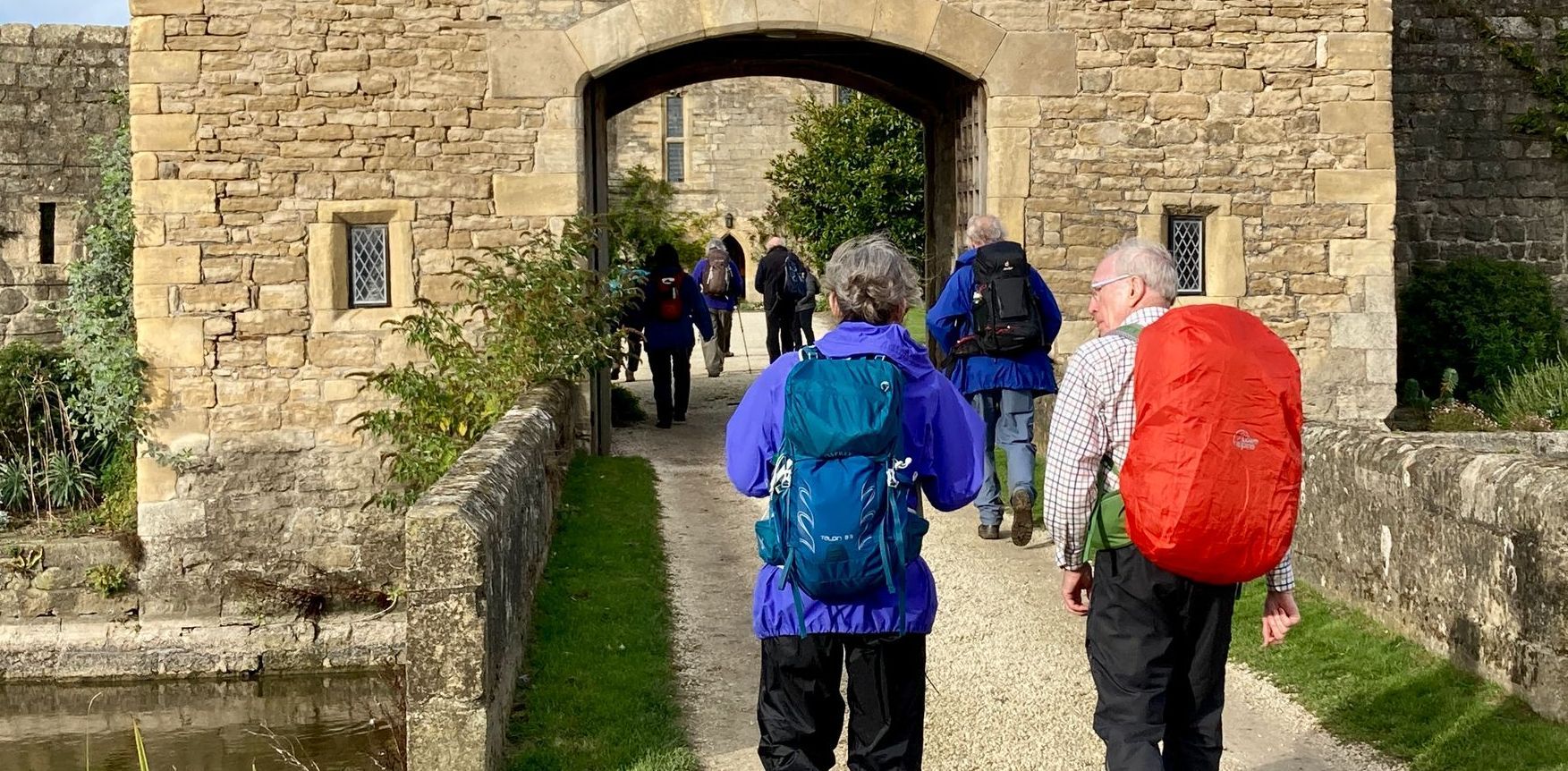
The modern pilgrim path to Canterbury isn’t the one that Chaucer’s Pilgrims took. Pilgrim and author of
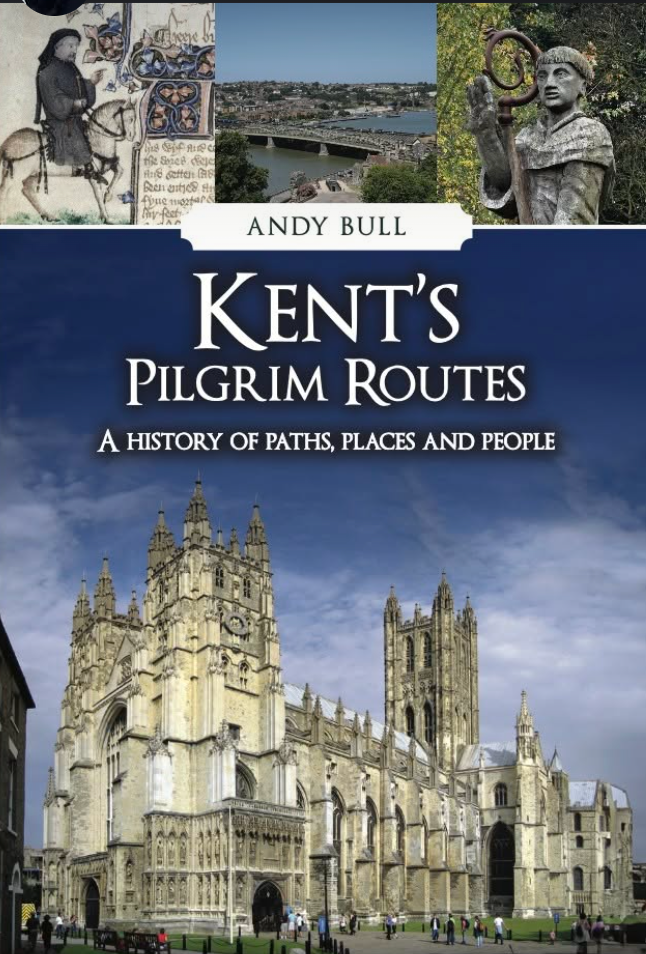
Kent's Pilgrim Routes Andy Bull set out in search of the way!
Chaucer's pilgrims followed the most direct route from Southwark to Canterbury, riding the 60 miles along Roman Watling Street – now partly subsumed beneath the A2 – through Dartford, Rochester, Newington, Sittingbourne and Faversham. The modern, official Pilgrims’ Way departs from that route early on – at Dartford – and descends the North Downs to join a path to Canterbury that starts in Winchester. It seemed to me that it was a shame to overlook Chaucer’s route, so I have created an alternative pilgrim path to Canterbury that is as faithful to it as possible, while also offering a truly enriching walk. Avoiding the modern A2 is surprisingly easy, opening up a pilgrim path that is generally peaceful, and full of variety.
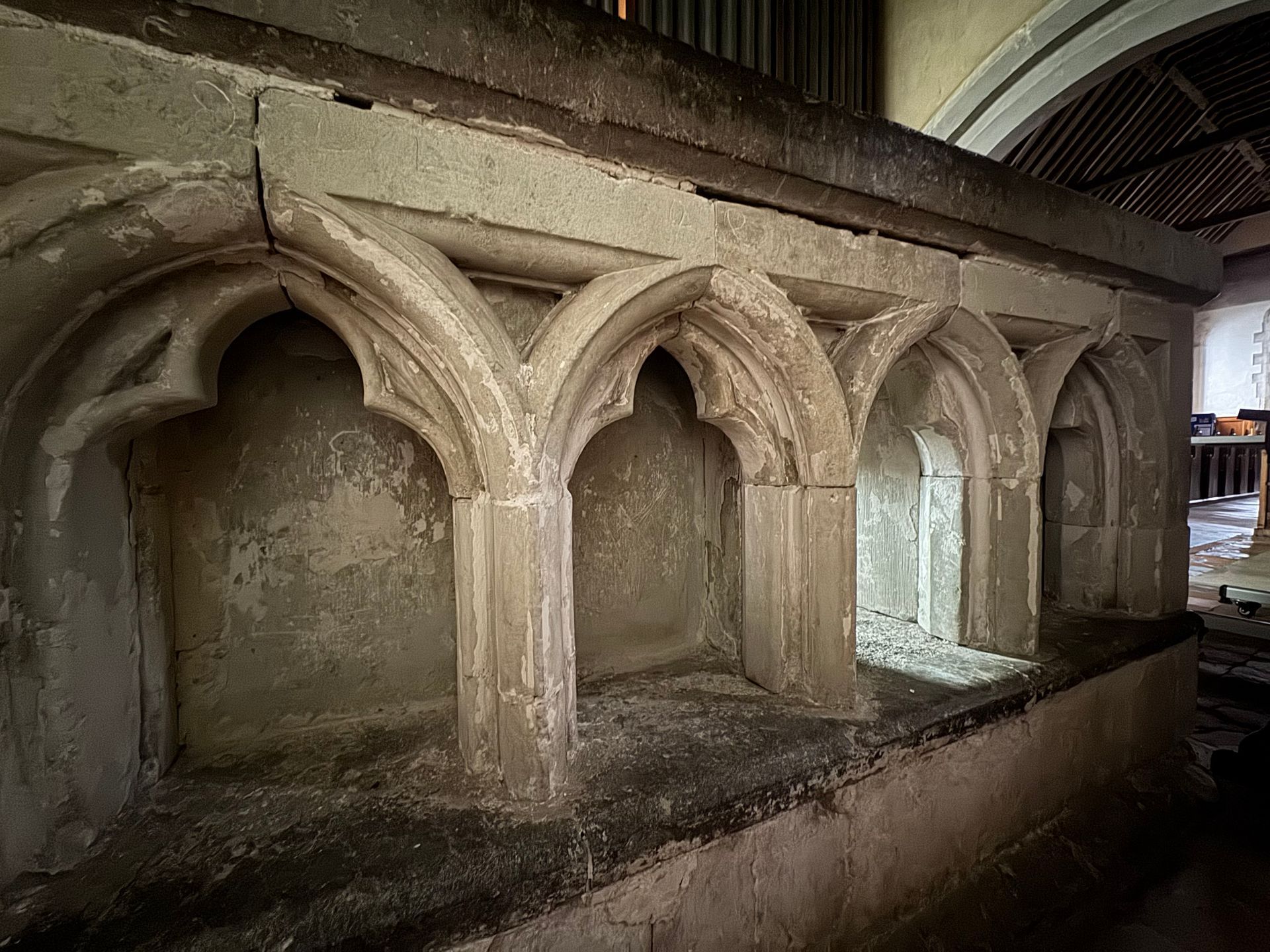
St Thomas Becket, the Archbishop of Canterbury whose murder brought pilgrims to his shrine, also travelled via Watling Street on occasion, and is remembered at many pilgrim points along the way. When Chaucer’s pilgrims got to the village of Newington, they found the shrine of a local saint. He was Robert of Newington who was killed on Watling Street. Robert is a mysterious figure, and it is unclear who he was, when he died and whether he was a pilgrim. However, a substantial cult developed around him and there is evidence of this in the village church. Newington also had a close connection to St Thomas Becket.
The next stop for Chaucer’s pilgrims was Sittingbourne. In the thirteen-century it boasted thirteen inns and hostels for pilgrims and other travellers, and there was an important shrine in the town’s church. The wealthier might have stayed at the Red Lion, which still stands in the High Street. The Red Lion hosted Henry V on his way back from the Battle of Agincourt, in 1415. Henry VIII dined at the inn in 1522 and 1532.
Sittingbourne’s thirteenth-century church of St Michael was a focal point for pilgrims, and it is on the path taken in Chaucer’s Canterbury Tales. The church had a statue of the Virgin Mary in a niche set into an external buttress, known as Our Lady of the Buttress, and protected beneath a wooden porch. According to Hasted, in his History of Kent, there was ‘a clear spring of water in the high road’ near the church which flowed when national hardship was imminent. This was one of several prophetic springs in Kent known as Nailbournes, water sources or streams that only flowed seasonally
A walk through cherry and apple orchards brings you to Faversham, where the pilgrim history is very strong. In 1234 Henry III had a monastery built at Ospringe, on the outskirts of the town. Part of it, the Maison Dieu, or House of God, survives. It sheltered pilgrims, along with the local poor and sick, and many on the road to Canterbury spent a night here, or in one of the many inns in Faversham. A local legend tells of two other saints, brothers St Crispin and St Crispinian (or Crispianus), third-century Romano-Britons who found refuge in the town. There is a tradition that they fled here from their home in Canterbury, to escape Roman persecution, after their Christian father, a British prince, had been martyred. At Faversham they became apprenticed to a cobbler and lived out their lives. They are now the patron saints of shoemakers. The brothers were said to have lived near where the Swan Cafe, once an inn, is now, on Market Street. A holy well, known as St Crispin’s Well, once stood nearby, but no longer exists. However, there is a well, known as Cross Well, in nearby Market Place. Could this be the holy well, now capped with an ornate, Victorian, red-painted pump?
At Harbledown, Chaucer’s pilgrims’ route meets up with the modern Pilgrims’ Way. Chaucer calls Harbledown Bobbe-up-and-doun, and it is mentioned in the Manciple’s Prologue in the Canterbury Tales. Henry II came here on a well-publicised penitential journey, four years after the murder of St Thomas Becket, which had been carried out in his name.
The king prayed at the Hospital of St Nicholas, founded in 1084 by Archbishop Lanfranc for sixty lepers. In the fourteenth century, when leprosy was eradicated, it became alms houses. It still is, and can be visited, as long as you respect the privacy of the residents. The king gave an annual grant of 20 marks to the hospital, which itself became an important point for pilgrims to visit. They held a relic of St Thomas here. Erasmus, the priest, theologian, satirist and philosopher, visited in 1519, and was invited to kiss the shoe buckle of Thomas Becket. A rock crystal from that buckle had been incorporated, in the fourteenth century, into a chalice, which is now held in Canterbury Cathedral’s treasury.
Close to the hospital is the Norman church of St Michael and All Angels. It was being decorated for a Christmas Tree Festival when I visited, but the very welcoming volunteers broke off to show me where to find the stamp for my pilgrim passport.
From here it is just two miles to Canterbury.
Andy Bull is author of Kent’s Pilgrim Routes, published by Amberley
You can buy Kent’s Pilgrim Routes from your chosen local bookshop here
https://uk.bookshop.org/ - be sure to nominate the bookshop you want your money to go to.
From the publisher here:
https://www.amberley-books.com/.../kents-pilgrim-routes.html
Or from Amazon here:
https://amzn.to/4kHa0MB
Want to check out the route? You’ll find maps you can download and follow on your phone here:
https://www.andybull.co.uk/book/kents-pilgrim-routes/