Another Day in Paradise- the magic of the Camino

Eddie Gilmore • November 12, 2024

Pilgrim and writer Eddie Gilmore reflects on his recent journey with his wife along the Camino to Finistere.


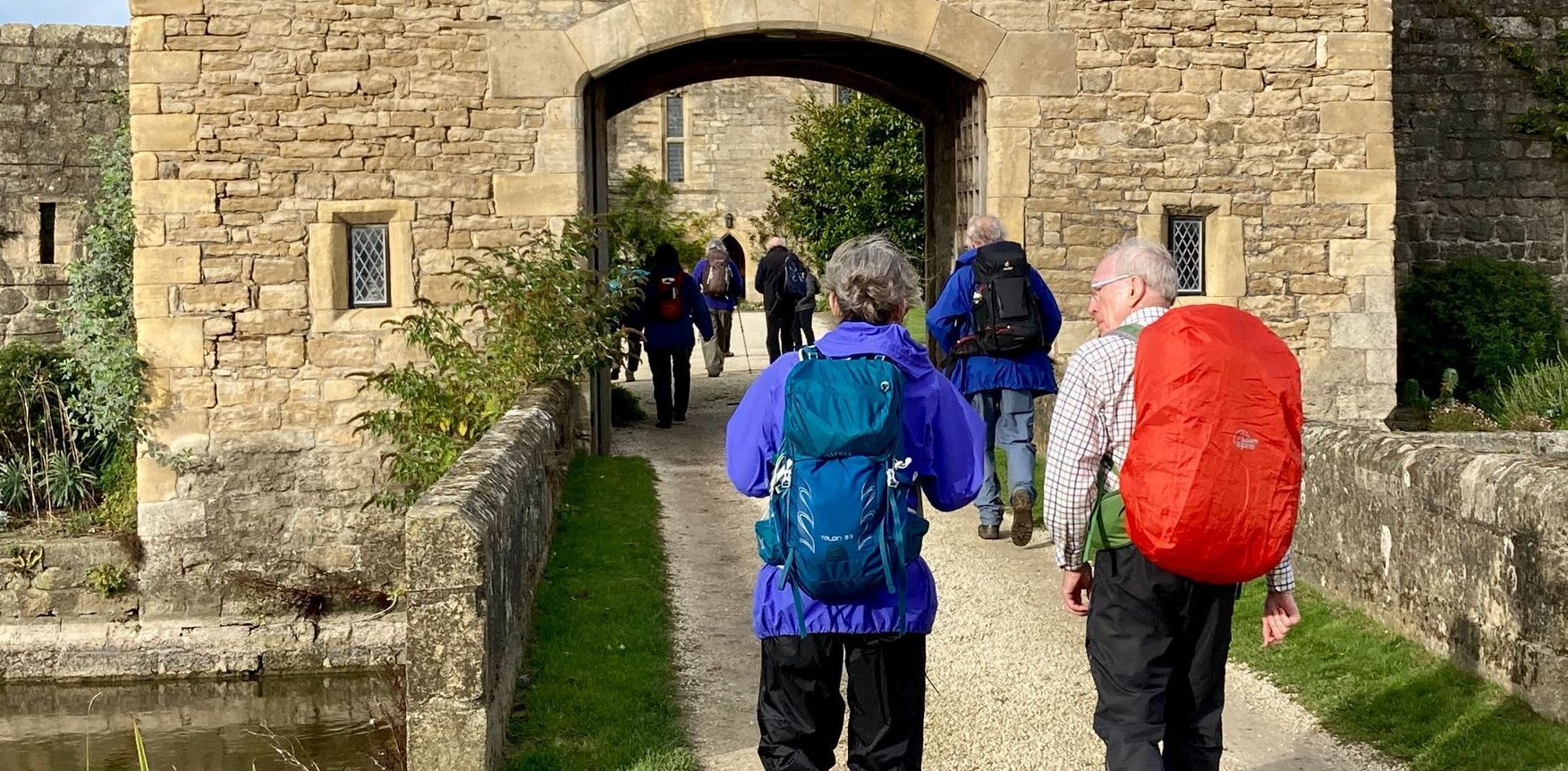
I can’t think there are many places in the world with scenery so varied and so stunning; with the opportunity to share stories and meals, and to laugh, cry and sing with people from all over the world; where twenty-year-olds are happy to hang out with men and women thrice their age; and where we willingly walk an average of twenty-five kilometres a day for thirty-three days straight, all the while carrying a rucksack. Not to mention spending the night in a dormitory full of bunk beds, or perhaps on the floor of a big room with slanted walls and creaking floorboards, and to think it’s the greatest and most fun adventure we ever had.


Indeed I’m not sure there is any experience that comes anywhere close to walking the Camino. One of my fellow-pilgrims on my second stretch on the Camino in 2016 was Hollyanne from the States and as she says in my book ‘Another Day in Paradise,’ “I am incapable of believing there is another cultural experience that can satiate in the same way my perennial desire for travel and human connection.”


It’s hard to pick highlights from my 2024 walk because there are so many but I’ll compile a short list and group them roughly in the category of eating and singing, both of which activities I enjoyed immensely on the Camino:


1. Tosantos. The sleeping on the floor mentioned above was at a ‘donativo’ albergue, about ten days into the walk, by which time some of us knew each other pretty well. In addition to a bed for the night in a donativo, you get a communal meal (that you’ve helped to cook!), plus breakfast in the morning. And you leave a little donation. They are usually in lovely, quirky old buildings and there is often a lovely chapel with a time of prayer or sharing in the evening. The chapel in the albergue of St Francis in Tosantos is especially beautiful and we had there a most touching night prayer. And then the large group of us of all nationalities and ages bedded down on the floor but nobody wanted to go to sleep because it was like the most fun sleep over ever!


2. The donativo albergue in Bercianos. Like at Tosantos, there was a banquet of a meal, plus communal sunset gazing, then a gathering in the chapel during which each person was invited to say what had brought them on the Camino. A group of us also sang some Taizé chants and right at the end I was asked to sing the song I’d written after my first time walking on the Camino in 2015, ‘El Camino.’


3. The singing nuns albergue in Carrión de los Condes. I’d had a special time there in 2016 and I was keen to return. I wasn’t disappointed. There were more Taizé chants, I sang ‘El Camino,’ as well as telling briefly the story of how the song had been inspired, and I led a communal cooking session in the kitchen, after which there followed another feast.


4. Arrival into Santiago. Even though this didn’t involve eating or singing it was possibly one of the most incredible experiences of my life. It was our third time to be arriving in the famous Praza do Obradoiro in front of the cathedral where, for centuries, pilgrims have ended their journeys. The first time, in 2017, it was a complete anti-climax. Yim Soon and I had left our albergue early in the morning and in the dark to reach Santiago for the noon mass and on the way into the city had made a fruitless search for accommodation. I got to the square tired, hungry and stressed. In 2023 we were there again following our Portuguese Coastal Camino. We gave each other a hug and it was quite nice although as we’d done a less popular route we didn’t know so many people. Our 2024 arrival was on another level. We’d had a big breakfast and a leisurely departure from O Pedrouzo for the final 19 km, and we’d stopped on the way for café con leche and a big slice of Santiago cake. Once into the city, we made straight for the cathedral and passed the famous bagpiper. We turned the corner into the vast square and there was a huge cheer. Lots of our Camino gang were already there in the centre of the square and they formed a guard of honour for us. We passed through, I flung off my rucksack, and, with tears streaming down my face, I hugged each of those lovely people that we’d shared our lives with for nearly five weeks.


Just in case anyone reading this gets the impression that the Camino is one big pain-free party, I should point out that walking long distances day after day with that bag on your back, and then perhaps finding yourself in a dormitory with the world’s loudest snorer, can be tough. Some people had blisters that covered almost the whole of their foot. One of our fellow pilgrims, Michael, with whom we had sung and shared a feast of a shared meal, died of a heart attack on the steep ascent to the O Cebreiro peak. Our dear Taiwanese friend, I Hua had saved up two years’ of holiday to fulfil a long-standing dream of walking the Camino; then was hobbling along slowly much of the time due to sore feet. But whenever she saw us she broke into a big smile. And when we bumped into her again right at the end ‘by chance’ at Finisterre (the end of the earth) she said simply, “Amazing, very amazing!”


Yes, the Camino has its ups and downs, geographically as well as emotionally, just like life in general, and sometimes spectacularly so. And yet, there is such pure joy that I felt at times that my heart could burst with happiness. There is playfulness and laughter. There are songs and stories. And there is a satisfying simplicity to each day. You get up in the morning and scrunch your sleeping bag back into its holder, you pack your world into your rucksack, and you follow those yellow arrows to the next place along the way; with nothing to worry about except where the next café con leche is coming from. Well, perhaps also if there’s going to be a bed for you at the end of the day! It’s surprising to discover how little we need to live a contented life. When one of my three walking tops vanished into the black hole which was the Burgos launderette I was annoyed for a bit but then found that, with extra washing, I could cope fine with just the two. Likewise, when I unwittingly gifted one of my three pairs of thick outer socks to the English albergue in Rabanal! And when one of our two travelling towels went walkies, we just had to share the other! Plus it was less weight to carry!


I’ll conclude with one more highlight, and this is back on the theme of eating and singing!


5. Nájera. This is about a week into the Camino Francés and I especially wanted to stay in the communal albergue because of what had happened there nine years before and I especially wanted to cook a meal for some of the wonderful people that Yim Soon and I had been walking with. After our feast of a meal I picked up a guitar and before singing ‘El Camino’ I told the story of what had happened in 2015. I had been there with my friend James, who had brought with him from his home in Australia a stove and a billy can. I had brought from England a packet of tea! We were sitting in the early morning on a bench outside that albergue waiting for the water in the billy to boil for our tea. The sun was just starting to rise above the tall trees, the birds were beginning to sing, and there was the pleasing sound of rushing water from the nearby river. We were sitting there in silence and then James said the words which inspired both a song and the title of a book and which I often repeated to the amazing people that we shared our lives with for thirty-three truly unforgettable days along a path in Spain in the Autumn of 2024: “Another Day in Paradise.”


Eddie Gilmore


More about Eddie's books can be found here.

By Anne E Bailey December 5, 2025
A new video of the Jubilee Pilgrimage of Hope from Anne E Bailey
O
By Alex Knox December 3, 2025
Over the last 12 months, Alex Knox walked Britain’s newest pilgrimage with its youngest pilgrim. This is their story.
By Torin Brown December 3, 2025
Torin Brown, Pilgrim Officer at Canterbury Cathedral, asks why pilgrimage still 'packs a spiritual punch' in a secular age.
By Christian Jenkins December 2, 2025
Christian Jenkins describes a the first Our Lady of Christendom pilgrimage in the UK from Tewkesbury Abbey to Evesham!
By Phil McCarthy December 1, 2025
A podcast about pilgrimage has been launched, hosted and created by Torin Brown, the pilgrim officer at Canterbury Cathedral!
By Nick Dunne December 1, 2025
The Confraternity of Pilgrims to Rome are delighted to announce the formal recognition of the Francigena Britannica from London to Canterbury, and their annual conference on 14th March 2026!
By Phil McCarthy November 29, 2025
The key to any safe and successful walking pilgrimage is thorough preparation. This resource is a useful prompt.
By Phil McCarthy November 29, 2025
A pilgrimage is a journey undertaken by individuals or groups for religious or spiritual reasons, often to a sacred place or shrine of particular significance. It is an expression of faith and devotion that involves physical travel as well as inner exploration and transformation. Pilgrimages have been integral to many religious traditions throughout history, including Christianity, Islam, and Hinduism. In the Catholic faith, a group pilgrimage is seen as a special journey of prayer and devotion. It is an opportunity for believers to deepen their relationship with God, seek spiritual renewal, and encounter the divine in tangible ways. Pilgrimages are not only about visiting holy sites but are also about the inward journey, seeking grace, forgiveness, healing, or enlightenment. Planning the inner journey Rejoice always, pray without ceasing, give thanks in all circumstances; for this is the will of God in Christ Jesus for you. 1 Thessalonians 5:16-17 Planning a personal pilgrimage is a sacred process. It can be a transformative and enriching spiritual experience. Walking alone provides the opportunity for solitude, encounter with strangers and closeness to nature. Individual walking pilgrimage can give insights into the communities passed through. . The destination When choosing a destination for your pilgrimage, consider the following factors: Popular pilgrimage sites: Explore well-known pilgrimage sites, such as shrines dedicated to saints, historic churches, or locations associated with miracles or apparitions. Accessibility: Ensure the pilgrimage site is accessible to you given your age and physical abilities. Accommodation: If you need overnight accommodation, try to find options which align with the aims of the pilgrimage and are affordable. These may include retreat centres, religious houses or hospitable parishes. The British Pilgrimage Trust’s Sanctuary Network provides affordable options such as churches, church halls, village halls or sports pavilions. Cultural relevance: The Catholic community in England & Wales is incredibly diverse in terms of ethnicity and culture. Consider the cultural context of the pilgrimage destination and its significance. Setting dates and itinerary Creating a well-planned itinerary is essential. Dates: Select dates that coincide with religious feast days, significant anniversaries, or local events that enhance the spiritual significance of the pilgrimage. Don’t forget the weather! Itinerary: Develop an itinerary that incorporates a variety of activities catering to spiritual, educational, and recreational needs. Include daily Mass if possible, opportunities for prayer and reflection, guided tours of sacred sites, and times of silence and openess to encounter with others. Prayer and reflection: Plan specific prayer stops, devotions, and meditations that align with the pilgrimage theme or focus. Include encounters with local religious communities. Before the way I rejoiced when they said to me, “Let us go to the house of the LORD.” Psalm 122:1 Preparing yourself spiritually is essential for a good pilgrimage experience. Prayer and reflection resources can be found here . Personal spiritual preparation: Prior to the pilgrimage research the route and plan to make the experience as deeply as possible. Try to find daily Scripture readings, novenas, or devotional exercises related to the pilgrimage theme. Indentify a personal intention for the journey : This might be to pray for healing, to give thanks for some event, to commemorate a loved one or to raise money for a cause close to your heart. Talk to others about your plans: Try to find books about the way you have chosen or speak to others who have walked it. Find resources that address the themes of the pilgrimage, such as faith renewal, healing, or devotion to specific saints. Share your spiritual intentions: This may include your talking about your c oncerns and hopes for the pilgrimage with family, friends, and your home community. On the road Teach me your way, O Lord, that I may walk in your truth; unite my heart to fear your name. Psalm 86:11 Incorporating liturgies, personal prayer and rituals enhances the spiritual depth of the pilgrimage. Resources can be found here . Masses and Sacraments: Where possible, try to find Masses at significant pilgrimage sites, allowing yourself to participate in the liturgy and be nourished by the Eucharist. Receiving the Sacrament of Reconciliation (confession) can foster spiritual healing and renewal. Devotions: Plan to include devotions that symbolise the journey of faith such as praying the Rosary, Stations of the Cross, or other traditional Catholic prayers relevant to the pilgrimage theme. Rituals: Integrate symbolic rituals like lighting candles at sacred shrines, making offerings of prayer intentions, or reciting specific prayers associated with the pilgrimage's spiritual objectives. Silence: It is good to include a period of intentionally silent walking, giving yourself the opportunity to reflect on your own intentions for the pilgrimage. Research guidance on contemplative practices that encourage inner reflection. Fellowship: You may encounter others on the way. Try to be open to these as opportunities for sharing your pilgrimage with others. It may be possible to join communal meals, shared experiences, and social gatherings entoute. At the destination And people will come from east and west, and from north and south, and recline at table in the kingdom of God. And behold, some are last who will be first, and some are first who will be last.” Luke 13:29-30 It is important to plan how you will mark your arrival at the shrine or other destination, or there may be a sense of anti-climax. Resources can be found here . Consider: Welcome : by the Shrine Director, clergy, staff or parishioners. Shared prayer : it is important to mark the end of the pilgrimage with a prayer which is relevant to the site and theme. Tour of the destination and an explanation of its religious and cultural significance. Devotions: for example, lighting three candles, one for the pilgrim’s personal intentions and for any that others have asked him or her to pray for, one in gratitude for the people who helped along on the Way, and one in hope for those who will follow. Masses and Sacraments: Where possible, arrange a final Mass and the opportunity to receive the Sacrament of Reconciliation (confession). If this is not possible then the Evening Prayer of the Church for the day may be a good way to end the pilgrimage. Fellowship over tea and coffee is always welcome and a group photo with others at the destination! After the way Come to me, all who labour and are heavy laden, and I will give you rest. Take my yoke upon you, and learn from me, for I am gentle and lowly in heart, and you will find rest for your souls. For my yoke is easy, and my burden is light.” Matthew 11:28-30 Continuing the pilgrimage experience beyond the journey itself is important for sustaining spiritual growth. Resources can be found here . Personal reflection : Try to reflect on the experience and to continue the journey. Reflect and Learn: Consider offering to speak to your community to share the experience and its impact on your faith journey. Plan Future Pilgrimages: Use insights from the pilgrimage experience to plan future pilgrimages that address the your evolving spiritual needs. Collaborate with other pilgrims, and clergy to identify new destinations, themes, and spiritual objectives for upcoming journeys. Phil McCarthy NB I am grateful to Molly Conrad and Elliot Vanstone for their contributions to the development of this resource.
By Phil McCarthy November 29, 2025
Congratulations on completing your pilgrimage. Now you can download the certificate of completion!
By Phil McCarthy November 29, 2025
Whether you will be walking alone or in a group a Pilgrim Passport is useful.