A Memorable Milestone along the St Wilfrid's Way!
This year, the Annual Diocesan St Wilfrid’s Way Pilgrimage was walked for the 10th time!
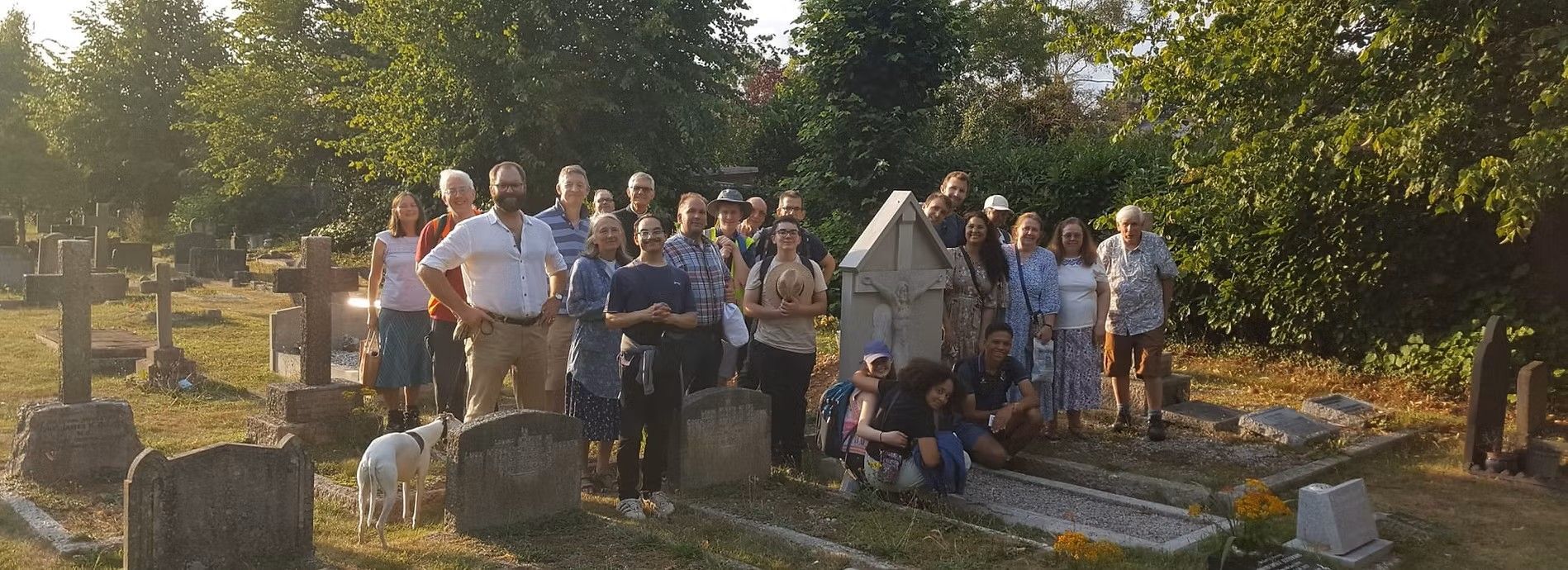
In the 2025 Holy Year of Jubilee across the Catholic Church, we were all exhorted to walk together as ‘Pilgrims of Hope’ – and for the pilgrims who each year set out in hope from Leeds Cathedral to St Wilfrid’s in Ripon, this was ‘all in a day’s walk’ (or two day’s walk for some!) The Jubilee was just one of the ‘milestones’ (pun intended!) marked by this year’s St Wilfrid’s Way. Our local ‘way-marker’ was the tenth walking of this Annual Diocesan Camino. From small beginnings of just six walkers in 2016, the pilgrimage has grown rapidly to between 30 and 40 people walking over the two days. Even during both years of pandemic, with 30 walkers spaced two metres apart, it was the only one of our diocesan pilgrimages permitted by the authorities to continue.
Although there was much rejoicing this year, at becoming a long-standing diocesan event, there was also a note of nostalgia, as our ‘Camino Supremo’, Stephen Habron announced his retirement from leading the walk that would not have existed without him. The Huddersfield parishioner and veteran of several ‘Caminos de Santiago’ developed pilgrimage routes from St Patrick’s, Huddersfield to Leeds Cathedral and from the Cathedral to Ripon as parish events for the 2015 Year of Mercy. Stephen’s idea had ‘legs’ (pun intended again!) In 2016, his fellow parishioner and Diocesan Director of Communications ‘re-branded’ the Leeds to Ripon route as ‘St Wilfrid’s Way’ in honour of our Diocesan Patron and, as it were, ‘ran with it’ … The rest is history: ‘A Walk through History’, in fact! Stephen’s superbly detailed Route Booklets contain not only directions along the footpaths, tracks and lanes between Roundhay Park and Ripon, but also prayers and historical information about the heritage of our diocese.
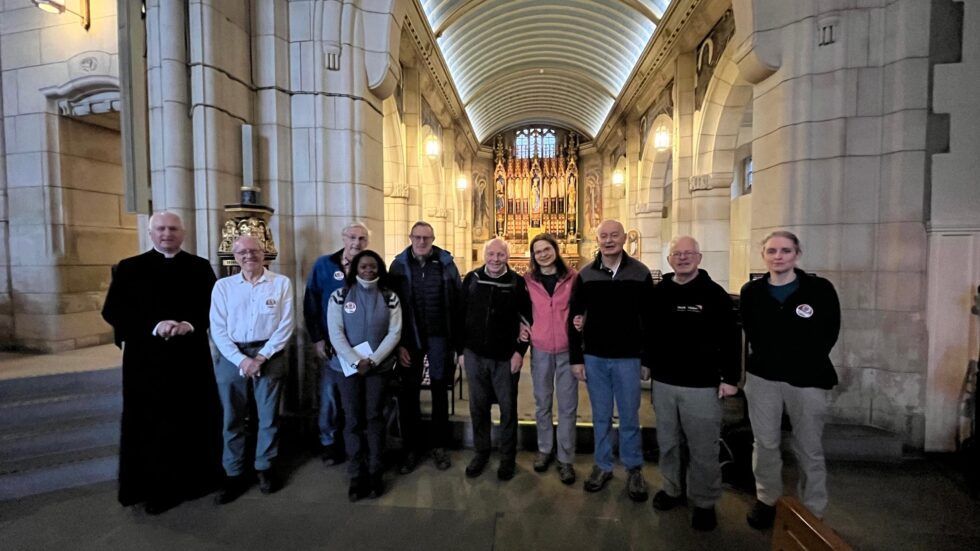
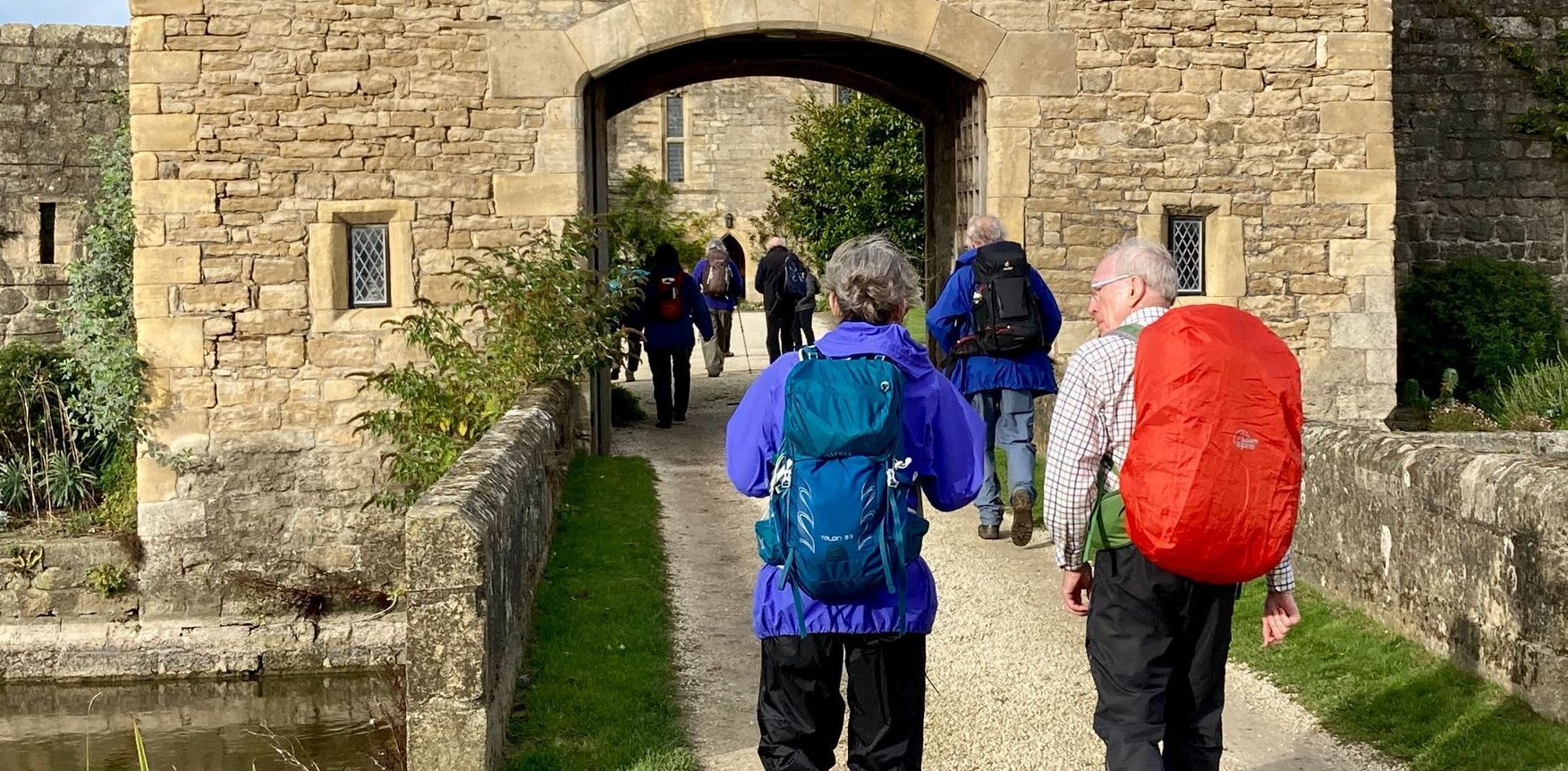
On the morning of Friday 10 October at 8am, Stephen’s son, Cathedral Dean Canon Matthew Habron, celebrated the Tenth Anniversary Pilgrims’ Mass which traditionally begins St Wilfrid’s Way. Pilgrims then took the ‘bus to Roundhay Park, where the walking actually begins. The walk is carefully planned to be in stages, so it suits walkers with varying levels of experience. Pilgrims can choose which day to walk, and plan where to join or leave. Some pilgrims have walked every year since 2016; and there are always several ‘new’ pilgrims, some of whom have walked all or part of the Camino de Santiago.
The walk is well-reconnoitred and always subject to a ‘dynamic risk assessment’ – but one can never account for the unforeseeable – so pilgrims were concerned on the way out of Roundhay Park to hear cries of ‘Man down!’ Fortunately, this wasn’t a fall, but a ‘fail’! Experienced walker Richard’s trusty walking boots had seen him right through the Spanish Camino and many other long-distance walks. They appeared to be in perfect condition – but after 20 years, the glue holding on the sole had perished, leaving the Halifax parishioner and accountant’s carefully conserved vintage footwear more rusty than trusty. A surgeon’s skilled attempts to re-unite ‘body and sole’ with gaffer-tape were to no avail – and it was with heavy hearts that we had to leave the disappointed yet still cheerful victim of ‘wardrobe malfunction’ at a ‘bus stop in Shadwell!
Another regular item on the Risk Assessment is the presence of cattle and calves in fields, and alternative routes to avoid them. Later in the walk, pilgrims traversing an apparently empty field had to navigate the sudden appearance and approach of a herd of bullocks. It was hardly an ambush, but the curious beasts lumbered rather too close for comfort. As pilgrims awaited their turn to squeeze one by one through a small gate, ‘Celebrity Pilgrim’ and Knaresborough parishioner Ian (to whom Stephen has bequeathed the role of ‘Camino Supremo’) kept the boldest bullock at bay until everyone was safely through the gate. The creature clearly respected the authority of the former Chief Operating Officer of the Diocese: just one of many senior leadership roles which have qualified Ian to deal with any amount of ‘bull’!
All our walking pilgrimages are intended to emphasise environmental issues, and St Wilfrid’s Way is no exception, with almost every stage of the walk being accessible by public transport, as well as being close to nature in the beautiful West and North Yorkshire countryside. Red Kites, buzzards and a heron were amongst the fauna thriving along the route’s varied habitats – but there were also reminders of climate change. In past years some of the footpaths, farmyards, and fields had made walking difficult because of liquid mud – and worse! Weeks of dry weather this summer had rendered the going much easier – a mixed blessing – but one which permitted one pilgrim to use a ‘green’, if unorthodox mode of transport! Harehills parishioners Frank and Queenie first joined St Wilfrid’s Way last year as walkers – but this year, only Queenie walked: Frank came on his bike, pedalling across all terrains, and developing a sapper’s skills as he and other pilgrims worked out how to manhandle the conveyance over stiles and fences with military precision.
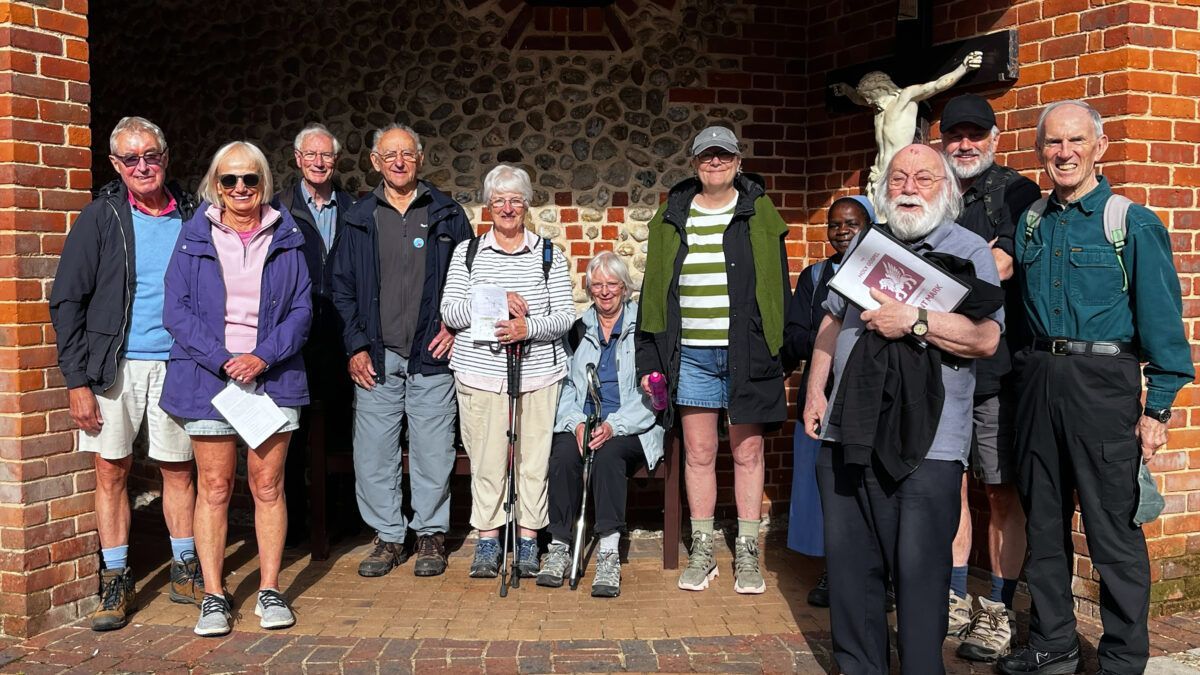
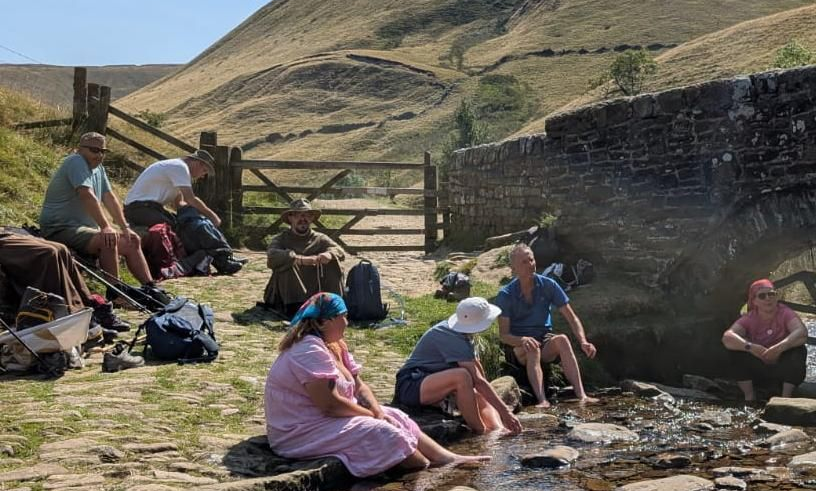
St Wilfrid’s Way engenders a camaraderie amongst pilgrims. Friendships made ‘on Camino’ over the past decade are renewed each year, and previous years’ conversations continued; others, meeting for the first time, are soon chatting like old friends. Some stages are walked in silent contemplation. One such is the walk from Wood Hall Carmel in Linton near Wetherby. After a convivial rest stop for packed lunches, this year’s pilgrims set off on their way, saddened by the fact that as the convent is now up for sale, it may be the last time we enjoy the Carmelite Sisters’ cheerful company and kind hospitality, before the members of this community disperse to Carmels across the country.
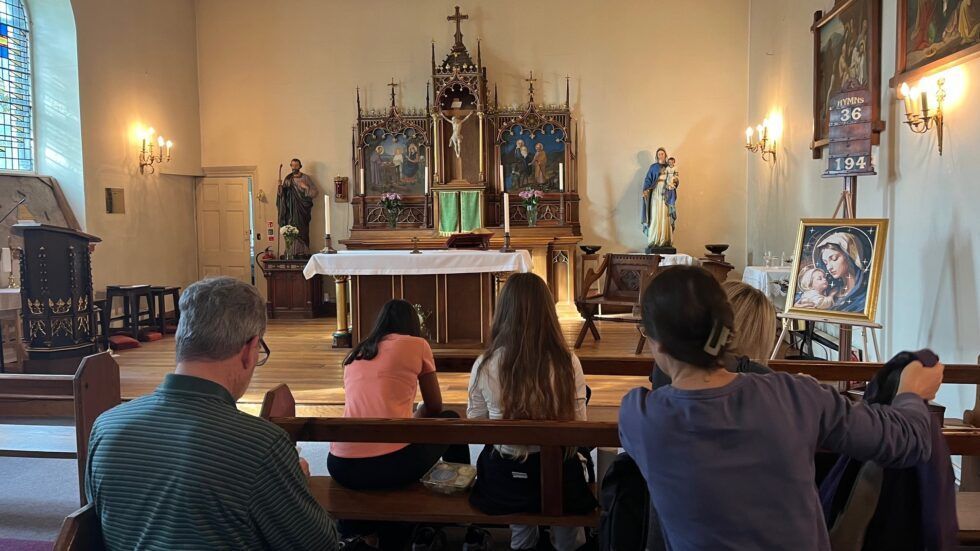
A great benefit of St Wilfrid’s Way is how it brings people together from our entire Diocesan Family. Pilgrims from parishes right across the Diocese – and even further afield – are represented: from Bradford, Halifax, Harrogate, Huddersfield, Knaresborough, Leeds, Ripon and Wakefield. It is a guiding principle of St Wilfrid’s Way, that non-walkers who are on standby to give lifts to the weary, or who open their churches, presbyteries, parish halls and homes to walkers are pilgrims too! This was certainly true on both days, where in Knaresborough Our Lady of the Crag trustee Peter, and parishioners Julie and Charlotte were awaiting our arrival with the warmest of welcomes. At the Crag Chapel, chairs had been put out to take the weight off weary feet, pray the day’s final Decade of the Holy Rosary, sing Salve Regina, and have an erudite introduction to the mediaeval miracle at the heart of Our Lady’s unique and beautiful wayside shrine, built in thanksgiving for the Blessed Virgin’s prayers to her Son which averted what could have been a tragedy. Repairing to St Mary’s Parish Hall, we were met with Julie and Charlotte’s delicious refreshments, including cream scones prepared on site – and also a wonderful array of salads and juices brought by Kirkstall parishioner and allotment-owner Nattaley, who had walked with us much of the day, leaving to return home by ‘bus and prepare more home-made fare for the feast in Knaresborough!
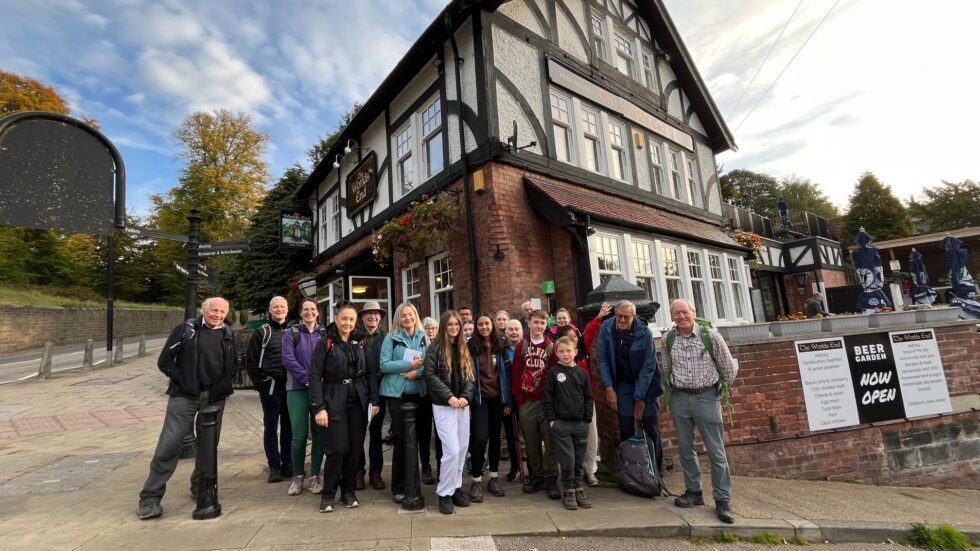
After the first day of St Wilfrid’s Way, pilgrims either return home from Knaresborough Railway Station, stay in pre-booked accommodation, or in some cases are put up by kind locals, ready for those walking the second day of the Camino to set off promptly at 8.30am from outside The World’s End pub on the second half of the 34-mile pilgrimage. The stopping places on this second day are equally historic. St Joseph’s, Bishop Thornton, is one of the oldest churches in the Diocese, and one of three pre-dating the 1829 Catholic Relief Act. The Presbytery (currently home to a Ukrainian family) is even older as a Mass House and came into use at the time of the earlier Catholic Relief Act of 1791. Bishop Thornton is the usual rest stop for packed lunches before pressing on to Ripon via Markington. It has also always been a welcome ‘comfort stop’ for pilgrims, although the outdoor lavatory was very basic and not recommended for arachnophobes. This year, a ‘brand new loo’ in the old school building was a real luxury! Thus refreshed and relieved, the pilgrims headed for another of the treasures of the Diocese and a true highlight of St Wilfrid’s Way: the Recusant moated house and chapel of Markenfield Hall.
Leaving muddy boots on the ancient stone flags, we were warmly welcomed by Lady Deirdre and shown upstairs to the Hall’s C14th chapel. Stephen Habron led us in a decade of the Holy Rosary and spoke very movingly about his ten years of route planning, reccying and leading our now well-established diocesan ‘camino’ but, he said, now was the time to take a well-earned rest and ‘hand on the baton’ of these duties to another: his current camino co-leader, Ian Burrell. After a special Pilgrims’ Blessing was given by Deacon David Arblaster, Diocesan Director of Permanent Deacons, who had walked with us from his Parish of St Aelred in Harrogate, we bade farewell to Lady Deirdre until next year and set off on the last stage of the pilgrimage.
It is not for nothing that the final four miles into Ripon are described by some as being ‘on the last legs’ of the journey! However, pilgrims look forward to both spiritual and temporal refreshment at St Wilfrid’s in Ripon; arriving in time for the 5.30pm Saturday Vigil Mass, after which viaticum, comes the food and drink after the journey, in the form of the by now traditional ‘fizz and chips’ supper. Fr Jonathan Hart is Parish Priest at St Wilfrid’s and during Mass acknowledged Stephen Habron’s decade of dedicated camino leadership with a presentation. Fresh from the ‘fridge, the Prosecco was the perfect accompaniment to North Street Fisheries’ finest fare: fish and chips twenty-five times for those who were able to stay and celebrate at the Presbytery with Fr Jonathan and some of his parishioners.
St Wilfrid’s Way is an example of how initiatives for engagement and evangelisation can grow through leadership by lay faithful, with collaboration between parishioners and diocesan curia. The parish pilgrimage which became a diocesan tradition also inspired the ‘Hearts in Search of God’ project across the Catholic Church in England and Wales, from which came the National Jubilee Walking Pilgrimage of Hope which was walked by several St Wilfrid’s Way ‘regulars’. The Northern route of this was St Mark’s Way, led by Ian Burrell, to whom the baton of St Wilfrid’s Way ‘Camino Supremo’ – and also ‘Cattle Whisperer’ – has been handed.
Grateful thanks go to all the clergy, curia colleagues past and present and lay-faithful who support the St Wilfrid’s Way Pilgrimage! Pilgrims report that they look forward to this annual event and would be ‘heartbroken’ if it were ever to be cancelled – but there’s no danger of that; ‘the pilgrimage the pandemic could not prevent’ will still be over two days – and new pilgrims will always be welcome to walk any of the stages on either or both days.
To sign up for this, and all our diocesan and Laudato Si’ walking pilgrimages, simply get in touch with organisers Anna and this humble correspondent via our NEW email address pilgrimage-walks@dioceseofleeds.org.uk.
Rowan Morton-Gledhill is Director of Communications for the Diocese of Leeds. This blog was first published on the website of the Diocese of Leeds and is reproduced with thanks.
Next year’s St Wilfrid’s Way will be walked on Friday 9 and Saturday 10 October 2026.
We look forward to seeing you ‘On Camino’!