Margery Kempe: a 'woman in motion'

Anne E Bailey • November 14, 2023

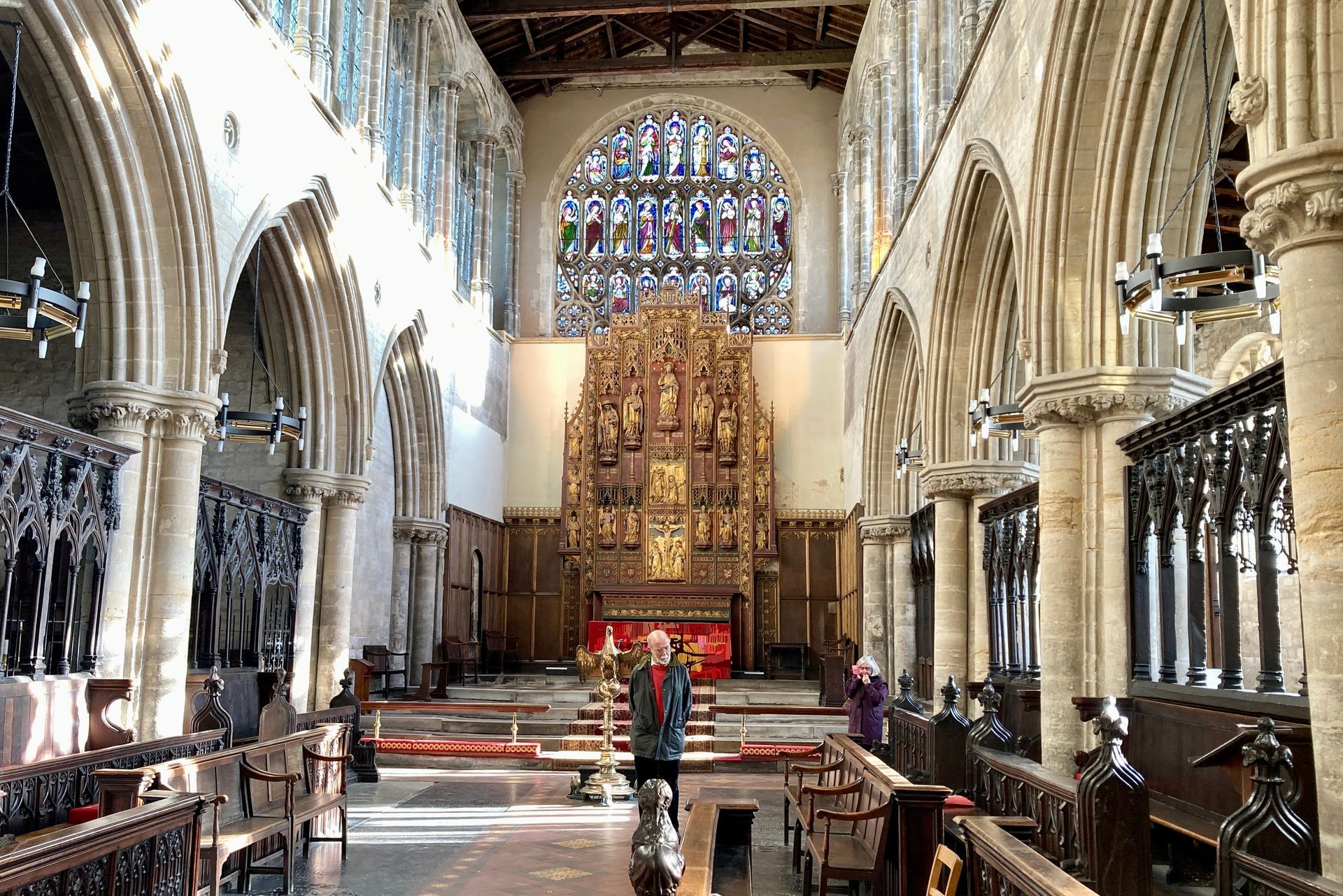
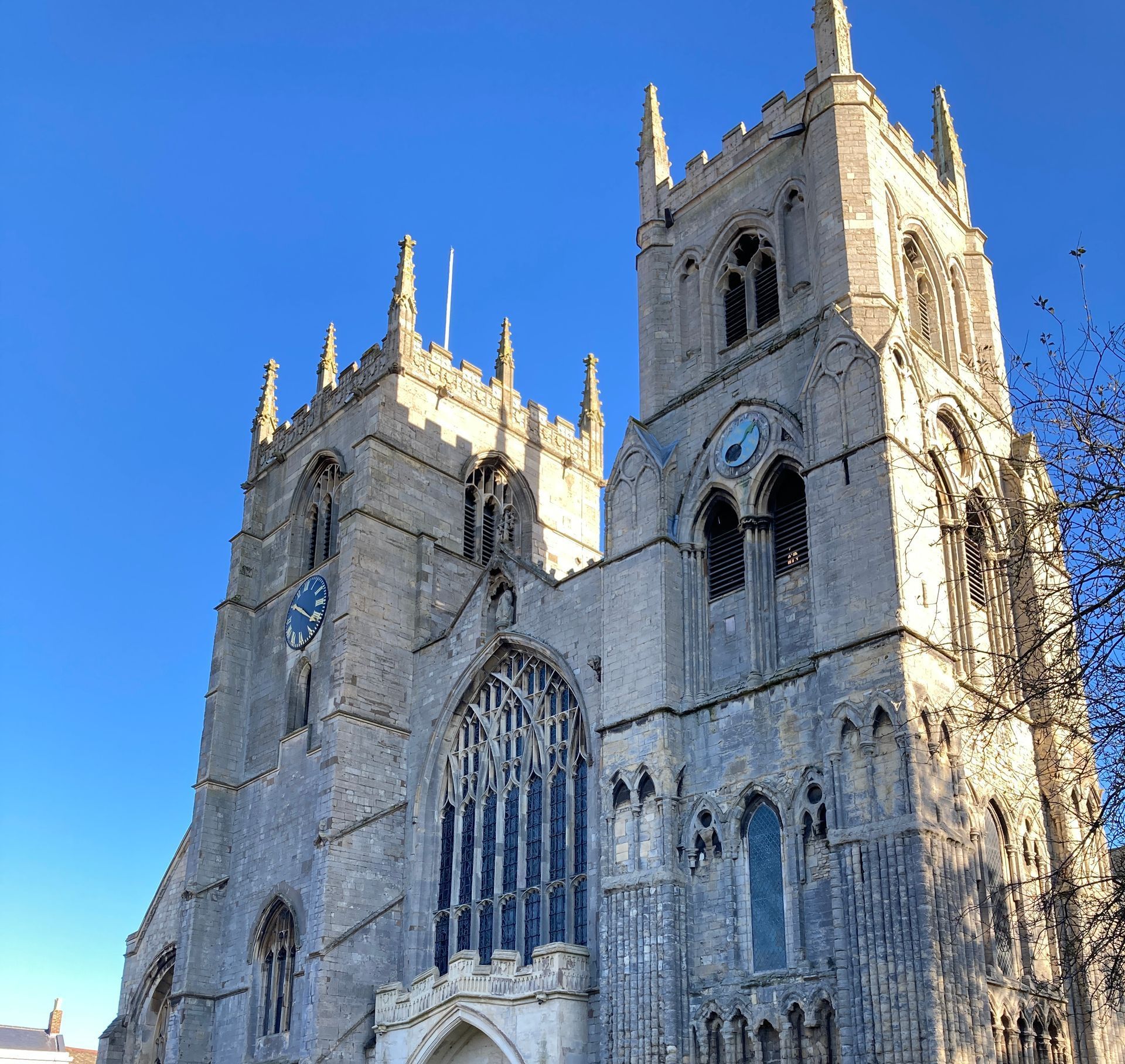
Margery Kempe, who worshipped in Kings Lynn Minster (pictured above), was an extraordinary woman and an indefatigable medieval pilgrim.


Walkers passing through the town of Oroso in Spain on the Camino Inglés will meet one of England’s most famous medieval pilgrims. Far from her home in Kings Lynn, Margery Kempe has been immortalised in stone close to the bridge she would have crossed on her way to St James’s shrine in Santiago de Compostela. But who was Margery Kempe and why is she commemorated so far from her native county of Norfolk? 


Margery is one of those colourful personalities who attracts a variety of different responses. To many she is an acclaimed mystic, to others she is an intrepid pilgrim, and to some she is a religious fanatic given to loud, public displays of weeping and wailing. Her overly emotional behaviour has been pathologized as, among other things, postnatal psychosis and Jerusalem syndrome. 


These modern perceptions of Margery are not so different from those of her fifteenth-century contemporaries. Although Margery had many supporters, others were unimpressed by her noisy religiosity, suggesting she had drunk too much wine or was possessed by a wicked spirit. A friar alleged she had a heart condition rather than a gift from God, while less generous detractors wished she were “put out to sea in a bottomless boat”. 


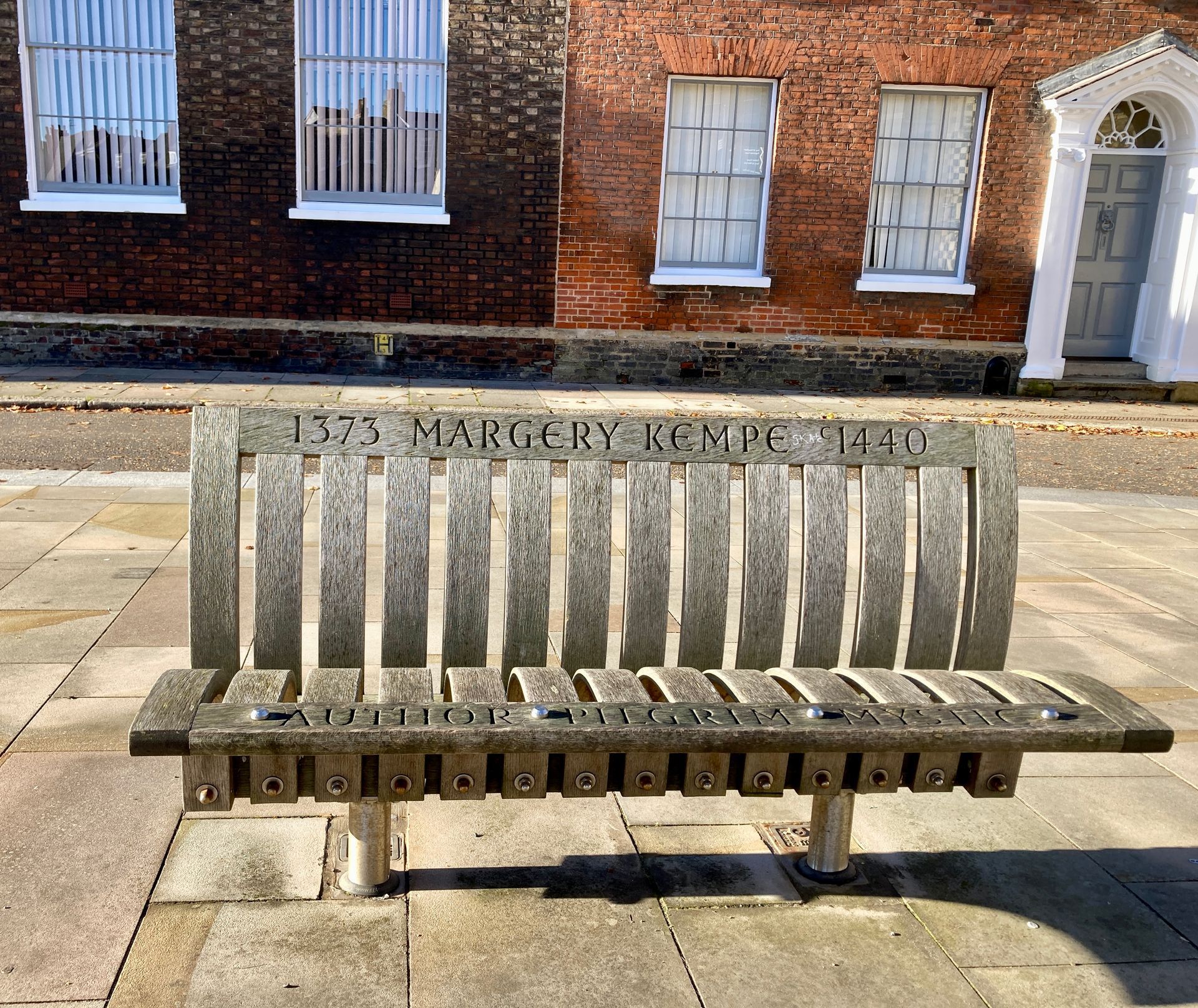
Despite her famed eccentricities, Margery is today perhaps best known as a pilgrim. Born in 1373 and married at the age of twenty, she took up religious travel later in life leaving behind fourteen children and several failed business ventures. She travelled widely across England, visiting many of the country’s foremost pilgrimage destinations including Canterbury, York, and Walsingham. Her overseas journeys took her to the celebrated shrines of Wilsnack and Aachen in Germany, to Rome and Jerusalem and, of course, to Santiago de Compostela where she followed the Camino Inglés and passed through Oroso. 


Considering her lack of formal education, one of Margery’s greatest achievements was to author, with the help of scribes, a book narrating her life story. The Book of Margery Kempe – which might be described as a free-thinking, religious autobiography in homely Middle English – is the main medium through which we get to know this extraordinary medieval woman and learn about her numerous pilgrimages. While Margery was not the only female travelling on pilgrimage in the fifteenth century, she is unique in that no other woman of her time recorded her journeys with quite so much passion and in such detail. 


As well as telling us much about pilgrimage in the late Middle Ages, Margery’s Book highlights some of the challenges faced by women on long-distance journeys. Margery herself comes across as a tough, determined, and resilient traveller. She took her first pilgrimage in her forties and, at the age of sixty with a painful leg, she made her way across eastern Germany sleeping in barns and valiantly trying to keep up with her younger companions. She was also fearless, instructing the Archbishop of Canterbury to rebuke his household for swearing, and brazenly telling the Archbishop of York – who had apprehended her for questioning – that she “had heard tell” that he was “a wicked man”. However, we also glimpse Margery in her more vulnerable moments: we witness her terror at sea during a life-threatening storm, and her constant worry of sexual assault as a lone female pilgrim. 


Margery, of course, is no ordinary pilgrim and her pilgrimages are all the more hazardous because of her unconventional behaviour. On a visit to Canterbury, her exuberant weeping not only annoys the monks and priests; it also embarrasses her long-suffering husband, John, who disowns her for a day. Things get worse when Margery entertains a street crowd with stories from Scripture. How did an illiterate woman have access to these religious texts, people ask? Surely she was either a heretic or possessed by the devil? All alone outside the gates of Canterbury, Margery trembles with fright as people shout, “Take her and burn her!” She is eventually rescued by two men who escort her safely to her lodgings. 


The pilgrimage which receives the most attention in Margery’s Book is her journey to the Holy Land. Like other late-medieval pilgrims, Margery spends her time touring the popular Biblical attractions such as the Holy Sepulchre Church in Jerusalem, Bethlehem, the River Jordan, and the Mount of Temptation. Needless to say, her trip is far from trouble free. Her noisy weeping and her habit of constantly talking about God – even at the dinner table – makes her very unpopular with her companions. On the voyage out, her fellow pilgrims try to abandon her and, when that fails, they attempt to shame her by forcing her to wear foolish clothing. Their spiteful bullying continues all the way to Jerusalem: they threaten to turn her maidservant against her, they steal her money, and they confiscate the bedding necessary for her sea passage. 


Once in Jerusalem, however, Margery comes into her own. As was the custom, she and her pilgrim companions spend twenty-four hours in the Church of Holy Sepulchre and are shown around by their Franciscan hosts. Margery follows them with her candle, weeping without restraint. When they reach Calvary, Margery collapses, writhing and crying aloud, claiming she could see the Crucifixion and Christ’s body punctured with “more holes than any dovecot”. 


The pilgrimage we hear about the least is, ironically, Margery’s journey to Santiago. We know she took ship from Bristol, reached Santiago in seven days, and stayed for two weeks. She must have passed through the town of Oroso as she followed the “English Way” from the port city of La Corũna to Santiago, but the only trace of her today is the modern statue in which she smiles benignly at travellers passing across the town’s medieval bridge. 


One reason we hear so little about Margery’s Santiago pilgrimage is because the Book of Margery Kempe is a spiritual memoir rather than a travel account. Margery’s main purpose was to inform her readers about her mystical visions, her special relationship with Christ, and her religious conversations and musings. In this respect, some of her most striking pilgrimages are not geographical but spiritual. Margery had the ability to travel in her mind, and her Book includes several episodes in which she effectively time-travels back to first-century Palestine and interacts with some well-known Gospel characters. 


One of the most vivid of Margery’s virtual pilgrimages occurs during an Easter spent at home in Lynn. While in contemplation in her parish church, she is spiritually transported to Jerusalem where she witnesses Christ’s passion. She sees Christ arrested, and then tortured and beaten. After Christ’s burial, Margery accompanies the Virgin Mary home, and there follows a touching scene where the grief-stricken Mary lies on the bed and Margery comforts her by making her a hot drink of spiced wine.


Despite her extensive wanderings, Margery’s life was anchored at home in the Norfolk town of Lynn, now Kings Lynn. It was to Lynn where Margery always returned after her travels, and it is here where she dictated her Book to her two scribes, close to the parish church of St Margaret’s where she experienced her Easter vision. 


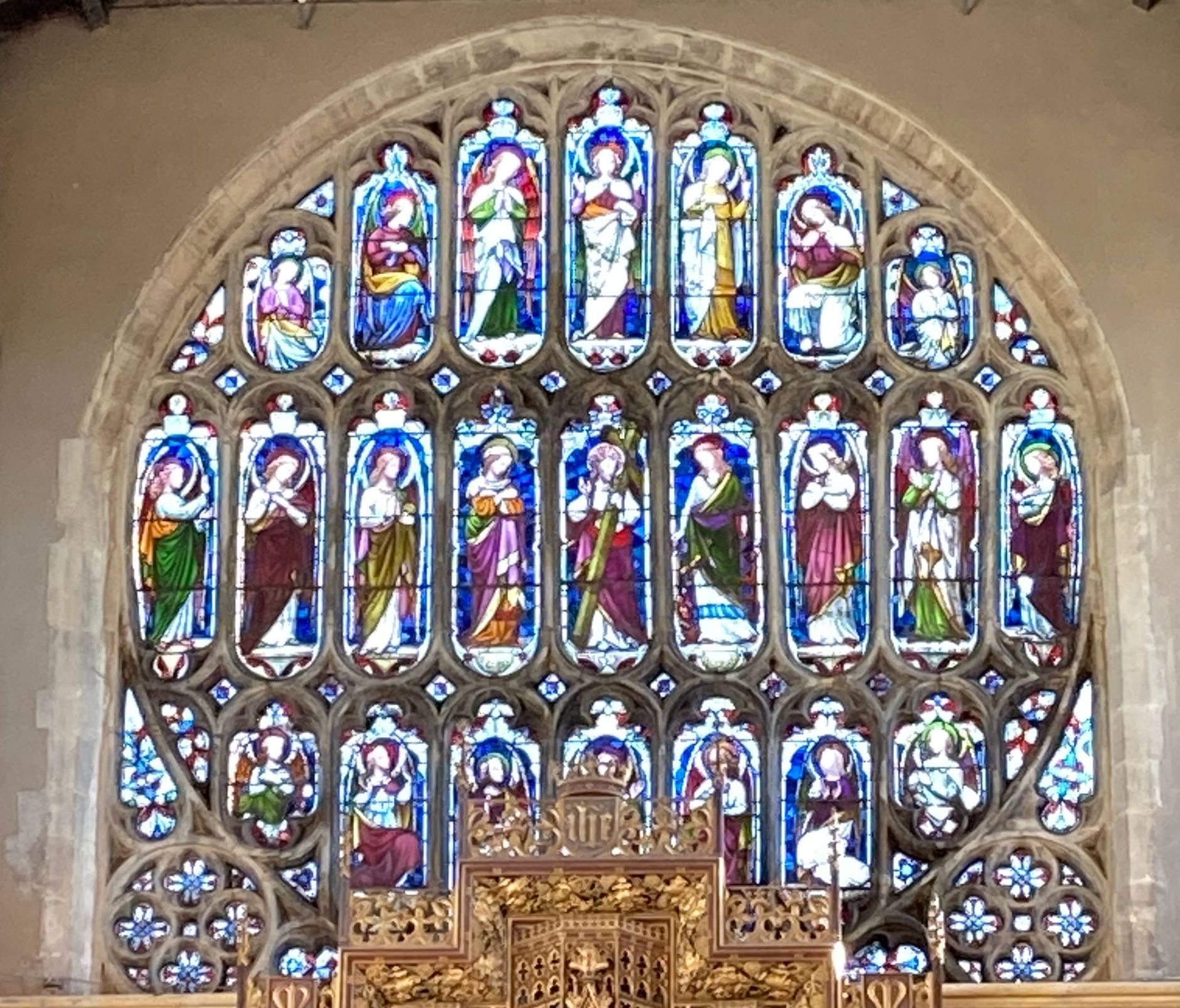
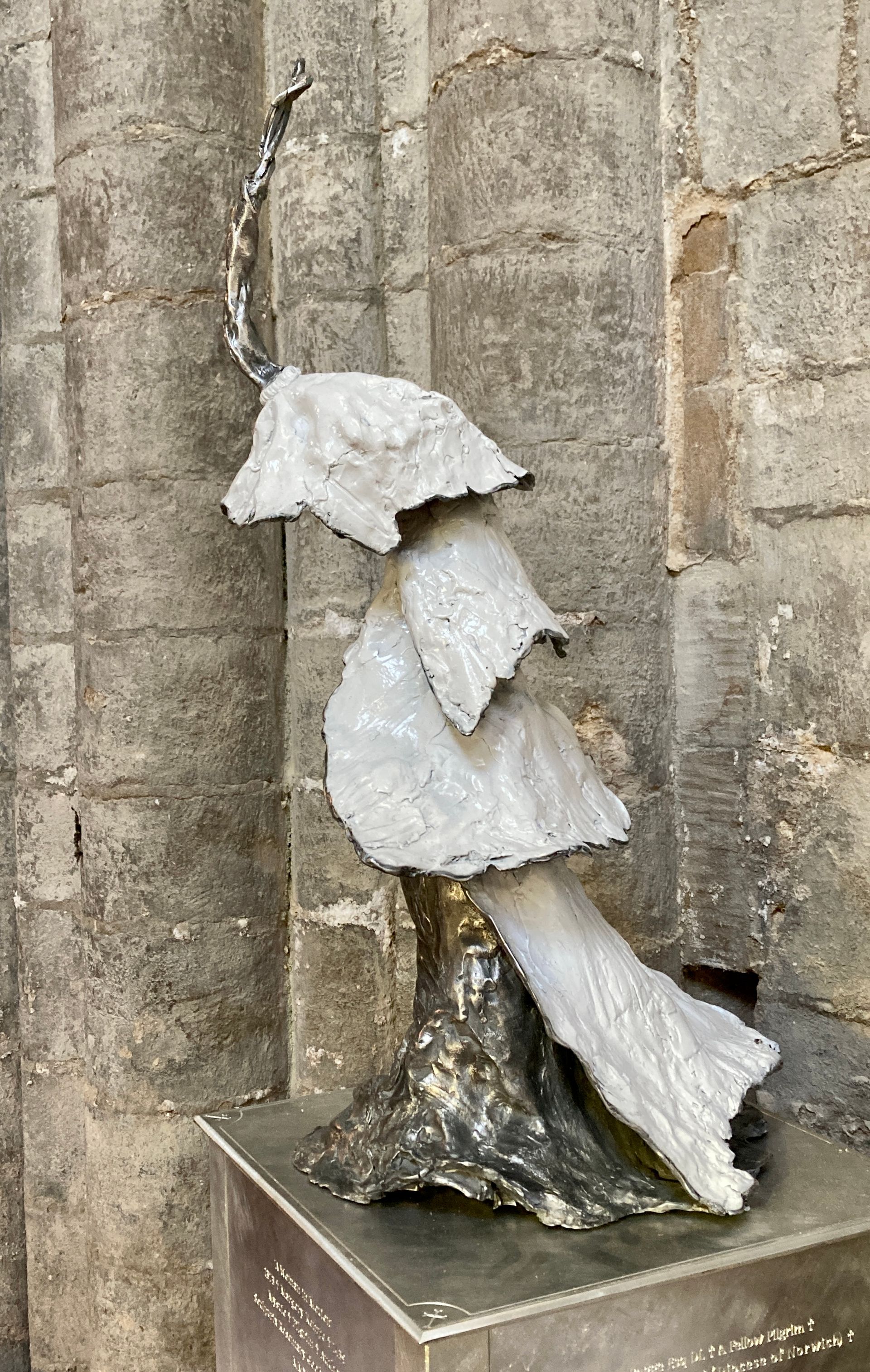
In many ways, it is more fitting to commemorate Margery in her hometown rather than on a road in Spain, and another statue of Margery now stands in what was once her parish church, Kings Lynn Minster (see images above and below). Entitled, “A Woman in Motion”, the sculpture by Rosemary Goodenough nicely captures two sides of Margery’s personality. Head bowed in prayer, she is static and rooted in her parish church. And yet, at the same time – and dressed in swirling pilgrim attire – she is off and away to her next pilgrimage destination. 


Anne E. Bailey


____________

Suggested Reading


The Book of Margery Kempe, ed. and trans. Anthony Bale (Oxford World’s Classics, 2015)

Anthony Bale, Margery Kempe: A Mixed Life (Reaktion Books, 2021)

Anthony E. Goodman, Margery Kempe and her World: Urban Culture and Religious Experience in Later Medieval England (Routledge, 2002)

John Arnold and Katherine Lewis (eds.), A Companion to the Book of Margery Kempe (Boydell & Brewer, 1994)

Laura Kalas and Laura Varnam (eds), Encountering the Book of Margery Kempe (Manchester University Press, 2021)
'A Woman in Motion' sculpture by Rosemary Goodenough in Kings Lynn Minster
O
By Alex Knox December 3, 2025
Over the last 12 months, Alex Knox walked Britain’s newest pilgrimage with its youngest pilgrim. This is their story.
By Torin Brown December 3, 2025
Torin Brown, Pilgrim Officer at Canterbury Cathedral, asks why pilgrimage still 'packs a spiritual punch' in a secular age.
By Christian Jenkins December 2, 2025
Christian Jenkins describes a the first Our Lady of Christendom pilgrimage in the UK from Tewkesbury Abbey to Evesham!
By Phil McCarthy December 1, 2025
A podcast about pilgrimage has been launched, hosted and created by Torin Brown, the pilgrim officer at Canterbury Cathedral!
By Nick Dunne December 1, 2025
The Confraternity of Pilgrims to Rome are delighted to announce the formal recognition of the Francigena Britannica from London to Canterbury, and their annual conference on 14th March 2026!
By Phil McCarthy November 29, 2025
The key to any safe and successful walking pilgrimage is thorough preparation. This resource is a useful prompt.
By Phil McCarthy November 29, 2025
A pilgrimage is a journey undertaken by individuals or groups for religious or spiritual reasons, often to a sacred place or shrine of particular significance. It is an expression of faith and devotion that involves physical travel as well as inner exploration and transformation. Pilgrimages have been integral to many religious traditions throughout history, including Christianity, Islam, and Hinduism. In the Catholic faith, a group pilgrimage is seen as a special journey of prayer and devotion. It is an opportunity for believers to deepen their relationship with God, seek spiritual renewal, and encounter the divine in tangible ways. Pilgrimages are not only about visiting holy sites but are also about the inward journey, seeking grace, forgiveness, healing, or enlightenment. Planning the inner journey Rejoice always, pray without ceasing, give thanks in all circumstances; for this is the will of God in Christ Jesus for you. 1 Thessalonians 5:16-17 Planning a personal pilgrimage is a sacred process. It can be a transformative and enriching spiritual experience. Walking alone provides the opportunity for solitude, encounter with strangers and closeness to nature. Individual walking pilgrimage can give insights into the communities passed through. . The destination When choosing a destination for your pilgrimage, consider the following factors: Popular pilgrimage sites: Explore well-known pilgrimage sites, such as shrines dedicated to saints, historic churches, or locations associated with miracles or apparitions. Accessibility: Ensure the pilgrimage site is accessible to you given your age and physical abilities. Accommodation: If you need overnight accommodation, try to find options which align with the aims of the pilgrimage and are affordable. These may include retreat centres, religious houses or hospitable parishes. The British Pilgrimage Trust’s Sanctuary Network provides affordable options such as churches, church halls, village halls or sports pavilions. Cultural relevance: The Catholic community in England & Wales is incredibly diverse in terms of ethnicity and culture. Consider the cultural context of the pilgrimage destination and its significance. Setting dates and itinerary Creating a well-planned itinerary is essential. Dates: Select dates that coincide with religious feast days, significant anniversaries, or local events that enhance the spiritual significance of the pilgrimage. Don’t forget the weather! Itinerary: Develop an itinerary that incorporates a variety of activities catering to spiritual, educational, and recreational needs. Include daily Mass if possible, opportunities for prayer and reflection, guided tours of sacred sites, and times of silence and openess to encounter with others. Prayer and reflection: Plan specific prayer stops, devotions, and meditations that align with the pilgrimage theme or focus. Include encounters with local religious communities. Before the way I rejoiced when they said to me, “Let us go to the house of the LORD.” Psalm 122:1 Preparing yourself spiritually is essential for a good pilgrimage experience. Prayer and reflection resources can be found here . Personal spiritual preparation: Prior to the pilgrimage research the route and plan to make the experience as deeply as possible. Try to find daily Scripture readings, novenas, or devotional exercises related to the pilgrimage theme. Indentify a personal intention for the journey : This might be to pray for healing, to give thanks for some event, to commemorate a loved one or to raise money for a cause close to your heart. Talk to others about your plans: Try to find books about the way you have chosen or speak to others who have walked it. Find resources that address the themes of the pilgrimage, such as faith renewal, healing, or devotion to specific saints. Share your spiritual intentions: This may include your talking about your c oncerns and hopes for the pilgrimage with family, friends, and your home community. On the road Teach me your way, O Lord, that I may walk in your truth; unite my heart to fear your name. Psalm 86:11 Incorporating liturgies, personal prayer and rituals enhances the spiritual depth of the pilgrimage. Resources can be found here . Masses and Sacraments: Where possible, try to find Masses at significant pilgrimage sites, allowing yourself to participate in the liturgy and be nourished by the Eucharist. Receiving the Sacrament of Reconciliation (confession) can foster spiritual healing and renewal. Devotions: Plan to include devotions that symbolise the journey of faith such as praying the Rosary, Stations of the Cross, or other traditional Catholic prayers relevant to the pilgrimage theme. Rituals: Integrate symbolic rituals like lighting candles at sacred shrines, making offerings of prayer intentions, or reciting specific prayers associated with the pilgrimage's spiritual objectives. Silence: It is good to include a period of intentionally silent walking, giving yourself the opportunity to reflect on your own intentions for the pilgrimage. Research guidance on contemplative practices that encourage inner reflection. Fellowship: You may encounter others on the way. Try to be open to these as opportunities for sharing your pilgrimage with others. It may be possible to join communal meals, shared experiences, and social gatherings entoute. At the destination And people will come from east and west, and from north and south, and recline at table in the kingdom of God. And behold, some are last who will be first, and some are first who will be last.” Luke 13:29-30 It is important to plan how you will mark your arrival at the shrine or other destination, or there may be a sense of anti-climax. Resources can be found here . Consider: Welcome : by the Shrine Director, clergy, staff or parishioners. Shared prayer : it is important to mark the end of the pilgrimage with a prayer which is relevant to the site and theme. Tour of the destination and an explanation of its religious and cultural significance. Devotions: for example, lighting three candles, one for the pilgrim’s personal intentions and for any that others have asked him or her to pray for, one in gratitude for the people who helped along on the Way, and one in hope for those who will follow. Masses and Sacraments: Where possible, arrange a final Mass and the opportunity to receive the Sacrament of Reconciliation (confession). If this is not possible then the Evening Prayer of the Church for the day may be a good way to end the pilgrimage. Fellowship over tea and coffee is always welcome and a group photo with others at the destination! After the way Come to me, all who labour and are heavy laden, and I will give you rest. Take my yoke upon you, and learn from me, for I am gentle and lowly in heart, and you will find rest for your souls. For my yoke is easy, and my burden is light.” Matthew 11:28-30 Continuing the pilgrimage experience beyond the journey itself is important for sustaining spiritual growth. Resources can be found here . Personal reflection : Try to reflect on the experience and to continue the journey. Reflect and Learn: Consider offering to speak to your community to share the experience and its impact on your faith journey. Plan Future Pilgrimages: Use insights from the pilgrimage experience to plan future pilgrimages that address the your evolving spiritual needs. Collaborate with other pilgrims, and clergy to identify new destinations, themes, and spiritual objectives for upcoming journeys. Phil McCarthy NB I am grateful to Molly Conrad and Elliot Vanstone for their contributions to the development of this resource.
By Phil McCarthy November 29, 2025
Congratulations on completing your pilgrimage. Now you can download the certificate of completion!
By Phil McCarthy November 29, 2025
Whether you will be walking alone or in a group a Pilgrim Passport is useful.
By Phil McCarthy November 14, 2025
The key to any safe and successful walking pilgrimage is thorough preparation!